.svg&w=384&q=75 "GoalGist logo")
Diego Forlan on Ronaldo's Role in Portugal's Attack
Diego Forlan knows what it is to live inside the penalty area. He won the Golden Ball at the 2010 World Cup, scored goals across Europe, and shared a dressing room with Cristiano Ronaldo at Manchester United. So when he looks at Portugal and sees a problem with their No.9, he speaks with a striker’s blunt honesty, not as a pundit searching for headlines.
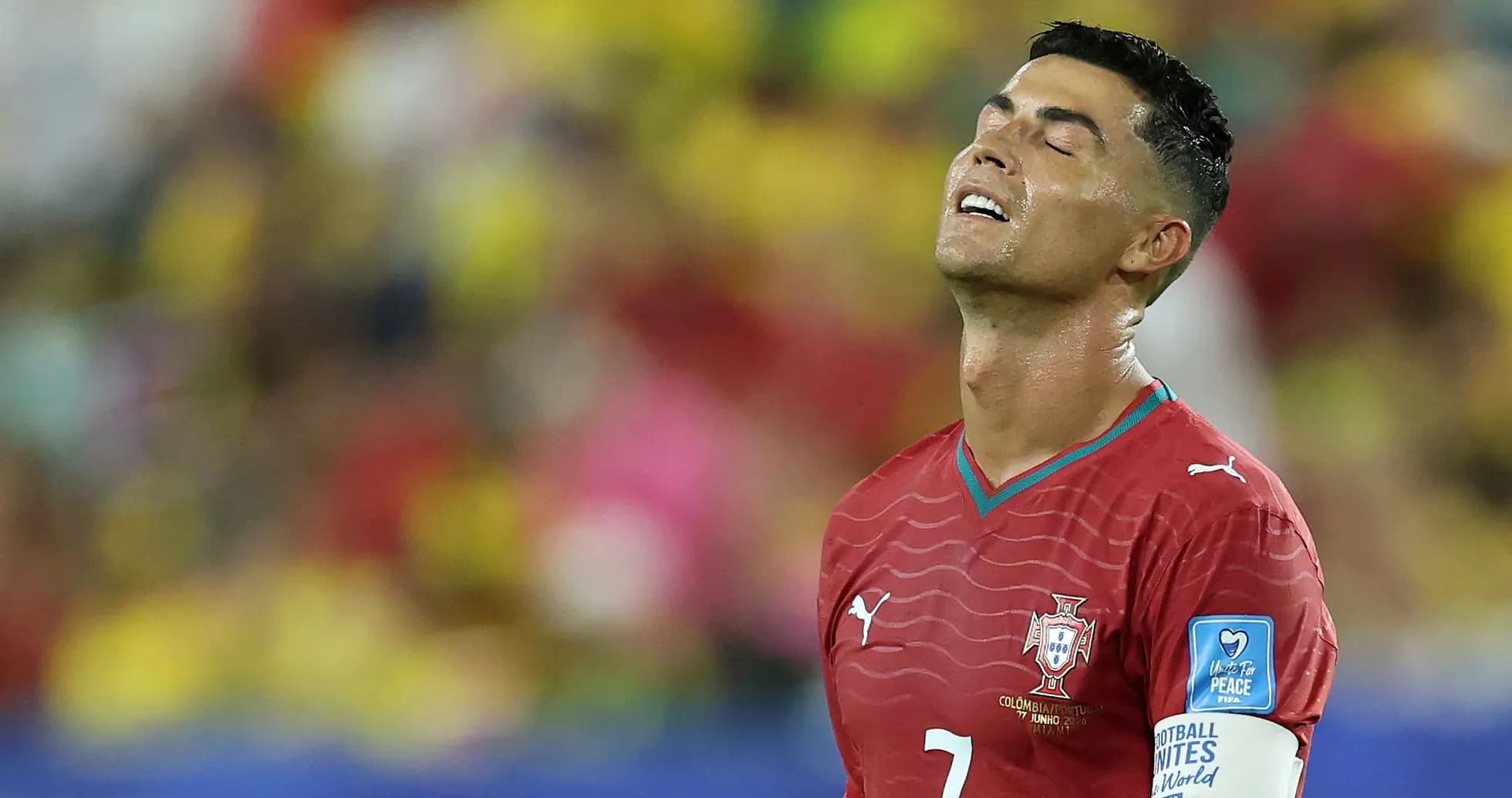
On ESPN’s La Casa del Kun, Forlan cut straight to the point: Ronaldo’s presence in the middle of the pitch, he argued, is becoming a tactical handbrake.
"I'm speaking as a striker, the problem is that Cristiano is in the center, he is who he is, he is there as a No.9, and he stays there to take advantage of the goal because he no longer goes out to look for the ball, but he ends up conditioning Portugal," Forlan said. It was a clinical diagnosis of a very modern dilemma: how do you build a fluid, unpredictable attack around a 39-year-old legend who now lives almost exclusively between the posts?
Forlan painted the picture every centre-back dreams of. Ronaldo plants himself in the box, the defenders don’t have to chase into the channels, and the game shrinks.
"It's the typical situation where we used to say, 'I'm staying here because I'm close to the goal to score,'" he continued. "But you don't understand that you end up hurting your team because both center backs stay there, you don't move. The center backs stay put, one becomes a reference point and the other is left out. You have no one who can get to you because you start closing down that space."
In other words, the penalty area becomes crowded, not dangerous. Portugal’s attack, for all its glittering names, starts to feel like a traffic jam.
And that is the crux of Forlan’s argument. This is not a team short of invention. Bruno Fernandes, Bernardo Silva, Rafael Leao – these are players who thrive when the pitch is stretched, when the passing lanes open, when defenders are dragged into uncomfortable places. When the No.9 stands still, those channels disappear.
Forlan doesn’t question Ronaldo’s finishing. He doesn’t deny the aura, the instinct, the threat. He questions the movement.
With the air of a veteran passing on a final, crucial tip, he offered a simple adjustment, not a revolution.
"If he moved a little to the wings, the others could get in and he could be involved," Forlan said. "That's where Portugal falters because they don't explode because everything ends up going to one side, which is actually a funnel. I wouldn't say it's a problem, it's about making him understand. Telling him: 'Move, get out of there so you can do something'.
The image is striking: a team funneled into predictable patterns, attacks squeezed into the same zones, all because the central figure refuses to budge. The solution, in Forlan’s eyes, is not to bench Ronaldo, but to nudge him out of his comfort zone – to turn him from a static reference point into a moving target.
This is where Roberto Martinez steps into the spotlight. Portugal have done their first job and reached the knockout phase, booking a round of 32 clash with Croatia. On paper, they look equipped to go deep. On the pitch, though, the warning lights are flashing.
Ronaldo has already shown he can still find the net. That part of the story hasn’t changed. The concern is what happens in the long stretches between those chances, especially against elite opponents who won’t be rattled by his reputation and will happily let him stand still while they lock down everyone else.
The “bottleneck” Forlan describes is not a theoretical problem. At this level, a predictable attack dies quickly. If the centre-backs can hold their line, if the full-backs don’t have to cover wide runs from the striker, if Bruno, Bernardo and Leao keep receiving the ball in crowded pockets, Portugal’s football loses its snap.
So the question that hovers over this knockout campaign is as much psychological as tactical. Can a five-time Ballon d'Or winner, in the twilight of an extraordinary career, change his habits for the good of the collective? Can he accept that, for Portugal to breathe, he has to move?
Forlan believes the answer lies in conversation, not confrontation – “making him understand,” as he put it. Martinez will have to find the right words, and Ronaldo the willingness to listen.
Croatia await. The stakes rise, the spaces shrink, and the margins tighten. If Portugal are to turn their talent into a title charge, their greatest-ever player may need to trade a few moments of comfort in the box for the hard running that creates room for everyone else. The knockout rounds are rarely kind to statues, no matter how many goals they have scored.