.svg&w=384&q=75 "GoalGist logo")
Fifa's Confidence Crisis: Unraveling the Integrity Issues
Fifa says confidence is being restored. How do we know? Because Fifa says so.
In a sport that has spent the past decade trying to crawl out from under its own scandals, world football’s governing body has decided the real problem now is not its behaviour, but the “attacks” on its integrity. The message from Zurich is clear: the crisis is over because the people who caused it have declared it so.
The latest episode centres on the now-abandoned “Fifa Forward Enterprise proposal”, a plan to effectively sell off control of World Cup commercial rights. It was conceived in near-total secrecy, pushed by Gianni Infantino, and then hurriedly buried once the scale of the backlash became impossible to ignore.
Even inside Fifa, people were left in the dark. Its own chief operating officer, Kevin Lamour, and its head of global football development, Arsène Wenger, were not properly consulted. Confederations, clubs, national associations, players, fans – the very fabric of the game – were left to read about a scheme that would reshape football’s crown jewel without their knowledge.
This was not a rogue committee or a muddled sub-clause. A global sport was pitched into turmoil by one man. Either Infantino dreamed up a project of historic importance and simply forgot to tell almost everyone in the sport, or he tried to stage a boardroom coup against football itself.
When the backlash came, the response was pure Fifa theatre.
A “constructive and positive meeting held in Rabat, Morocco” was announced. A joint letter from Infantino and secretary general Mattias Grafström followed. And in it came the 19 words that captured the surreal self-belief at the heart of this regime: “Fifa’s top management is fully confident that the outcomes of today’s meeting will help restore confidence in the organisation.”
Restore confidence. By the people who shredded it.
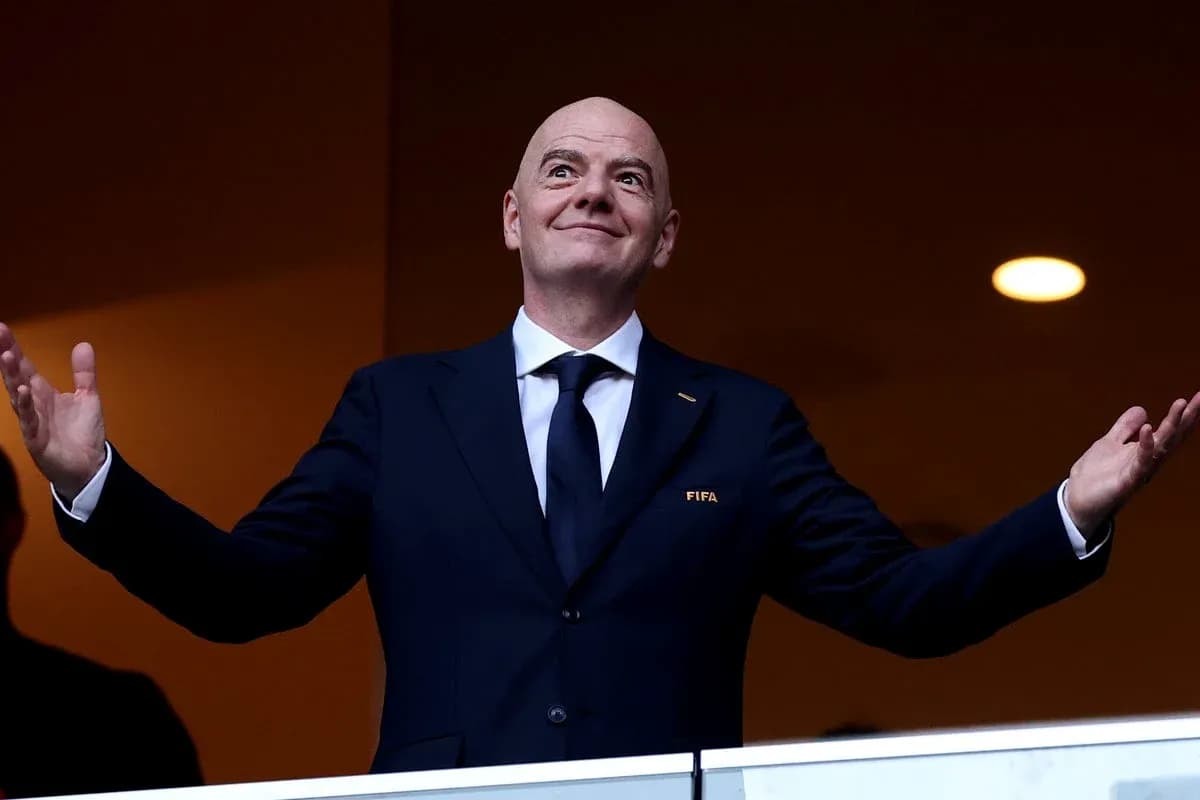
Infantino, the only official elected by all 211 member associations, faces open calls to resign from some of those same members. Others lined up to denounce the Forward Enterprise project. Yet the president remains in place, either the most divisive figure in modern football or the man who has managed the rare feat of uniting clubs, federations and fans against him.
“Mistakes made were acknowledged,” the letter insisted, wrapped in a tone of almost comical optimism. Then came the closest thing to contrition: “It was agreed that it was not the intention for the Fifa council and Fifa member associations to feel excluded from the process.”
Not the intention. So why exclude them?
The proposal was so tightly guarded that, as critics observed, it seemed to be shared with members of the Kushner family before Fifa’s own football stakeholders. National associations were told that those who backed it would receive more funding than those who did not. To many, that looked and sounded like a financial inducement. The word “bribery” does not appear in Infantino’s letter.
The president has now promised there will be no repeat. A review will be carried out. But the assumption is obvious: the same Infantino-dominated leadership will investigate itself and deliver the conclusions it needs to survive.
Inside Fifa, the sensitivity has hardened into something close to paranoia. The touchiness that has long been visible in Infantino’s social media posts now appears to define the organisation’s stance.
“It was agreed that Fifa will no longer tolerate any attacks on its integrity, good governance and due process and will take all necessary measures to protect and safeguard its name and reputation,” the letter declared, in one of its more extraordinary lines.
The language could have been lifted from a political rally. Donald Trump has built a movement on the idea that he is the victim of unfair persecution. Fifa, in its own way, is trying to do the same.
But integrity, good governance and due process are not concepts that can be restored by decree. They are judged by actions, and the recent record is damning.
This is the organisation that quashed suspensions to Cristiano Ronaldo and Folarin Balogun. That bent its own rules to shoehorn Lionel Messi’s Inter Miami into the Club World Cup. That allowed the United States to bar Somali referee Omar Artan from entering the country. That cultivated a close relationship with Trump. That created a “peace prize” only to award it to a man who then launched an illegal war.
Fifa has become shorthand for greed. In the United States, ordinary fans did not blame vague “organisers” for sky‑high ticket prices; they blamed Fifa by name. The body that claims to represent the global game openly favoured the Trump administration, with key decisions seemingly influenced by the White House. It presented itself as custodian of the World Cup while secretly exploring ways to sell it off without most of the sport even knowing.
The damage is not theoretical. It is lived, visible, and widely understood.
If Fifa truly wants to repair its reputation, it cannot be done with choreographed meetings, carefully worded letters and threats to silence criticism. It demands honesty. It demands transparency. Above all, it demands leadership that understands credibility is earned, not announced.
On that, Infantino’s latest dispatch offers nothing.

