.svg&w=384&q=75 "GoalGist logo")
England Adopts Palm-Cooling Tech for World Cup Heat
England’s World Cup preparations in the United States are not just about tactics, shape, and set-pieces. They’re about temperature. Specifically, how to keep it down when the heat and humidity start to bite.
With forecasts suggesting at least a third of World Cup fixtures will be played in temperatures above 26C, England have turned to a striking piece of sports science: high‑tech palm‑cooling devices designed to lower core body temperature and speed up in-game recovery.
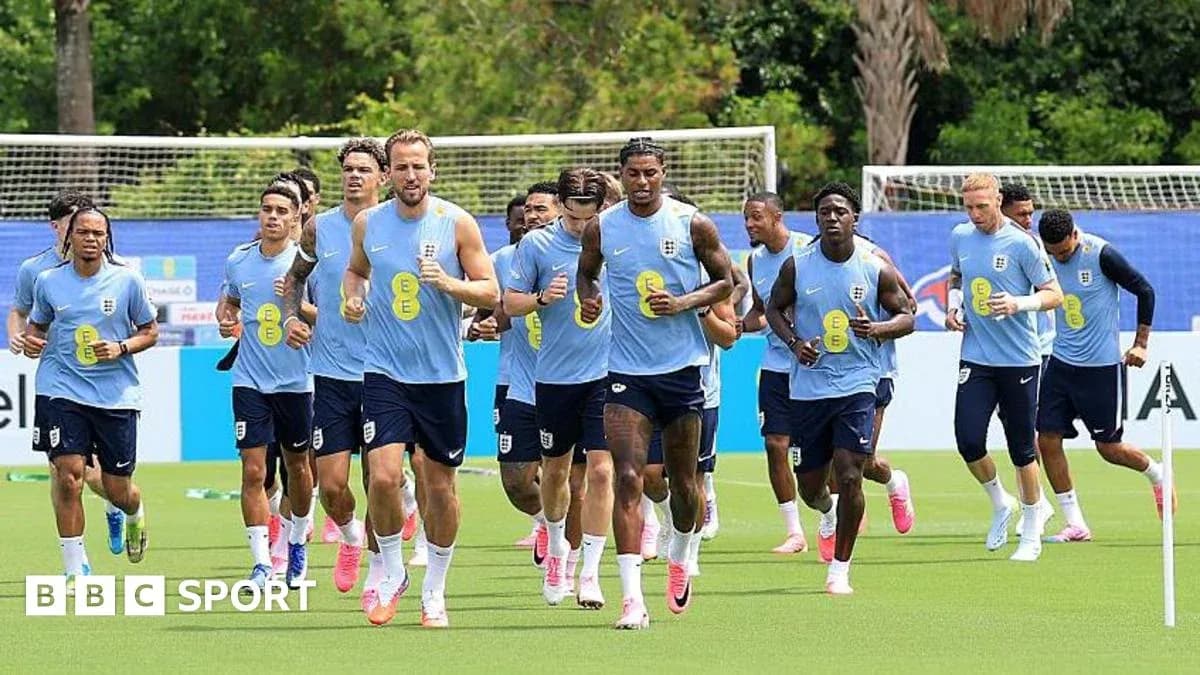
On Tuesday, the numbers told their own story. As England went through their opening training session in West Palm Beach, Florida, the temperature climbed to 32C. The air felt heavy, the kind of heat that saps legs and clouds decision-making. This is the environment they must learn to master.
Science in the palms of their hands
Palm-cooling technology has been quietly spreading through elite sport, with Manchester United among the clubs already using it. The concept is simple enough: cool the palms, and you can significantly reduce core body temperature. The impact, according to research, can be crucial during intense exertion, helping players recover between bursts and maintain performance levels for longer.
England intend to lean on that science. The devices will be used during training in Florida and during the scheduled water breaks at the World Cup itself. As players grab a drink, they will also grip the cooling units, trying to bring their internal temperature back under control before the next phase of the game.
This is the kind of marginal gain modern international football now chases. Not a new formation or a surprise selection, but a piece of kit in the dugout.
“Build capacity to the conditions”
Jordan Henderson, speaking about the early days of camp, made it clear that the first week in the US is about more than getting minutes in the legs.
He described it as a period to “build capacity to the conditions,” stressing that the warm-up matches will form a key part of that process. It is not just about playing New Zealand and Costa Rica; it is about playing them in this climate, under this strain.
The Brentford midfielder also highlighted the work being done off the pitch. He praised the “team behind the team” and their “top level research” into cool-down and recovery methods, underlining how seriously England are treating the challenge of the heat.
“Hopefully that can give us a little edge when we get into the tournament,” he said. The phrase lingered. In tournament football, a “little edge” can be the difference between survival and exit.
Warm-up games, rising stakes
England’s schedule in the US is set. New Zealand await on Saturday, 6 June (21:00 BST), then Costa Rica follow on Wednesday, 10 June (21:00). On paper, they are friendlies. In reality, they are live rehearsals for managing energy, hydration, and recovery in conditions that will test even the fittest squads.
Each water break becomes a drill. Each pause, a chance to see how the players respond to the palm-cooling devices, how quickly they settle, how sharply they restart. Coaches will be watching more than just passing patterns.
Then comes the real thing.
Thomas Tuchel’s side open their World Cup campaign against Croatia on Wednesday, 17 June (21:00), before facing Ghana on 23 June (21:00) and Panama on 27 June (22:00). Three group matches, all in potentially punishing heat, all demanding clarity of thought in the final 20 minutes when legs are heavy and games are usually decided.
England believe they have the talent to compete deep into the tournament. The question now is whether a strip of cold metal in the palm, and the science behind it, can help keep those ambitions from melting in the heat.

