.svg&w=384&q=75 "GoalGist logo")
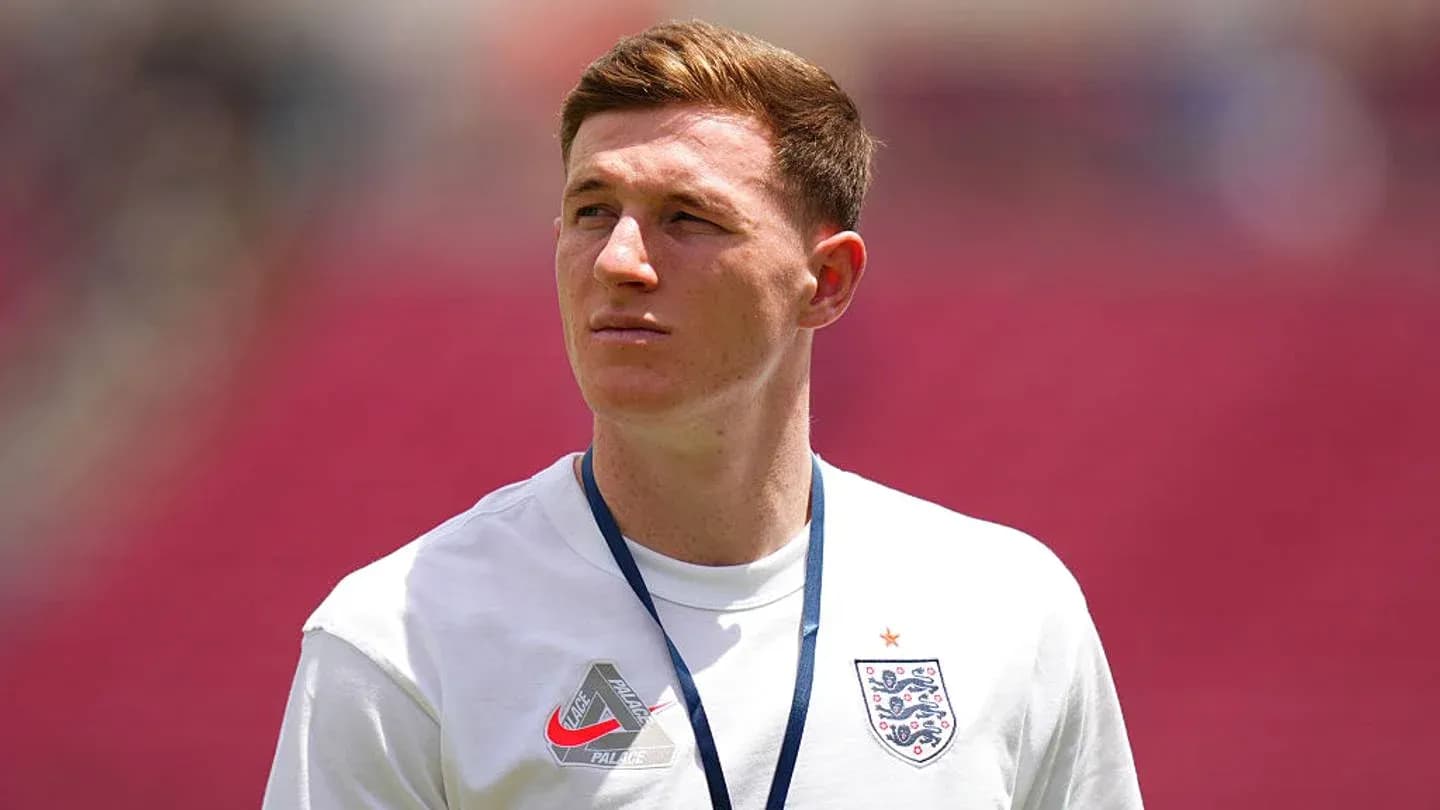
Elliot Anderson Transfer Saga: Manchester City Eyes Record Deal
Manchester City are testing the outer limits of the transfer market again, and this time the name on their whiteboard is Elliot Anderson.
The Premier League champions have moved aggressively for the Nottingham Forest midfielder, tabling an offer that would make the 23-year-old the most expensive English player in history. The proposal, relayed on Wednesday by Fabrizio Romano and The Athletic’s David Ornstein, starts at $141.7 million (£106 million) guaranteed and could climb past $160.4 million (£120 million) with add-ons.
That fixed fee alone nudges beyond the total Arsenal paid for Declan Rice in 2023. Rice’s move from West Ham set the current benchmark for an English player. City are now prepared to blow past it for a footballer who, two years ago, was still on the fringes of wider public consciousness.
Forest, though, are not blinking.
Forest Hold Their Nerve
The negotiating table is where Forest believe their leverage truly lies. Anderson has three years left on his contract. There is no looming free agency, no ticking clock forcing their hand. On the pitch, he has just delivered a breakout 2025–26 campaign, forcing his way into the England squad in time for the 2026 World Cup and producing standout displays against both Manchester clubs.
That combination of form, age and contract length gives Forest the freedom to set a price and wait. And they are looking above City’s first offer.
Ornstein points to Alexander Isak’s 2025 transfer from Newcastle United to Liverpool as the key reference point. Liverpool paid $167.1 million guaranteed, with only minor add-ons, to land the Swedish striker. Forest view that as the true marker. If Isak commanded that figure, they argue, Anderson – younger, central to their system and now an England international – should not come cheaper.
To meet that standard, any Anderson deal would need to eclipse Isak’s guaranteed fee. Do that and you are not just breaking the English record. You are setting a new Premier League high, with only Neymar and Kylian Mbappé having ever cost more before add-ons.
Forest are behaving like a club that knows it sits on a premium asset. Either they keep one of the league’s best young midfielders for at least another season, or they bank a sum that would reshape their squad. From their perspective, both outcomes are acceptable.
The Market That Made Anderson a $160m Footballer
On the surface, nearly $170 million for a midfielder sounds wild. In the context of recent deals, it fits the pattern.
The Rice transfer opened the floodgates in 2023. Chelsea’s moves for Enzo Fernández and Moisés Caicedo dragged the ceiling higher still. Those two weren’t one-off aberrations from a single club either: Liverpool had a similar bid accepted for Caicedo before he chose Stamford Bridge. Top Premier League sides have been paying huge premiums for central players who can dictate games in and out of possession.
Anderson has grown into that bracket. His 2025–26 season at Forest showcased the all-round profile elite clubs now covet: press-resistant, technically sharp, comfortable in tight spaces, and able to influence both boxes. It is exactly the kind of skillset Manchester City are looking to anchor their midfield in the post-Pep Guardiola era.
Precedent matters. Clubs do not negotiate in a vacuum. If Rice, Fernández and Caicedo all went in that financial stratosphere three years ago, with broadcasting and commercial revenues climbing since, Forest see no reason to step down from their valuation.
The comparison stretches back further than the current boom. In 1993, Forest sold Roy Keane to Manchester United for what was then a British record: £3.75 million, around $5 million at today’s rate. Blackburn Rovers had actually offered more. What felt like a staggering fee then now barely registers in a modern wage bill. The numbers inflate; the logic stays the same.
City’s Long Game
From City’s point of view, this is not just a splashy headline. It is a strategic bet on the next decade.
Anderson turns 24 in November. If he signs, City can reasonably expect him to anchor their midfield for eight, nine, even ten years. Viewed over that time span, the best part of $170 million starts to look like a long-term asset rather than a short-term gamble.
City have built their era of dominance on exactly that model. David Silva, Yaya Touré, Sergio Agüero, Kevin De Bruyne, John Stones, Bernardo Silva – all arrived for significant fees, all repaid that investment over years of elite performance. The club will move players on quickly if they do not fit, but when they get it right, they keep them, and the outlay feels cheap in hindsight.
The calculation now is whether Anderson belongs in that category. City’s recruitment department clearly believe he does. They have identified him as a cornerstone for the next phase, a midfielder to bridge the transition from Guardiola’s meticulous control to whatever comes next at the Etihad.
There is another layer: competition. Manchester United are also tracking Anderson. Losing him across town, at a time when United are desperate to reassert themselves, would sting. Landing him would not only strengthen City but deny a direct rival a potential centrepiece.
A Record Waiting to Fall
For now, the gap between offer and demand lies in the structure, not the overall scale. City have signalled they are comfortable with a total package north of $160 million. Forest want more of that sum locked in as guaranteed money, closer to the Isak deal than the Rice structure.
Both sides know they are operating in the same ballpark. Both know this is the level where Premier League records fall.
Forest can afford to wait. City rarely walk away from a player they truly believe in. Somewhere between those two truths sits the figure that will decide whether Elliot Anderson becomes the next British record breaker – or spends another season driving Nottingham Forest from the heart of midfield.

