.svg&w=384&q=75 "GoalGist logo")
Egypt's Historic World Cup Victory: Hossam Abdelmaguid Shines
Hossam Abdelmaguid walked alone from the halfway line, 18 years old and carrying a nation that had never been this far before. One clean strike later, Egypt rewrote its World Cup history.
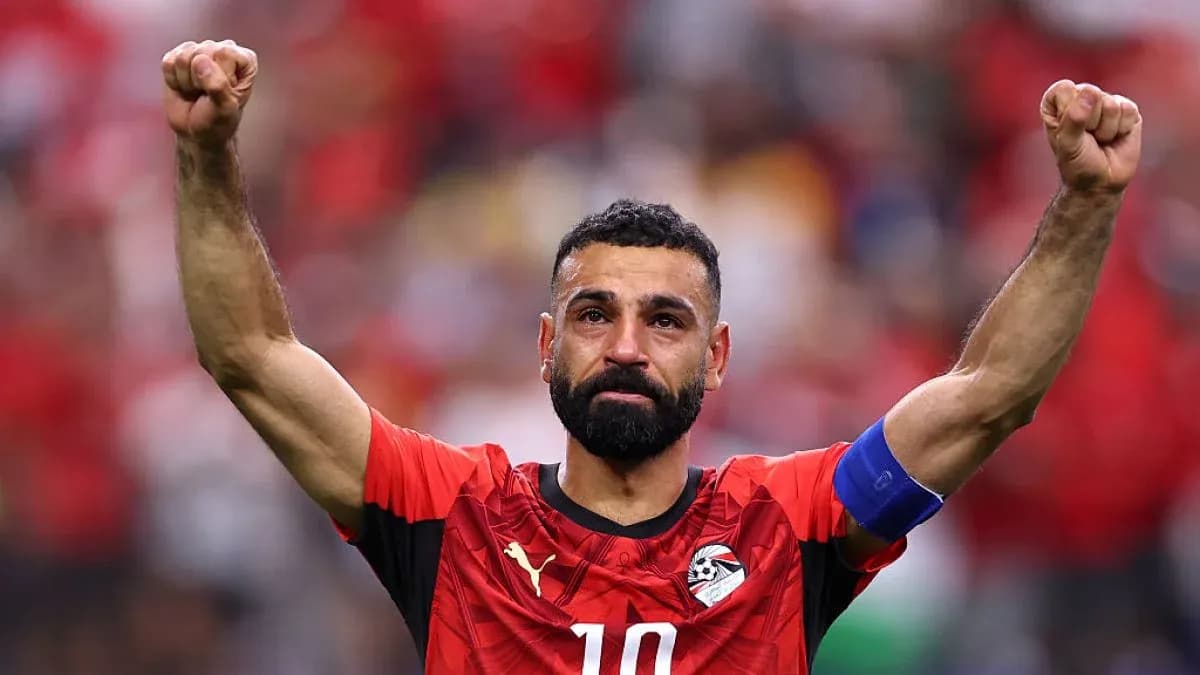
His winning penalty sealed a 4-2 shootout victory over Australia in Texas after a tense, bruising 1-1 draw across 120 minutes, sending the Pharaohs into the last 16 for the first time. Mohamed Salah, their wounded captain, sank to the turf in tears as Egyptian fans behind the goal erupted.
Next, barring a seismic shock, comes Lionel Messi and Argentina in Atlanta. For now, Egypt will savour the night it finally stepped through the door it had been banging on for generations.
Nerve, noise and a teenager’s finish
Australia coach Tony Popovic played his last card before the shootout, summoning Mathew Ryan for the penalties in a late roll of the dice. The stage belonged to Egypt’s supporters. The kicks were taken in front of a wall of red shirts and whistling chaos.
Harry Souttar blinked first. The towering defender strode up for Australia’s opening effort and lashed it high over the bar, immediately tilting the contest Egypt’s way.
Every taker that followed held firm. Five penalties, five conversions. Salah, subdued for much of the night and still nursing a hamstring strain, strolled up and rolled his kick in with icy calm, a reminder that class can simmer quietly before cutting through at the decisive moment.
Then came the crack in Australian resolve. Lucas Herrington, just 18, stepped up with his side trailing and crashed his effort against the bar. Abdelmaguid, equally young but unflinching, answered at the other end. One measured run-up, one precise finish, and decades of World Cup frustration dissolved in a single swing of his right foot.
Early blow, slow burn
The game itself never flowed so cleanly. It was tense, bitty, and at times brutal.
Australia almost landed the first punch. With less than five minutes gone, Cristian Volpato – the playmaker who chose the Socceroos over Italy on the eve of the tournament – rattled the top of the crossbar with a fierce strike that had Mostafa Shobeir beaten.
Egypt looked rattled early. Having only just claimed their first ever World Cup win in the group stage against New Zealand, Hossam Hassan’s side were nervy at the back, misplacing passes and allowing Australia to settle into their direct rhythm.
Then, almost out of nowhere, Egypt struck.
Nestory Irankunda switched off at the back post, losing track of Emam Ashour. Karim Hafez whipped in a teasing cross and Ashour, timing his run perfectly, buried a header for his second goal of the tournament after just 13 minutes. Against the run of play? Perhaps. Ruthless? Absolutely.
The goal forced Australia, a team that had scored only twice in the group stage, to chase. They struggled to turn territory into threat. Their first shot on target did not arrive until 10 minutes before half-time, Aziz Behich tamely testing Shobeir, whose father Ahmed kept goal for Egypt at the 1990 World Cup.
Salah contained, Egypt bruised
If the script had been written for Salah, Australia refused to read it.
The 34-year-old, still feeling the effects of that hamstring problem from Egypt’s last game, drifted on the margins of an attritional first half. Fouls, collisions and stoppages broke any rhythm he tried to build. Every touch came with a body on his back or a boot snapping at his heels.
The physical tone was set when Jordan Bos, one of the quickest players at this World Cup, was left crumpled after a full-blooded aerial challenge from Rabia. Bos could not continue and Kai Trewin replaced him at the interval, a significant blow to Australia’s attacking thrust down the flank.
Seconds after the restart, Egypt should have taken full control. Omar Marmoush, the Manchester City forward, slid in at the far post and somehow pushed his effort wide from close range. It felt like a moment that might linger.
It did.
Hany’s nightmare continues
Egypt’s coach had warned about Australia’s physicality at set pieces. The warning went unheeded.
Under intense pressure from a vicious in-swinging free-kick, Mohamed Hany stooped to clear and instead glanced the ball into his own net 10 minutes after the break. It was his second own goal of the tournament, a cruel personal twist in a campaign that is turning historic for his country.
From there, anxiety took over. Both sides knew what was at stake. Neither had ever won a knockout match at a men’s World Cup. Every misplaced pass drew a groan, every half-chance felt heavy.
Egypt gradually reasserted themselves. Salah, still not at full tilt, began to stitch moves together in flashes. Deep into added time at the end of 90 minutes, he helped launch a flowing attack that ended with Patrick Beach producing an outstanding save to deny Ramy and drag the tie into extra time.
Extra time, empty legs, and destiny from the spot
The final 30 minutes brought tired legs and frayed minds. Egypt looked the fresher side. Salah, on his weaker right foot, skied a decent opening early in extra time. The longer it went, the more inevitable penalties felt.
Australia, compact and stubborn, dug in. Egypt probed, but the cutting edge deserted them. The match drifted into the shootout that had seemed written from the hour mark.
There, the margins narrowed to a few yards of grass and a handful of kicks. Souttar’s miss. Herrington’s bar. Salah’s assurance. Abdelmaguid’s composure.
When the ball hit the net for the final time, the story changed for Egyptian football. No longer just group-stage participants. No longer a footnote. A last-16 team, with Messi’s Argentina likely waiting in Atlanta.
The Pharaohs have finally arrived at the sharp end of a World Cup. The question now is not whether they belong, but how far this first step into the knockout rounds can carry them.