.svg&w=384&q=75 "GoalGist logo")
Egypt's Historic World Cup Knockout Victory in Dallas
Egypt’s night of history in Dallas did not end on the penalty spot. It stretched far beyond Dallas Stadium, past the dressing rooms and the mixed zone, across continents and into the rubble and tents of Gaza.
On the pitch, though, the story began with nerve.
Egypt edged Australia 4-2 on penalties after a tense 1-1 draw over 120 minutes in their round of 32 tie on Friday, claiming the country’s first-ever World Cup knockout victory. A milestone decades in the making, sealed by a generation that refused to blink.
Egypt hold their nerve
The game itself was tight, cautious, and for long spells, suffocating.
Emam Ashour broke it open early. On 13 minutes, he ghosted into the box and met a cross with a firm header, steering Egypt into a 1-0 lead and lighting up a stadium thick with North African colour and noise.
Australia, unsettled but not broken, clawed their way back. Ten minutes into the second half, their pressure forced the mistake Egypt had been desperate to avoid. Mohamed Hany turned the ball into his own net, a cruel deflection that dragged the score back to 1-1 and reset the contest.
From there, the match became a battle of will more than skill. Egypt sat in, broke when they could, and Australia probed without finding a killer touch. Extra time came and went with tired legs, half-chances, and the growing sense that this would be decided from 12 yards.
The shootout belonged to Egypt.
Hossam Abdelmaguid stepped up for the decisive kick and rolled it in with the composure of a veteran, after Harry Souttar and Lucas Herrington had both failed from the spot for Australia. One clean strike, and history shifted. Egypt were through, 4-2 on penalties, into a last-16 clash with Argentina or Cape Verde.
A win carried on two flags
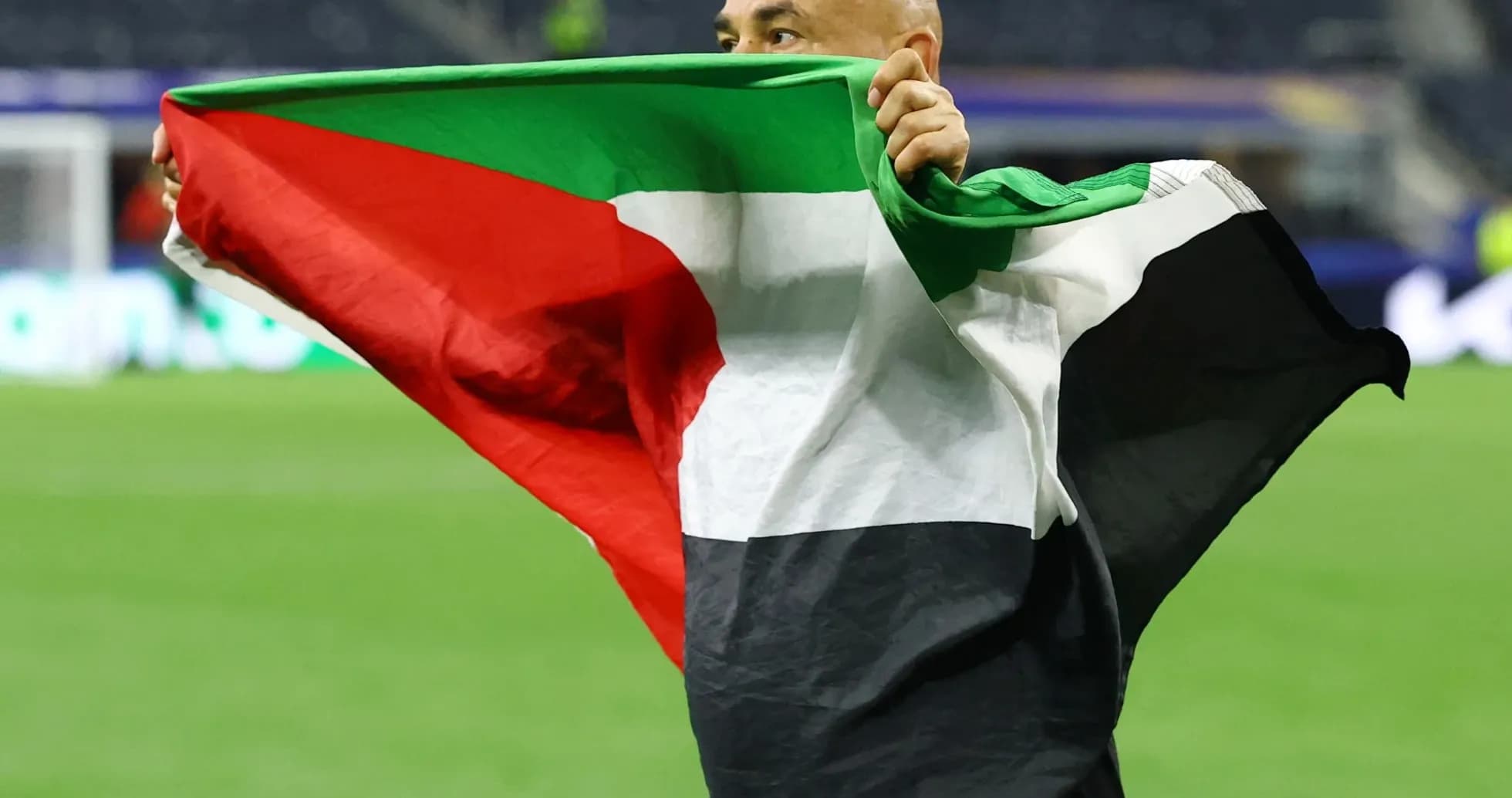
As the Egyptian players dropped to the turf in prostration, their coach, Hossam Hassan, reached for symbols that went beyond football.
He walked onto the pitch carrying both the Egyptian and Palestinian flags, a deliberate, visible statement on a night when his team had just written a new chapter in their sporting history.
Speaking afterwards, Hassan dedicated the victory not only to his own people, but across the border.
“May God grant them [the Palestinians] victory, may God have mercy on their martyrs,” he said. “I’m saying to them: I’m dedicating this victory to the Egyptian people and Palestinian people, those kind and honourable people.”
The images travelled fast. So did the emotion.
Gaza finds a moment of life
In Gaza, where daily life is framed by destruction, the match cut through the darkness for a few fleeting hours.
“For the first time, I’m following the World Cup with this much excitement,” Gaza-based Tamer Nahed wrote on X. He described thousands leaving their tents and shattered homes to watch Egypt’s game, drawn to a giant screen and a shared escape.
“I was so happy to see Egypt win a little while ago, but the most beautiful sight was here … thousands of people came out of their tents and from among their destroyed homes to watch the match.
“Faces lit up with smiles, cheers filled the air, and it felt as if everyone had decided to give themselves a moment of life despite everything surrounding them,” he wrote.
Social media footage from the besieged strip showed crowds huddled around a screening, bombed buildings looming in the background, makeshift tents lining the streets. Children with Egypt flags painted on their faces, men and women roaring at every penalty, a corner of a war zone briefly transformed into a fan zone.
The joy in Gaza was not just about a football result. It was about being seen, and about seeing a regional power lift their flag alongside Egypt’s on the world stage.
Tension off the pitch
Egypt’s night in Dallas had already been marked by confrontation before a ball was kicked.
Hours before the win, members of the national team were involved in an altercation with police officers at their team hotel. According to the Egypt national team, a Dallas police officer pushed their director, Ibrahim Hassan, and player Trezeguet as the pair tried to take a photo with a fan.
The incident went viral on social media, adding an edge to an already charged occasion. The Dallas Police Department later said the situation had been resolved at the scene, and no further action followed.
Once the whistle blew, the players channelled that tension into focus. By the time Abdelmaguid’s penalty hit the net, the earlier clash had been overshadowed by something far bigger.
A new stage, a heavier weight
Egypt now step into uncharted territory: a World Cup last-16 tie, against the might of Argentina or the rising force of Cape Verde.
The tactical questions will come quickly. How do they contain Argentina’s attacking lines, or unpick Cape Verde’s organisation and energy? Can this side, battle-tested in Dallas, manage the emotional and physical toll of such a historic breakthrough?
For Hassan and his players, though, the stakes have already expanded beyond tactics and formations. They are playing for a country that has waited a lifetime for this moment, and for neighbours who watched amid ruins and still found room to cheer.
The World Cup journey continues. So does the weight of the flags they now carry.