.svg&w=384&q=75 "GoalGist logo")
De Zerbi's Frustration After Tottenham's Defeat to Villa
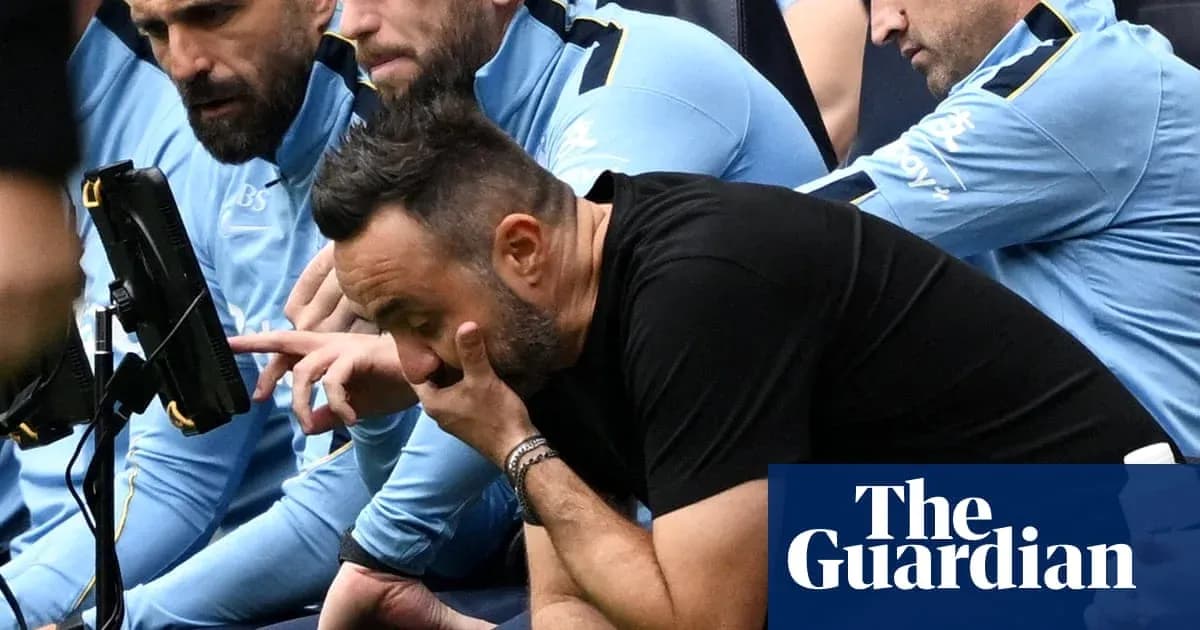
Roberto De Zerbi did not wait for the inquest. At full time of Tottenham’s 3-2 defeat by Aston Villa he went straight down the tunnel, the boos from the home support chasing him off the pitch and into a three-week international break with no Premier League win and only two points to show for the start of the season.
When he finally spoke, he did not hold back.
“I am very disappointed, sad and frustrated for the performance,” he said. “We can’t lose the game in this way, we can’t concede the second goal, we can’t lose balance just because we are losing.”
The anger ran deeper than the scoreline. De Zerbi questioned his players’ mentality, their physical condition and even the impact of his own substitutions, singling out how the introduction of Mohammed Kudus had unsettled the side’s structure.
He revealed he had tried to grab control of the game early in the second half. “I spoke with our four attackers in minute 51, I asked them to use their head, all second half I was telling people to be calm. But the second goal was incredible.”
That second goal, scored by Jackson in the 67th minute, cut particularly deep. The Villa forward raced on to a long kick from Zion Suzuki, whose distribution had troubled Spurs all afternoon. The move was simple, direct – and exactly what Tottenham had supposedly been primed for.
“We knew this season Aston Villa are playing 86% more long balls than last season and we spoke in many meetings about it,” De Zerbi said. His voice carried the exasperation of a manager who had seen a plan ignored in real time. “Now we have to explain another game like [the home defeat against] Newcastle where we played the first half well, got to 60 minutes OK, and then we lose.”
The pattern is starting to grate: bright starts, then a slow unravelling. Tottenham again reached the hour mark in decent shape, again lost their composure, and again walked off empty-handed.
De Zerbi did not deliver a rousing speech in the dressing room. In fact, he chose silence.
“I didn’t speak with the players today because I didn’t want to say anything,” he admitted. “The players who go with the national team have to play and work and the others; for sure we have to work more because I didn’t like the finish to this game. We can’t say everything is bad, but it is not enough.”
The message is clear enough: standards are not being met, and patience is thinning.
Emery hails Villa’s resilience and “competitive way”
On the opposite bench, Unai Emery left north London with something far more valuable than an away win. For him, this first Premier League victory of the season felt like a timely reminder of what has driven Aston Villa’s rise under his watch.
“The players did well because they believed,” he said, framing the result as a return to the identity he has tried to embed.
Villa leaned into their steel. They defended deep when they had to, absorbed pressure and trusted their structure, with Suzuki and his back line central to the effort. The long-ball approach was not an accident but a weapon.
“We needed to build a team that could play in this way, could defend with resilience and playing with passion when our opponents were attacking,” Emery explained. “We needed defenders, we needed the keeper, we needed everyone committed in that direction. We needed to feel strong first, then we could try to play with our structure and our ability. This is the competitive way.”
While De Zerbi wrestles with balance, belief and a squad he feels is undercooked, Emery walks into the break with a blueprint reinforced and a group that has just been reminded what it looks like to win his way.