.svg&w=384&q=75 "GoalGist logo")
Cherki's Struggles Amid France's Success After Sweden Win
The scoreline said harmony. The cameras suggested something else.
France had just swept aside Graham Potter’s Sweden 3-0, a performance that underlined why so many see them as tournament favourites. Players embraced, staff congratulated one another, the travelling fans roared their approval.
And then there was Rayan Cherki. Alone.
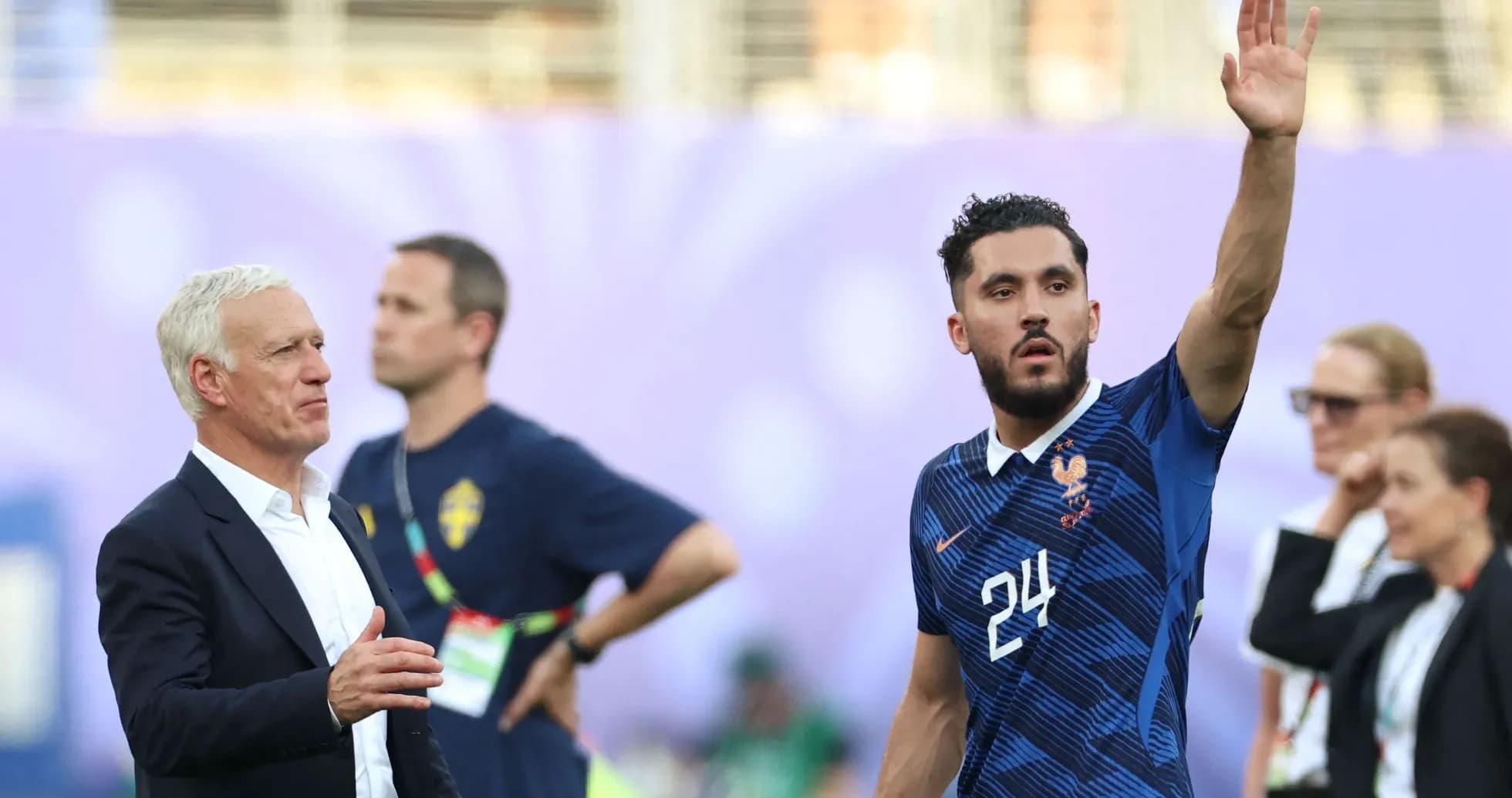
As his team-mates celebrated in small clusters, Cherki stood in the centre of the pitch, applauding the supporters on his own. It was a striking image: a gifted playmaker on the fringes of a side that barely seems to need him.
Didier Deschamps walked towards him, arm out, ready with a word and a touch of acknowledgment. The former Lyon midfielder appeared to brush the manager’s hand away. When Deschamps leaned in again, Cherki bent down to tie his boot, shifting his body away from the 57-year-old.
The exchange lasted only seconds. Online, it lasted all night.
A talent stuck on the margins
The tension has been building for a while. Cherki, now at Manchester City, arrived in North America with the aura of a game-changer, a luxury weapon for a coach who already has plenty. Four games into France’s campaign, he has yet to start.
His tournament so far: four substitute appearances, 51 minutes in total. Flashes, not a platform.
Against Sweden, Deschamps waited until the closing stages to call on him again. Cherki came on with Crystal Palace forward Jean-Philippe Mateta, with only five minutes of normal time left. The game was already won, the tempo already dropping. It was the kind of cameo that does little for rhythm and even less for a player’s sense of importance.
For a creative midfielder of his profile and ambition, those scraps are beginning to grate.
Too much talent, not enough minutes
The problem for Cherki is brutally simple: Deschamps is spoilt for choice.
Michael Olise has taken ownership of the No 10 role, knitting attacks together with the kind of authority that makes him very hard to dislodge. Out wide and between the lines, Bradley Barcola and Desire Doue are pushing hard, offering pace, direct running and end product.
In that company, someone was always going to be squeezed out. For now, it is Cherki.
This is the paradox of a squad as deep as France’s. The very abundance that makes them favourites also breeds frustration among those trapped on the edge of the rotation. Every training session feels like an audition. Every late substitution feels like a verdict.
Deschamps plays down the noise
While the Cherki clip ricocheted across social media, Deschamps stepped into his post-match press conference with a different message. He pointed not to fractures, but to the work ethic that underpinned the 3-0 win.
“There’s a good connection,” he said of his attacking unit. “When we need to work hard with the ball, everyone is involved, including the forwards. That’s a very good thing. Obviously, it’s something that pleases me, and I’m proud of it. We need to keep it up.”
That line – “we need to keep it up” – cuts to the heart of his job now. Keeping the football flowing is one thing. Keeping 23 elite footballers content is another.
Deschamps did not pretend that all is perfect behind the scenes. He has been around too long for that.
“The team spirit doesn’t win matches, but it can lose them,” he warned. “Players might be disappointed because they’re not playing enough or at all; there might be frustrations, but the collective strength is paramount.”
It was a pointed reminder. Individual moods cannot be allowed to puncture a campaign that, on the pitch at least, is gathering serious momentum.
Paraguay next – and a delicate balance
France now head to Philadelphia for a round of 16 meeting with Paraguay, a tie they will be heavily expected to control. The outside narrative will focus on tactics, selection, and whether Deschamps tweaks his front line again.
Inside the camp, the challenge is subtler.
Cherki’s situation is the most visible test of Deschamps’ man-management, but he will not be the only player feeling sidelined as the stakes rise and the rotation tightens. Knockout football rarely offers many chances to those on the periphery.
For a coach who has built his reign on discipline, hierarchy and collective buy-in, that brief, awkward moment on the pitch with Cherki was a warning shot. The football is purring. The squad harmony cannot be allowed to fray.
Paraguay await. So does the question that will follow France all the way through this tournament: can a group this gifted, and this competitive, stay united when some of its brightest talents are left watching from the shadows?

