.svg&w=384&q=75 "GoalGist logo")
Chelsea's Season Ends in Disappointment as McFarlane Reflects
The season ended not with a charge, but with a stumble.
A 2-1 defeat away at Sunderland on Sunday sealed a 10th-place finish in the Premier League and confirmed what had long felt inevitable: no European football next season for the Blues. For a club built on continental nights and high-stakes travel, the absence will sting.
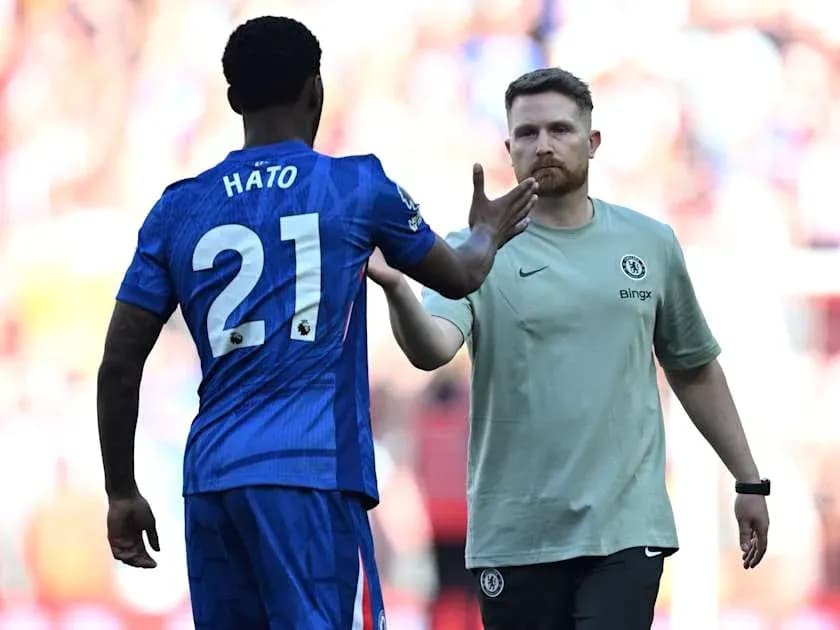
For Calum McFarlane, it was a brutal way to sign off his stint as interim head coach. He had spoken openly about wanting to repay the supporters, to give them something tangible for their loyalty during a fractured campaign. Instead, he walked off at full-time knowing they had fallen short.
“We’re as disappointed as them. We're gutted that we couldn't do it for them, they've been brilliant this year,” he admitted, the frustration clear. The backing from the stands, especially in the tense final weeks when every point felt like a lifeline, had not gone unnoticed. “They've really supported us, especially in the last couple of weeks, when we've needed to win games. We felt their presence and unfortunately we've let them down. We weren't able to put the performance in that they deserve.”
That was the theme of the season in miniature. The noise was there. The intention was there. The consistency was not.
Yet McFarlane’s brief reign has not been without its markers of promise. His side went to Anfield and came away with a 1-1 draw, standing toe-to-toe with Liverpool in one of the most demanding arenas in Europe. At Wembley, they pushed Manchester City all the way in a narrow FA Cup final defeat, showing resilience and structure on the biggest domestic stage.
Those games, isolated but telling, are what fuel his belief that this squad is closer to the level it expects of itself than the league table suggests.
“I think that this group has shown when they're at their best – when we're in the right place – we're a match for anyone across Europe,” McFarlane said. “They've shown that this season, but that hasn't been seen enough throughout the year. That definitely hasn't been seen enough in the second part of the season.”
The admission is blunt. The quality is not in question; the regularity of it is. That is where the next chapter begins.
On 1 July, Alonso arrives as Chelsea manager, charged with turning flashes into a framework and sporadic big-game performances into a weekly standard. McFarlane, who has worked closely with the squad during a hectic 31-day spell, sees enough inside the building to believe a reset is possible.
“We've got some real quality players. We’ve got a new manager coming in, who's got a brilliant reputation in the game, and you still have seen flashes in the last month of what this group can do,” he said, pointing again to Liverpool away and Manchester City in the FA Cup as reference points. “They can compete with anyone. It's just doing that on a more consistent basis.”
Behind the results and the table, there has been a quieter story of a dressing room that, in McFarlane’s view, stayed engaged through the turbulence. “I've enjoyed working with this group, with the players, and they've given our staff a lot of respect over the last 31 days.”
Now his role shifts. The spotlight moves to Alonso, a coach with a rising reputation and the playing pedigree to command instant attention.
“So I'm looking forward to working with the players and Xabi is a top coach with a great reputation. He was a top player, an elite player at the top level, so I’m really looking forward to what he brings to this club.”
The season ends with regret and a blank European calendar. The next one begins with a new manager, a wounded squad, and a simple, unforgiving question: can Chelsea turn those isolated flashes against Liverpool and Manchester City into their new normal?