.svg&w=384&q=75 "GoalGist logo")
Celtic Support Divided Over Robbie Keane Appointment
The debate over Celtic’s next manager has moved well beyond football tactics and touchline demeanour. It has become a question of identity.
Dozens of Celtic supporters’ clubs have publicly come out against the potential appointment of Robbie Keane, citing his decision to manage Maccabi Tel Aviv during Israel’s war in Gaza as incompatible with what they see as the club’s historic values.
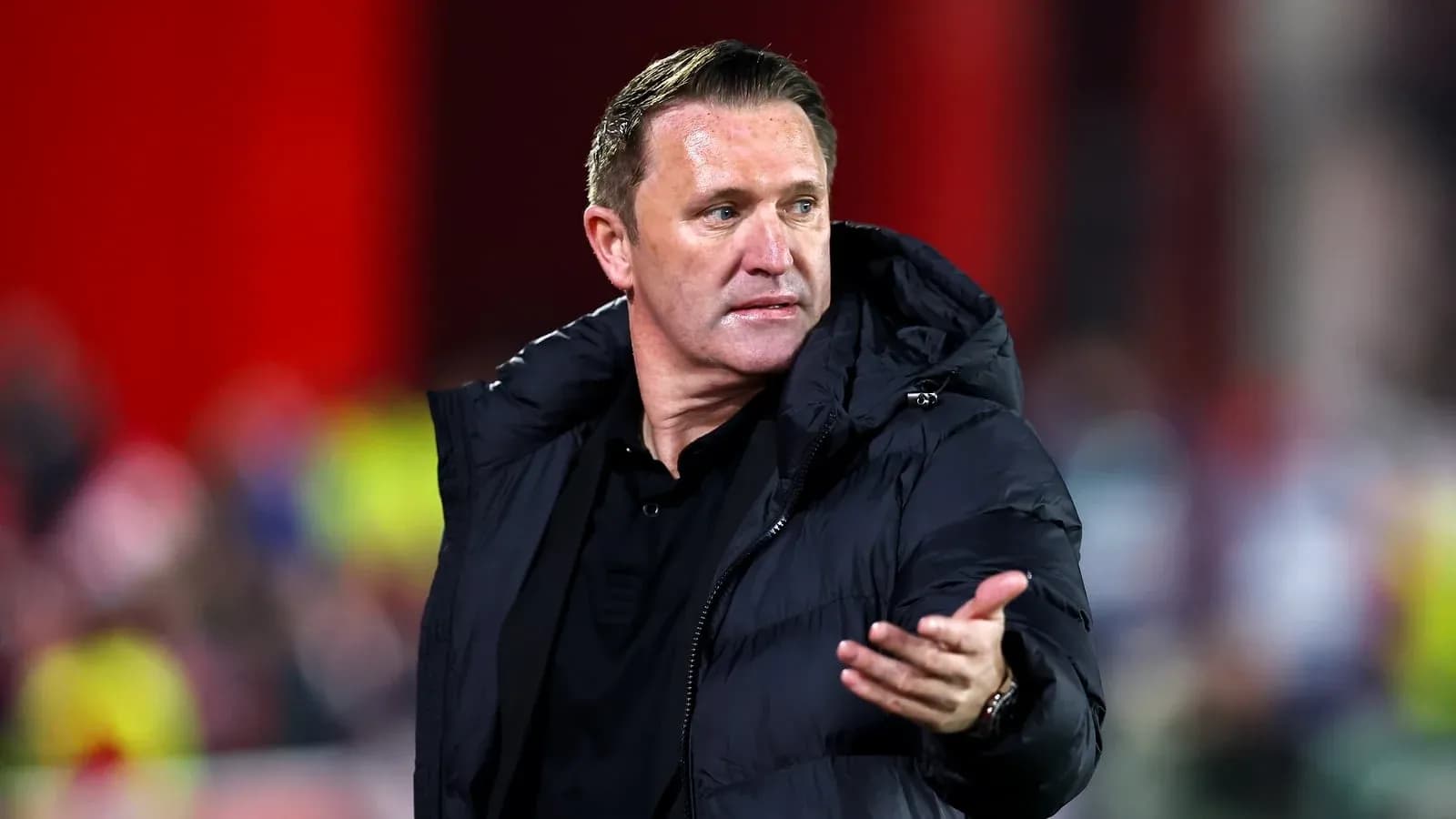
Keane, the Republic of Ireland’s record goalscorer and a hugely popular loan signing at Celtic Park in 2010, is understood to be among the leading contenders for the job and is reported to be in talks with principal shareholder Dermot Desmond. On paper, he brings pedigree: league titles in Israel and Hungary, a global profile, and a natural link to a support that once sang his name.
But this is not a debate about nostalgia or CVs. Not anymore.
A support that wants to be heard
The first signs of organised resistance appeared outside Celtic Park in recent days. Graffiti and banners rejected the idea of Keane in the dugout, some of them attributed to a group styling itself Celtic Fans for the Liberation of Palestine.
That online statement has now been amplified on a far bigger scale.
The North Curve Celtic account on X has published a list of 67 groups that it says have endorsed the protest. It is a roll call that cuts across generations and geographies within the support: the Green Brigade and Bhoys Celtic ultras, long-established supporters’ clubs such as Glasgow University Celtic Supporters Club and Craigneuk Tommy Gemmell CSC, and several prominent fan media outlets including the Cynic and eTims.
Their message is blunt. The statement insists Celtic supporters have “a long and proud history of solidarity with the Palestinian people” and argues that Keane’s decision to manage Maccabi Tel Aviv “during the genocide in Gaza is impossible to ignore”.
The language is charged and deliberate. It describes his choice to work in Israel “while, less than 40 miles away, the same country was using indiscriminate weapons of mass murder against defenceless people” as “unconscionable”.
The signatories root that stance in the club’s origins, invoking “a community shaped by the legacy of genocide, displacement and famine” and insisting Celtic “cannot forget where we came from, nor turn our backs on those facing genocide today”.
For them, this is not a marginal issue. It is central.
Unity versus appointment
There is also a hard football edge to the argument. The statement warns that at a time when Celtic “requires unity and collective purpose”, Keane’s appointment would be “deeply divisive among the support” and labels him “a predictable and uninspiring choice at a moment when greater ambition is needed”.
The pressure on the Celtic board is explicit. “We urge the Celtic board to listen to supporters’ concerns and reconsider this appointment,” the statement concludes.
This is not a small splinter group shouting from the fringes. The breadth of the listed backers, from ultras to university CSCs, underlines the scale of resistance the hierarchy would be choosing to confront if they press ahead with Keane.
Keane’s Maccabi spell under the spotlight
Keane’s time at Maccabi Tel Aviv is now being pored over in a way few could have imagined when he accepted the job.
He took charge in June 2023, months before the Hamas-led attacks on 7 October and the subsequent Israeli bombardment of Gaza. The conflict that followed has killed more than 70,000 people, according to figures cited in the statement, and has drawn global condemnation. Last October, an independent UN commission concluded that Israel had committed genocide against Palestinians in Gaza.
Keane stayed in post throughout the campaign, guiding Maccabi to a league and cup double before resigning in the summer of 2024. From a purely sporting perspective, it was a resounding success.
His reasoning for remaining in Israel once the war began has since been laid out. The 45-year-old said he felt a responsibility to the backroom staff who had followed him to Tel Aviv.
“I have a duty of care,” he explained, highlighting the example of his analyst, who had left Middlesbrough after 12 years to join him. Keane said he could not simply “walk away” and leave his staff and their families in limbo, and that they collectively decided to see out the season and then walk away from what he described as a “big contract” that could have run for another year or two.
For some, that sense of loyalty to his staff speaks well of his character. For many of the Celtic groups now mobilising, it does not alter the central fact that he chose to stay in Israel during a war they describe as genocide.
A decision that will define more than a season
Celtic’s next move will not just set the direction of the team. It will test the relationship between boardroom and stands, between a global brand and a support that fiercely guards the club’s political and cultural identity.
Robbie Keane’s name still carries warmth for plenty of Celtic fans who remember his goals in green and white. The question now is whether that past affection can survive the present storm – and whether the board is prepared to find out.