.svg&w=384&q=75 "GoalGist logo")
Cape Verde Advances to World Cup Knockouts After Tense Draw with Saudi Arabia
Cape Verde arrived at this World Cup as a postcard nation, a speck off the west coast of Africa, expected to make up the numbers. They leave the group stage as one of its stories. A 0-0 draw with Saudi Arabia in Houston was enough to complete a remarkable passage to the knockout rounds, secured not with fireworks but with nerve, structure and a refusal to blink.
Their reward: a last-16 meeting with the runners-up in Group J, either Algeria or Austria. For a country playing in its first-ever World Cup, history is no longer beckoning. It has already started.
Bubista rolls the dice, keeps his talisman
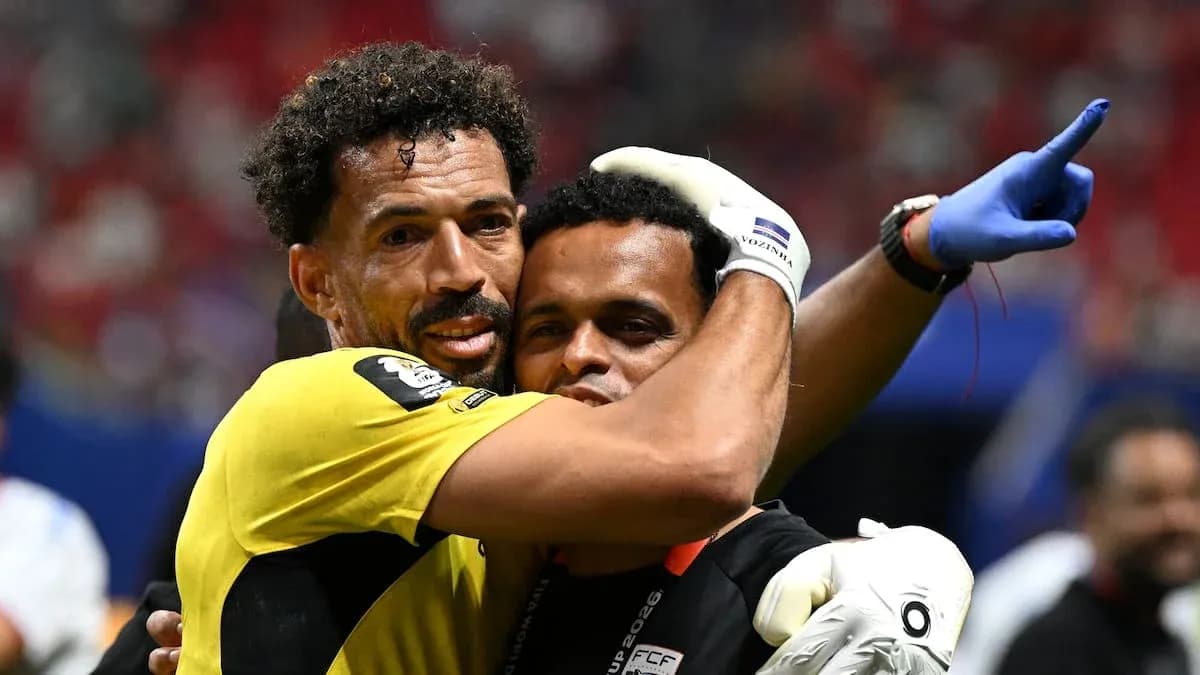
With everything on the line, coach Bubista made bold calls. He changed half his starting XI, some changes forced, others tactical, but there was never any doubt about one position. At 40, Vozinha stayed in goal, the veteran who had already turned this campaign into something close to a personal epic.
He had dragged Cape Verde through that opening night against European champions Spain, repelling wave after wave to preserve a 1-1 draw that felt like a minor miracle. Then came the breathless 2-2 with two-time winners Uruguay, a result that turned an improbable dream into a very real equation: avoid defeat here, hope results in Guadalajara went their way, and the knockout stage would open up.
Saudi Arabia, though, had their own calculations. They had drawn 1-1 with Uruguay, then been ripped apart 4-0 by Spain. Beaten but not yet beaten down, they still had a route through if they could find a way past Cape Verde.
Edge in Houston, drama in Guadalajara
The early exchanges in Houston belonged, just about, to Bubista’s side. Cape Verde used the ball with more care, pressed with more conviction and carried the greater threat, even if clear chances were rare in a tight, anxious first half.
Saudi Arabia’s evening worsened on 33 minutes. Hassan al-Tambakti, their experienced defender and a steadying presence at the back, went down and stayed down. The stretcher came on. His departure stripped Saudi of both leadership and organisation, and Cape Verde sensed it.
News then filtered through from Mexico. In Guadalajara, Spain struck first against Uruguay. The reaction in the stands at NRG Stadium told its own story: Cape Verdean fans roared, flags whipped in the air. For a moment, the group table seemed to tilt in their favour.
On the pitch, Willy Semedo drilled a shot not far wide of the Saudi post, a reminder that Cape Verde were not playing for the draw. Yet neither side truly cut loose before the interval. The tension choked the game, and the whistle for half-time felt like a release.
At that stage, with Spain ahead and Cape Verde level, Bubista’s men were going through at Uruguay’s expense.
Chances missed, nerves tested
The second half opened with the kind of opportunity that can haunt a team for years. Just three minutes after the restart, Jamiro Monteiro found himself close in, the ball sitting up for him in the box. It was the moment. His finish lacked conviction, and the chance slipped away.
The pressure did not. Kevin Pina stepped up from distance soon after, his strike skimming just wide, another reminder that Cape Verde were not content to simply sit on the maths.
The clock moved, the stakes climbed. The final quarter of an hour arrived and with it the expectation that Saudi Arabia, chasing their World Cup survival, would throw everything forward. Instead, they flickered. Possession without penetration, territory without ideas. For all that was at stake, they never truly found a cutting edge.
Cape Verde, by contrast, looked the side more likely to land the decisive punch.
On 75 minutes, Saudi goalkeeper Mohammed al-Owais produced the kind of save that keeps tournaments alive, plunging to deny Laros Duarte with a vital stop that kept the game goalless and his team’s hopes just about intact.
A famous point, a new horizon
As the minutes bled away, Cape Verde managed the chaos with impressive calm. They slowed the tempo when they needed to, broke with intent when space appeared and trusted the defensive discipline that had carried them this far. Vozinha, ever-present, marshalled, shouted, organised. He did not need the heroics of earlier games; his presence alone seemed to steady those in front of him.
The final whistle in Houston confirmed what had been building across three extraordinary group games. A point was enough. A point earned, not stolen. A point that carried a nation of islands into the knockout rounds of the World Cup at the first attempt.
Spain’s earlier struggles against them, Uruguay’s failure to shake them off, and now Saudi Arabia’s inability to break them down all tell the same story: Cape Verde are not here for the romance alone. They are here to compete.
Next comes Algeria or Austria, a different test, a different kind of pressure. The underdogs will walk into that tie with nothing to fear and everything to chase.
For a team that started this journey clinging on against Spain, the question now is no longer whether they belong. It is how far this adventure can go.