.svg&w=384&q=75 "GoalGist logo")
Canada's Historic 6-0 Victory Over Qatar
Canada arrived hoping for a routine win. It walked away with a statement.
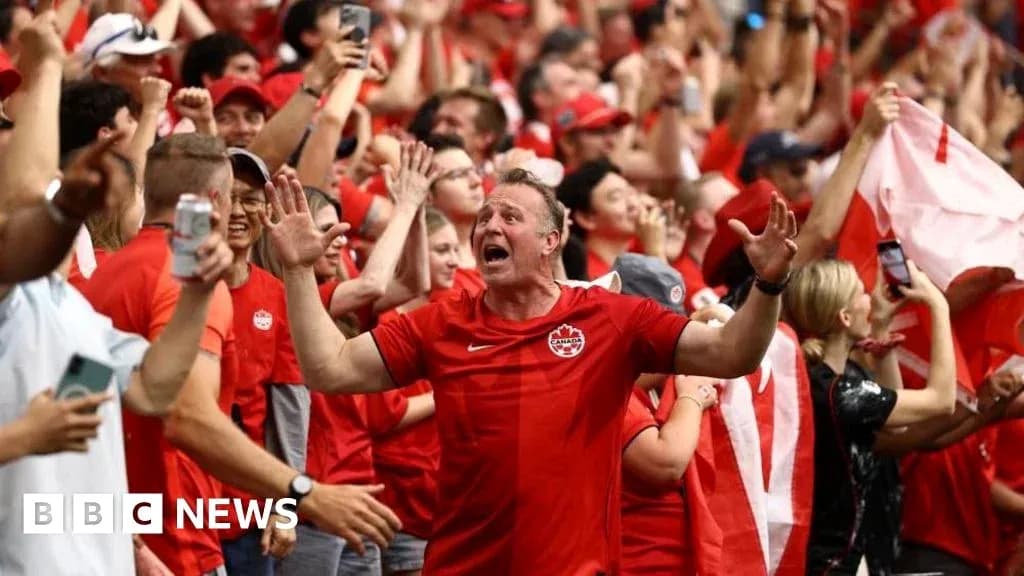
On a cool Vancouver night, in front of 52,000 fans dressed almost entirely in red and white, Canada ripped Qatar apart 6-0 to claim the country’s first-ever men’s World Cup victory – a result that felt less like a group-stage opener and more like a national rebranding.
This is what a “soccer nation” looks like, they said. And for once, it didn’t sound like wishful thinking.
A march, a roar, a rout
The tone was set long before kick-off. Thousands of supporters marched the “last mile” to the stadium through a haze of red smoke, flags snapping in the air, voices bouncing off the downtown towers. Others packed watch parties from Granville Street in Vancouver to neighbourhood bars in Toronto, where Canadian football lifers gathered with a mix of hope and scar tissue.
One of them was Dave Di Cola, a longtime believer in a team that has so often given its fans more punchlines than punch. He went into the night with what he called “reserved optimism” – the kind of guarded stance you develop when you’ve watched Canada stumble for decades.
The game shredded that caution in less than a half.
Canada flew out with intent, swarming Qatar, forcing errors, and striking three times before the interval. The crowd’s early nervous buzz turned into something else entirely: the sound of a country realising this might not be a one-off good night, but the arrival of a serious team.
By the final whistle, it was a demolition. Six goals on the board. Qatar reduced to nine men after two red cards. A scoreline that will sit in Canadian sporting folklore.
A hockey country leans into football
For Di Cola and thousands like him, this was more than a lopsided win. It was vindication.
“Canada soccer has always been kind of a joke. It’s always secondary,” he admitted. On Thursday, it didn’t feel secondary to anything.
The scenes told the story. One image raced around social media: a fan in a Connor McDavid ice hockey jersey, the “Mc” taped over and replaced with a hand-drawn “J” to honour Jonathan David, the hat-trick hero who scored three of the six. In a country where the rink has always ruled, the symbolism was impossible to miss.
This wasn’t hockey making room for football. It was hockey lending its crown jewels to the new show in town.
In Vancouver, TSN reporter Matthew Scianitti walked through the jubilant crowds and tried to take it in. “As a Canadian, to sit there and watch it all, I will live in that forever,” he said, capturing the sense that this night had jumped straight into the nation’s shared memory.
Joy, and a jolt of heartbreak
Yet even on a historic evening, the celebrations carried a shadow.
Midfielder Ismaël Koné, the Ottawa-born heartbeat of Jesse Marsch’s midfield, suffered a leg break that ended his tournament. The moment stopped everything. The stadium fell quiet. Teammates rushed to him, forming a protective ring as medics worked.
Marsch has called Koné “a big part of the heart of our team,” and you could see why in the reaction. This wasn’t just a tactical blow. It was emotional.
The response from the players was instant and defiant. Nathan Saliba, summoned from the bench to replace Koné, scored Canada’s fourth goal and held up his teammate’s jersey in tribute, a raw, simple gesture that cut through the noise of the rout.
On Friday morning, after surgery, Koné sent his own message back to the squad. “What you guys did yesterday will stay with me forever,” he wrote on Instagram – a line that underlined how quickly this group has forged its own identity.
For Di Cola, the injury changed the tone of the night. “If that didn’t happen, I would have been running up and down the avenue yesterday,” he said. The joy was real, but it came with a wince.
A team embraced on the biggest stage
The magnitude of the moment wasn’t lost on the country’s political leader, either. In the post-match locker room, Prime Minister Mark Carney addressed the squad, praising the way they responded when their teammate went down.
He spoke of “a level of character that some people never achieve,” and he was right to focus there. It wasn’t just the six goals or the swagger in possession that will linger, but the way Canada absorbed a gut punch and refused to let the night turn sour.
“You showed it when the entire country and a good part of the world is watching,” Carney told them. For once, Canada wasn’t just filling out the fixture list. It was commanding the stage.
The performance now takes its place alongside some of the country’s most cherished sporting images: Sidney Crosby’s golden goal at the 2010 Vancouver Olympics, the Toronto Raptors toppling the Golden State Warriors in 2019, the women’s football team winning gold in Tokyo in 2020.
Those moments delivered trophies and medals. Thursday night did not. Di Cola is the first to point out that what happened against Qatar is “much smaller in comparison,” and that this team still has “a long way to go.”
He’s right. One emphatic win does not rewrite a footballing history overnight.
But it can start a new chapter.
Switzerland next, and a new standard set
What Canada did in Vancouver was clear: it erased the old punchlines. Les Rouges no longer look like grateful guests at the World Cup party. They look like they belong, like a side that expects to dictate games, not just survive them.
The crowd, the scoreline, the surge of pride across a country that has always measured itself on ice rather than grass – all of it feeds into a growing sense of possibility.
The test now sharpens. Switzerland awaits, a step up in pedigree and a different kind of challenge altogether. The emotion of a first win will fade. The tactical questions will come. Can Canada reproduce that intensity without the adrenaline of history on the line? Can they adjust without Koné, their midfield fulcrum?
Those answers will define how far this run goes.
But one thing is already settled. On a night when red smoke filled Vancouver and a hockey nation rewrote a jersey for a footballer, Canada stopped asking if it could ever be a soccer country.
It started playing like one.