.svg&w=384&q=75 "GoalGist logo")
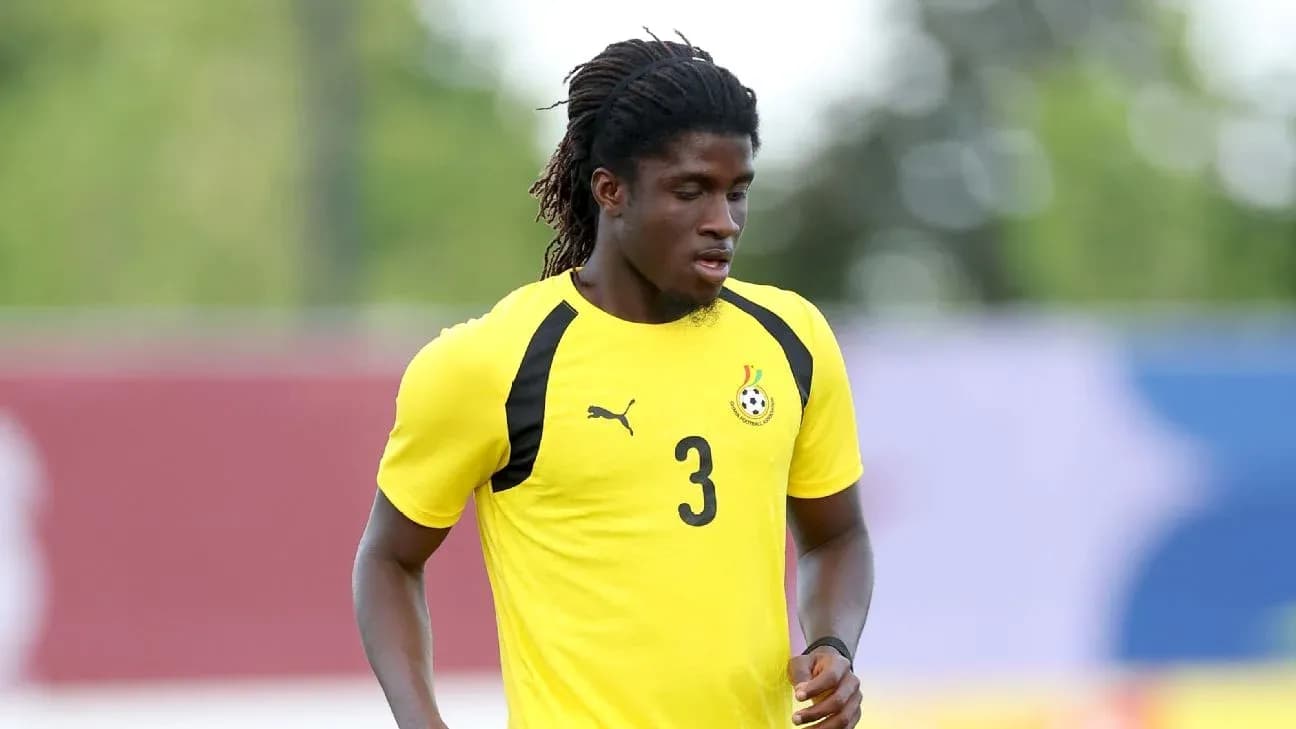
Caleb Yirenkyi's Stoppage-Time Goal Secures Ghana's Victory Against Panama
Caleb Yirenkyi had been running on fumes by the time the ball dropped to him in the Panama box. Ninety minutes gone, nerves frayed, a World Cup opener slipping towards frustration. Then one final move, one final sprint, one finish that Ghana might look back on as the moment their tournament truly began.
The teenager’s stoppage-time strike sealed a 1-0 win for the Black Stars on June 17, snatching victory from a game that had threatened to drift away from them. Panama had pressed, harried and asked questions for long stretches. Ghana, expected to glide through, instead had to grind.
And then the pattern they had rehearsed over and over finally clicked.
Deep into added time, Ghana won the ball back and broke with purpose. Antoine Semenyo and Brandon Thomas-Asante combined to drag Panama’s back line out of shape, the move flowing wide just as they had drawn it up on the training pitches in the weeks before the tournament. Yirenkyi, timing his run from midfield, arrived in the area right on cue and buried the chance.
“That’s what we have been practicing since we started our preparation,” he told reporters afterwards, explaining the sequence with the calm of someone describing a drill, not a World Cup winner. Get it wide. Deliver into the box. Midfield runners attack the space. Finish.
“When we won the ball back, I tried to just play forward and run for it and then hope to see what comes and then I got the ball in the box and I finished it.”
The goal was not a flash of chaos. It was a product of repetition.
At the heart of that repetition stands Carlos Queiroz. The new Ghana coach has wasted no time imprinting his methods on a squad split between battle-worn veterans and ambitious youngsters desperate to seize their chance on the biggest stage.
“That thing is the lessons. He gives us great lessons. We do a lot of training and with a lot of intensity,” Yirenkyi said, crediting the Portuguese coach’s demanding sessions for the team’s resilience in those tense final minutes.
For Yirenkyi, this is all happening fast. His winner against Panama was his second goal in as many games, backing up his strike against Wales in a pre-World Cup friendly earlier in the month. Twelve months ago, he was only just stepping into the senior Ghana setup, making his debut in a 1-2 defeat to Nigeria at the Unity Cup. Now he is deciding World Cup matches.
The FC Nordsjælland midfielder has already forced his way into prominence at club level, piecing together a breakthrough season in Denmark with 30 league appearances, two goals and six assists. Those numbers have not gone unnoticed. Nor has the maturity with which he now patrols the Ghana midfield.
In a squad undergoing a quiet revolution, his emergence feels timely. Some of the old guard are edging towards the end of their international journeys, still vital in the dressing room but increasingly sharing the stage with a new generation.
“We have great support around us,” Yirenkyi said. “The older players help us very much as young players, and we just have to take the information in and then do our best, run for each other and then we hope for the best.”
Against Panama, that blend of experience and youth was tested. Ghana invited pressure, misplaced passes, and at times looked like they were wrestling with their own nerves as much as the opposition. A game many expected them to control turned into a scrap.
They survived it because the collective held.
“We are just doing what we can do best each and every day, learn from each other, then from the coach, then from the people around us, and then we take it day by day,” Yirenkyi said, leaning heavily on the idea of a group pulling in the same direction.
“It’s everyone, helping each other out, and then, we all hope for the best, not just on myself, but for everyone, I think.
“I’m very positive, not just me. My teammates, also, we are all just, we have one goal to do our best in this tournament, and I think that’s what we’ve shown.”
A late winner, a rising teenager, a team still learning its own limits. Ghana walked off with three points and a sense that their work on the training ground travels. The question now is how far it can take them.

