.svg&w=384&q=75 "GoalGist logo")
Bournemouth's Premier League Journey: Marco Rose's Tough Start
Marco Rose does not get a gentle introduction to life in the Premier League.
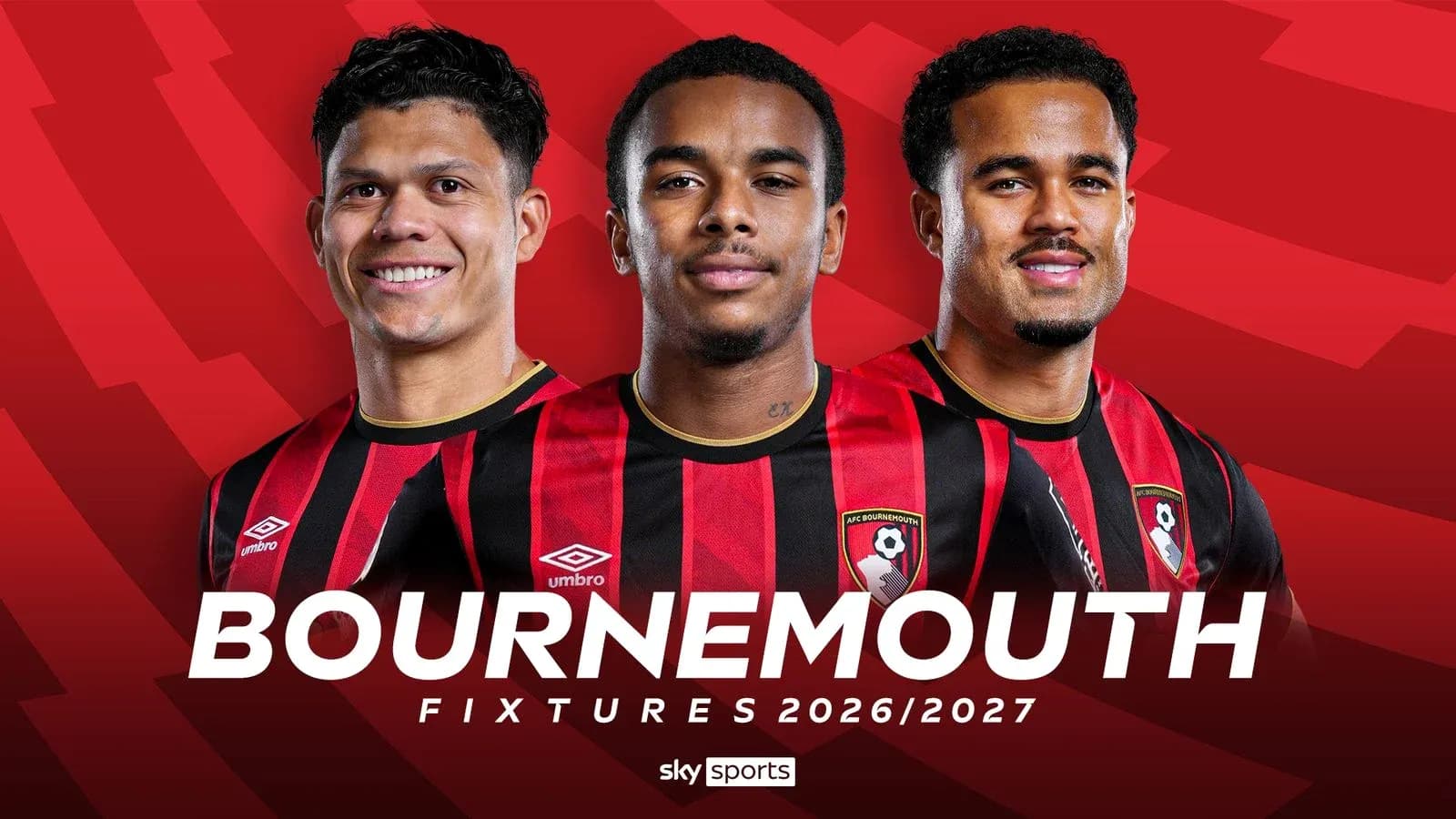
Bournemouth, fresh from a stunning sixth-place finish and Europa League qualification, open their 2026/27 campaign away to champions Man City on Sunday August 23, live on Sky Sports. A new manager, a hostile Etihad, and the weight of expectation after last season’s surge – the Rose era starts under floodlights and scrutiny.
From there, the rhythm of the season barely lets up.
Rose’s first steps: from City to St James’ Park
Everton visit the Vitality Stadium on August 29 for Rose’s first home league game, a chance for the Cherries to show how they have evolved without losing the aggressive, front-foot identity that carried them into Europe.
Then comes a trip to Newcastle on September 5, another yardstick of where Bournemouth now sit in the Premier League’s emerging middle power bracket. Three games, three very different tests. The table may still be taking shape, but the tone of the season could be set early.
Brentford arrive on the south coast on September 12, a deceptively important fixture squeezed between domestic and European demands. The Cherries will need depth, clarity and calm. Because what follows is history.
First taste of Europe – and an early reunion
On September 16/17, Bournemouth step into European competition for the first time as their Europa League campaign begins. For a club that has climbed from the brink of oblivion to the continental stage in little more than a decade, those dates will be ringed in red.
The schedule around it offers no sentiment. Just days after their European bow, Liverpool come to the Vitality on September 19. Andoni Iraola, the coach who led Bournemouth to sixth before departing, returns as the opposition manager. The narrative writes itself: old ideas versus new, the man who built the platform against the one now tasked with elevating it.
The league fixtures through autumn are steady rather than spectacular, but there is no real respite. A trip to Chelsea on October 10, Sunderland at home a week later, then Manchester United away on October 24. Leeds visit on October 31 to close a month that will quickly expose any early-season fragility.
November sends Bournemouth to Ipswich and Fulham, with Nottingham Forest sandwiched in between at home. These are the kind of games that decide whether a European side stays in the hunt for the top six or slides back into the pack.
Festive chaos: Arsenal, Spurs and a packed December
December is unforgiving. Six league fixtures, the winter grind, and European commitments in the background.
Brighton at home opens the month on December 2, followed by Hull at the Vitality on December 5. Then comes the first heavyweight of the festive run: Arsenal away on December 12, a trip that will test both legs and nerve.
Coventry at home on December 19 offers a different type of challenge, before Boxing Day throws Bournemouth into a clash with Tottenham in north London. Four days later, on December 30, they head to Crystal Palace under the lights at Selhurst Park. It is the sort of schedule that can chew up thin squads. Rose will know that by the turn of the year, his rotation policy and squad management will be under the microscope.
The chaos spills into early January. Aston Villa visit the south coast on Saturday January 2, then comes a midweek journey back to Brighton on January 6. Ipswich at home, Forest away and Fulham at home round out the month.
All of this plays out against a wider backdrop: the Europa League league phase runs from mid-September to January 28, with the knockout phase starting on February 18. The FA Cup third round drops on January 9. Every competition adds another layer of decision-making.
Spring pressure and heavyweight home tests
By February, the league calendar tightens around pivotal clashes. Bournemouth go to Leeds on February 6 and Aston Villa on February 10, then face Crystal Palace at home on February 20 and Coventry away on February 27. These are the weeks when European fatigue can creep in and league form can wobble.
March brings a sharp uptick in intensity. Tottenham visit the Vitality on March 3 in an evening kick-off that could carry European implications of its own. Newcastle follow on March 13, then Brentford away on March 20. Meanwhile, the Carabao Cup final sits on March 21, another key date on the domestic calendar even if Bournemouth’s involvement remains to be seen.
April carries a sense of reckoning. Man City come to the south coast on April 10, a direct measure of how far Bournemouth have come since that opening-day trip to the Etihad. Everton away on April 17 and Arsenal at home on April 24 close out a month that could define the run-in.
A brutal finish and an emotional finale
If Bournemouth’s start is demanding, their finish is ruthless.
The final month of the league season opens with a visit to Hull on May 1, before Manchester United arrive at the Vitality on May 8. Sunderland away on May 15 offers no guarantees, then Chelsea head to Dorset on May 23 in what could be a high-stakes occasion at both ends of the table.
And then, fittingly, the story loops back to Iraola.
On Sunday May 30, Bournemouth travel to Anfield to face Liverpool on the final day. Rose’s first season in charge ends against the man whose work he inherited, in one of the most intimidating arenas in European football. By then, the Europa League final will be just days away on May 26 in Frankfurt’s Waldstadion, and the FA Cup final will have been played on May 22.
For Bournemouth, the calendar is clear: a Premier League campaign starting across the weekend of August 22-24, a Europa League draw on August 28, Europe beginning in mid-September and potentially stretching deep into spring.
The fixtures tell a simple story. No hiding places. No soft landings. A club that has forced its way into Europe now has to prove it belongs there, while surviving – and thriving – in a Premier League schedule that tests every stride of its new era under Marco Rose.

