.svg&w=384&q=75 "GoalGist logo")
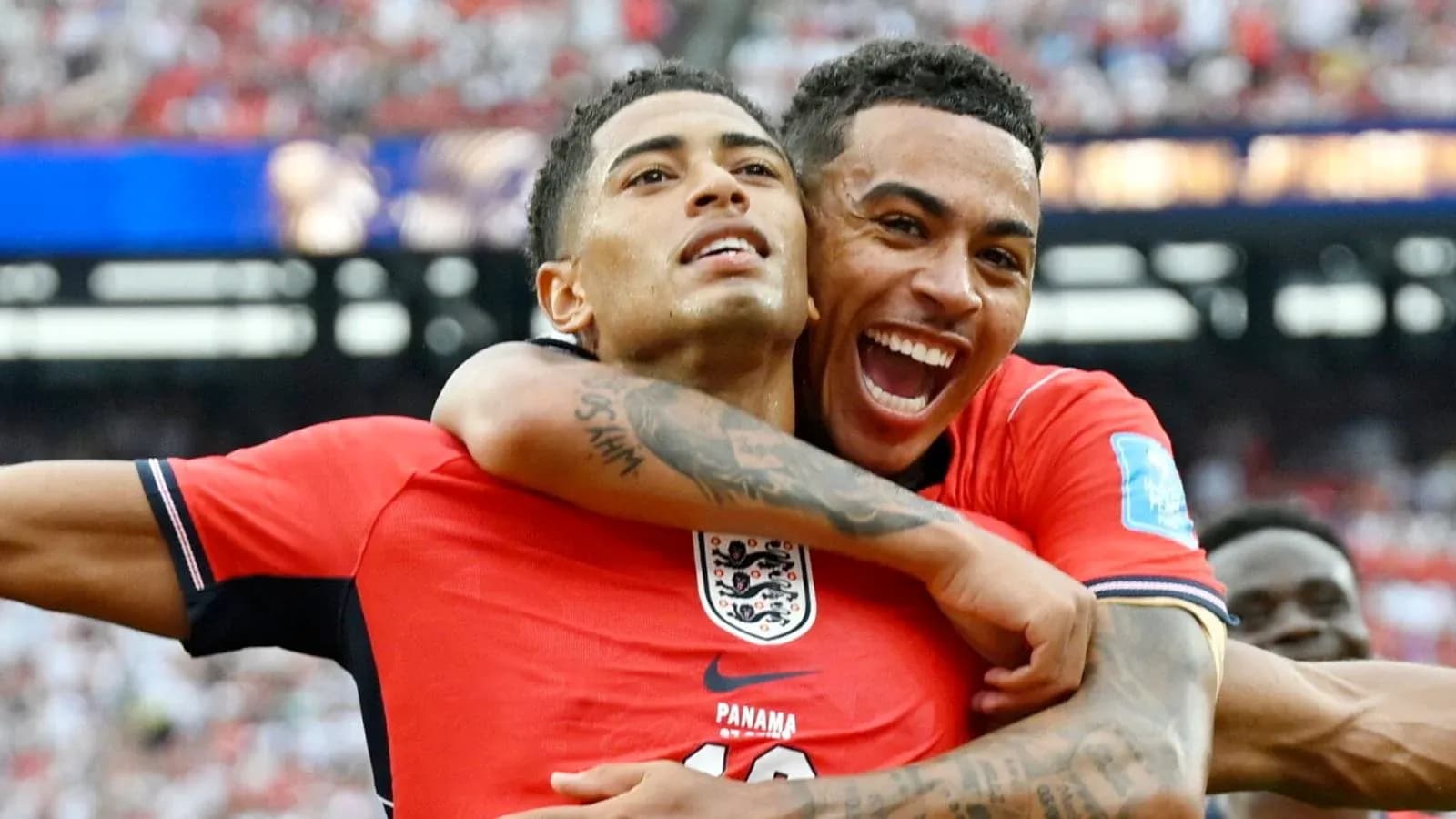
Bellingham's Impact on England's Midfield Dynamics
Thomas Tuchel walked away from England’s 2-0 win over Panama with the result he wanted – and a problem he didn’t.
Jude Bellingham has just ripped up his job description.
The 21-year-old started deeper, alongside Elliot Anderson, and delivered the kind of all-court performance that managers dream about and teammates start to depend on. A goal, an assist, constant movement, constant menace. It was the sort of display that forces a rethink.
The issue? That’s exactly where Declan Rice is supposed to live.
Bellingham changes the picture
Paul Merson watched Bellingham’s performance and saw more than just numbers on a stat sheet. He saw a tactical fault line opening up for Tuchel.
Bellingham, operating from deeper, kept arriving from the second line, breaking past Panama’s midfield and into spaces they couldn’t track. From there, he dictated the tempo and still found time to decide the game in the final third. For Merson, that’s a huge plus.
The deeper Bellingham starts, the harder he is to mark. Defenders don’t know whether to pass him on, follow him, or leave him. Midfielders lose him when he drives past them. He becomes a moving problem rather than a static target.
That’s very different to what England got from Morgan Rogers in the No 10 role. Rogers struggled to influence the game, barely touching the ball in dangerous positions. It mirrored Bellingham’s own frustrations against Ghana, when he played higher and found himself crowded out by a low block.
The central area behind the striker has become a traffic jam. When opponents sit deep, the No 10 ends up suffocated. From deeper, though, Bellingham can surge past the congestion instead of standing in the middle of it.
Tuchel now has a choice to make that will define England’s shape in the knockouts.
The Rice question
For Merson, one thing is non-negotiable: if Declan Rice is fit, Declan Rice plays.
Rice is the anchor against the heavyweights. He screens, he senses danger, he gives England structure when the opposition have the quality to punch back. Panama were not that kind of test. The bigger nations will be.
So the dilemma is clear. If Rice comes back in, where does that leave Bellingham?
One option is obvious on paper: pair Rice and Bellingham as a double pivot. That would be harsh on Anderson, who quietly did his job against Panama, but this is tournament football. Sentiment doesn’t last long in the knockout rounds.
The knock-on effect then lands squarely on the No 10 role. If Bellingham stays deeper, who plays as the central creator? Rogers did not “have the game of his life,” as Merson put it. Yet Bellingham also struggled in that advanced position against Ghana.
The question isn’t just who wears the No 10 shirt. It’s how England actually get the ball into that player’s feet often enough for them to matter.
Getting the ball to the star man
Merson’s central point is simple: England have to work out how to feed their best players.
Bellingham wants the ball. He demands it. He plays like the kid in the playground who refuses to stand on the fringes and wait his turn. It reminds Merson of Wayne Rooney – same hunger, same insistence on being involved everywhere.
Against Ghana, Bellingham kept showing for passes in tight areas and England kept ignoring him. Safe options, sideways passes, recycled possession. The man who can change the game was too often a spectator.
Merson reached for the highest bar in the sport to make his point. He stressed he wasn’t comparing Bellingham to Lionel Messi as a player, but highlighted how Argentina treat Messi: give him the ball, even when it’s risky. Trust his ability in tight spaces. Live with the occasional turnover because the upside is enormous.
England, he believes, need to build that same courage. When Bellingham is available, they must give him the ball – even when he’s marked, even when the angles are tight.
That’s why the deeper role suits him against teams like Panama and now DR Congo, who are also expected to drop off and pack bodies behind the ball. From there, Bellingham can collect possession more frequently, drive forward, and still arrive in scoring positions.
If Tuchel pushes him back up to No 10 against a side sitting on their own 18-yard line, the risk is clear: Bellingham ends up penned in, just another body in a crowded zone.
Wingers stuck in second gear
Out wide, England are still waiting for the spark.
Against Panama, Marcus Rashford saw plenty of the ball in the first half but rarely hurt his man. The pre-match clamour to start him ahead of Anthony Gordon felt justified on reputation, but not on output. There was possession, not penetration.
On the opposite flank, Bukayo Saka looks short of his usual sharpness. Merson suspects he may be carrying a minor knock, but even so, he cannot imagine an England side without Saka in the big games. The Arsenal winger’s decision-making and work rate remain vital, even when he’s not at full throttle.
The pattern is worrying but also strangely promising. England brought four wingers to this World Cup. None of them have truly caught fire yet. For Merson, that’s not a disaster – it’s an opportunity.
If those wide players can lift their performances from a six out of 10 to an eight as the stakes rise, England suddenly gain match-winners from all angles. The goals don’t have to come from Harry Kane every time. They shouldn’t.
Kane has already done his part with key goals. The defence held firm against Ghana. Bellingham took centre stage against Panama. That spread of responsibility matters in a long tournament.
Now the wingers need their turn.
England still searching for their peak
Merson rates England’s group-stage output as a seven out of 10. Professional. Controlled. Enough.
They did what they had to do against Croatia, Ghana and Panama. No more, no less. That baseline will not be enough to win the World Cup, but it’s a platform.
The warning is obvious: you can’t just flick a switch in the quarter-finals and expect to suddenly become a different team. Improvement has to build game by game. Rhythm, understanding, bravery on the ball – those things grow, or they don’t.
DR Congo in the last 32 is the next step on that ladder. England must look sharper, quicker, more ruthless than they did in the group. They need to edge closer to the level they showed against Croatia, which remains the benchmark performance of their tournament so far.
The wider landscape is unforgiving. France look devastating in attack. Spain control games but tend to leave opponents alive, always giving you a chance. Colombia, who impressed Merson with their pace and energy against Portugal, look perfectly at home in these conditions.
This World Cup feels open. Many teams have a player – or two – who can ruin your night in a single moment. That cuts both ways. On a good day, with the right rhythm, England can beat anyone. On an off day, they can go home quickly.
Merson sees reality checks in the laboured spells against Ghana and even Panama. Those are red flags. But he also sees a live contender.
As long as England are still in the draw, they have a chance. The task now is brutally simple: solve the midfield puzzle, ignite the wingers, and reproduce that Croatia-level performance when it matters most.
Because at some point in this tournament, that version of England will have to walk back out – or someone else will be lifting the trophy.

