.svg&w=384&q=75 "GoalGist logo")
Bayern München vs Paris Saint Germain: Tactical Preview of Champions League Semi-Final
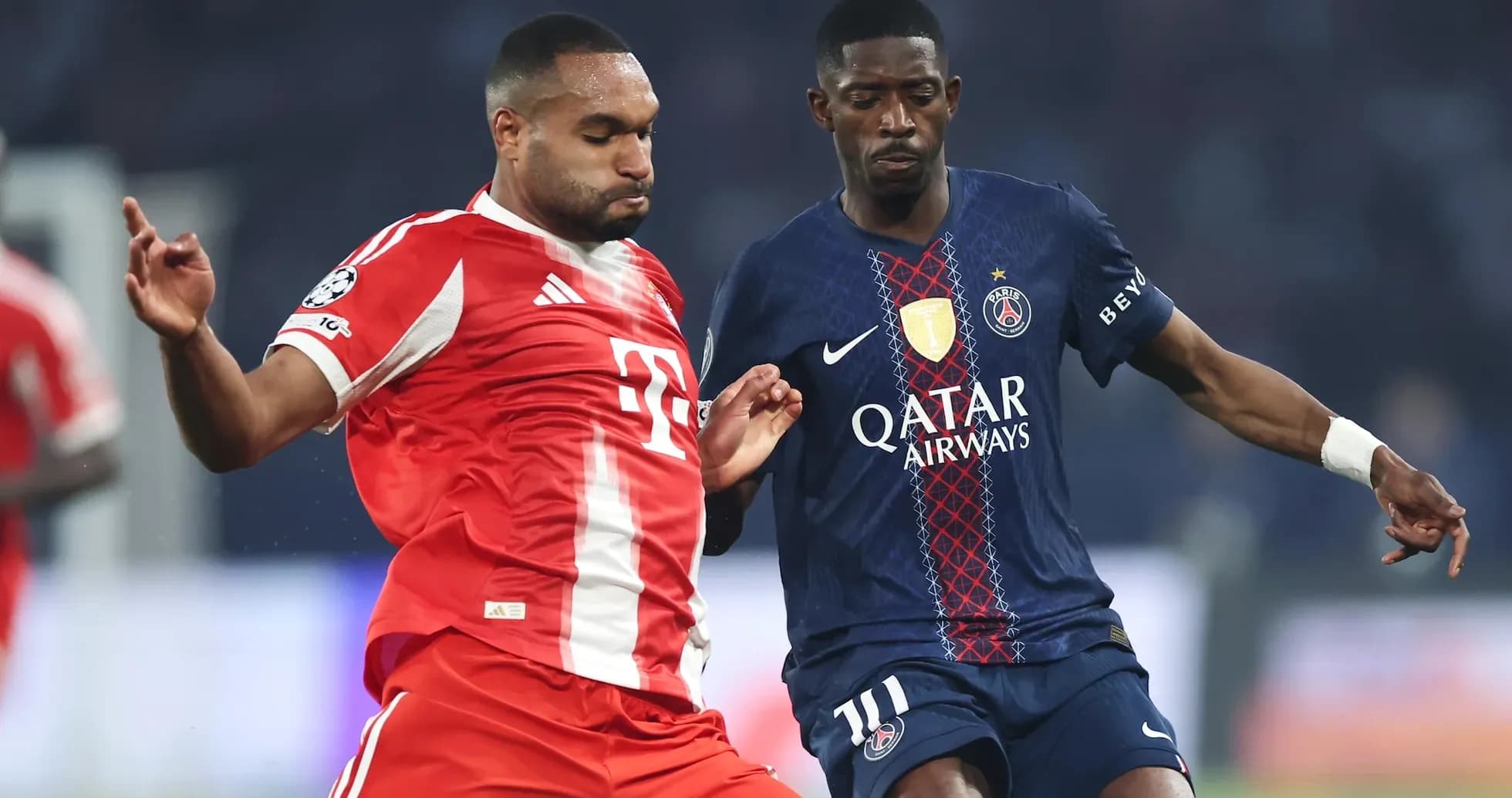
Under the lights of the Allianz Arena, a semi‑final that felt like a final in all but name ended 1–1, leaving Bayern München and Paris Saint Germain locked in a tactical stalemate rather than a spectacle. Following this result, the tie remains perfectly poised, but the paths each coach chose – and the profiles of their squads – tell a clear story of how they intend to win the war over two legs.
I. The Big Picture – Two giants, two identities
Bayern came into this Champions League campaign as a machine of accumulation. Overall they had played 14 matches, winning 11 and losing only 2, with 43 goals scored and 20 conceded. That gives them an overall goal difference of 23, powered by a ruthless attack that averages 3.0 goals at home and 3.1 on their travels. At the Allianz Arena specifically, they had been immaculate: 7 fixtures played, 6 wins, 1 draw, 0 defeats, 21 goals for and 7 against, for a home goal difference of 14.
Paris Saint Germain arrived with a different rhythm but similar firepower. Overall, they had played 16 matches, winning 10, drawing 4 and losing 2, with 44 goals scored and 22 conceded – an overall goal difference of 22. At home they average 3.1 goals, on their travels 2.4, and they concede 1.8 at home but only 1.0 away, suggesting a more controlled, pragmatic version of PSG when they leave Paris.
Those broad numbers framed a semi‑final first leg that always threatened to become a duel between Bayern’s relentless home momentum and PSG’s more balanced, away‑day maturity.
II. Tactical voids – Absences that reshape the chessboard
Both squads were notably incomplete. Bayern were without M. Cardozo (thigh injury), S. Gnabry (muscle injury), C. Kiala (ankle injury), W. Mike (hip injury) and B. Ndiaye (inactive). Gnabry’s absence in particular stripped Vincent Kompany of a proven Champions League creator and runner – a player who had delivered 5 assists in this campaign – forcing him to lean even harder on the trio of M. Olise, J. Musiala and L. Díaz behind H. Kane.
PSG’s Enrique Luis had his own structural gap: no A. Hakimi on the right due to a thigh injury, plus L. Chevalier and Q. Ndjantou sidelined by muscle problems. Hakimi’s 6 assists from right‑back had been central to PSG’s verticality and width; without him, the responsibility for stretching Bayern fell more heavily on O. Dembele and K. Kvaratskhelia, supported by the adventurous W. Zaire‑Emery from the back line.
Disciplinary profiles also shaped the risk landscape. Bayern’s season data shows a pronounced late‑game edge of aggression: 37.04% of their yellow cards come between 76‑90 minutes, while their reds are split between 46‑60 and 61‑75. PSG mirror that late‑edge: 42.86% of their yellows arrive in the final 15 minutes of normal time, and their two reds have been split between 31‑45 and 91‑105. This semi‑final, then, was always likely to become more chaotic as fatigue set in – precisely when both teams’ emotional temperature tends to spike.
III. Key matchups – Hunter vs Shield, Engine Room vs Press
Hunter vs Shield
H. Kane entered this tie as one of the competition’s defining predators: 14 goals and 2 assists in 13 appearances, with 25 shots on target from 36 attempts. He had already won 2 penalties and scored 4 from the spot, though he had also missed 1 – a reminder that even his efficiency is not flawless. Behind him, L. Díaz (7 goals, 3 assists) and M. Olise (5 goals, 6 assists) give Bayern a three‑headed threat, with Díaz’s 15 shots on target from 21 and Olise’s 34 key passes and 45 successful dribbles making them as dangerous as they are unpredictable.
PSG’s shield in Munich was constructed around Marquinhos and W. Pacho, with N. Mendes and Zaire‑Emery flanking them. On their travels this season, PSG concede only 1.0 goal per game and have kept 3 clean sheets away from home. That away defensive record – 8 goals conceded in 8 away fixtures – is the platform upon which they hoped to contain Kane’s movement between the lines and Bayern’s wide overloads.
On the other side, PSG’s own hunter is K. Kvaratskhelia: 10 goals and 6 assists in 15 appearances, 30 shots with 18 on target, plus 51 dribbles attempted and 29 successful. He is both finisher and creator, leading the Champions League in combined goal‑assist influence for PSG. Around him, O. Dembele (7 goals, 2 assists) and D. Doue (5 goals, 4 assists) complete a fluid front three that can interchange, press and carry the ball over distance.
Engine Room – Vitinha vs Kimmich
The central battle was defined by two different kinds of controllers. For Bayern, J. Kimmich remains the metronome: 1117 passes with 30 key passes at 90% accuracy, plus 15 tackles and 9 interceptions. He is also one of the competition’s more card‑prone midfielders, with 4 yellows already, and his role as the pivot in a 4‑2‑3‑1 exposes him constantly to transition duels.
Alongside him, A. Pavlovic offered balance, while Olise and Musiala rotated between half‑spaces to overload PSG’s midfield trio of Vitinha, F. Ruiz and J. Neves. Vitinha, though, has quietly been one of the most complete midfielders in the tournament: 1553 passes at 93% accuracy, 23 key passes, 25 tackles, 17 interceptions, and 6 goals. He is both PSG’s rhythm and their first line of counter‑pressing.
The way this semi‑final played out, Bayern’s double pivot sought to pin PSG back and force them into longer build‑up phases, while PSG’s three‑man midfield tried to lure Bayern’s 10 (Musiala) and wide 8s into traps, then spring Kvaratskhelia and Dembele into the spaces behind K. Laimer and J. Stanisic.
IV. Statistical prognosis – Margins, xG logic and the second leg
Even without explicit xG numbers, the season data sketches the likely balance of chances. Bayern’s overall scoring average of 3.1 goals per game against PSG’s 1.4 goals conceded overall suggests that, on a neutral model, Bayern should generate the higher volume and quality of chances, especially at home. Conversely, PSG’s 2.4 goals per game on their travels, against Bayern’s 1.0 home goals conceded on average, indicates that Enrique Luis’s side are well equipped to carve out clear opportunities of their own whenever Bayern overcommit.
The penalty data underlines one critical detail: Bayern have taken 4 penalties and scored all 4 this season in the competition, but Kane himself has missed 1 in his personal tally. PSG have scored 2 from 2 overall, yet Dembele and Vitinha each carry a missed penalty in their individual records. In a tie that feels destined to be decided by moments rather than dominance, the psychological weight from those previous misses could become decisive if another spot‑kick arrives.
Following this 1–1 draw, the tactical preview for the second leg is clear. Bayern will lean again on their 4‑2‑3‑1, trusting Kane’s penalty‑box craft and the creative storm of Díaz, Musiala and Olise, while hoping their late‑game discipline holds in a period where 37.04% of their yellows usually appear. PSG will double down on their 4‑3‑3, asking Vitinha to dictate, Kvaratskhelia to tilt the tie with one surge or pass, and their away defensive solidity – 3 clean sheets and only 8 goals conceded in 8 away matches – to absorb Bayern’s waves.
Statistically, the edge in expected chance volume still leans slightly towards Bayern, but PSG’s efficiency, away resilience and the individual brilliance of their front three mean this semi‑final remains a coin toss – one likely to be decided by which hunter punishes the first crack in the opposing shield.