.svg&w=384&q=75 "GoalGist logo")
Ballon d'Or Race: Yamal vs Rodri Showdown
The Ballon d'Or race is starting to feel like a political campaign. Posters, narratives, power blocs – and at the centre of it all, two Barcelona teammates with very different stories.
On one side, the phenomenon: Lamine Yamal, the face of a new era, pushed hard by a club that has thrown its full weight behind his candidacy. On the other, the metronome: Rodri, coming off a World Cup that reminded everyone why midfielders still win you the biggest trophies.
Barcelona’s machine is firmly behind Yamal. The club have not hidden their stance, championing the youngster as the rightful heir to football’s most prestigious individual prize and driving a clear PR push to shape the conversation in his favour. For many voters, he is already the frontrunner.
Yet the debate is far from settled.
Tebas breaks from the pack
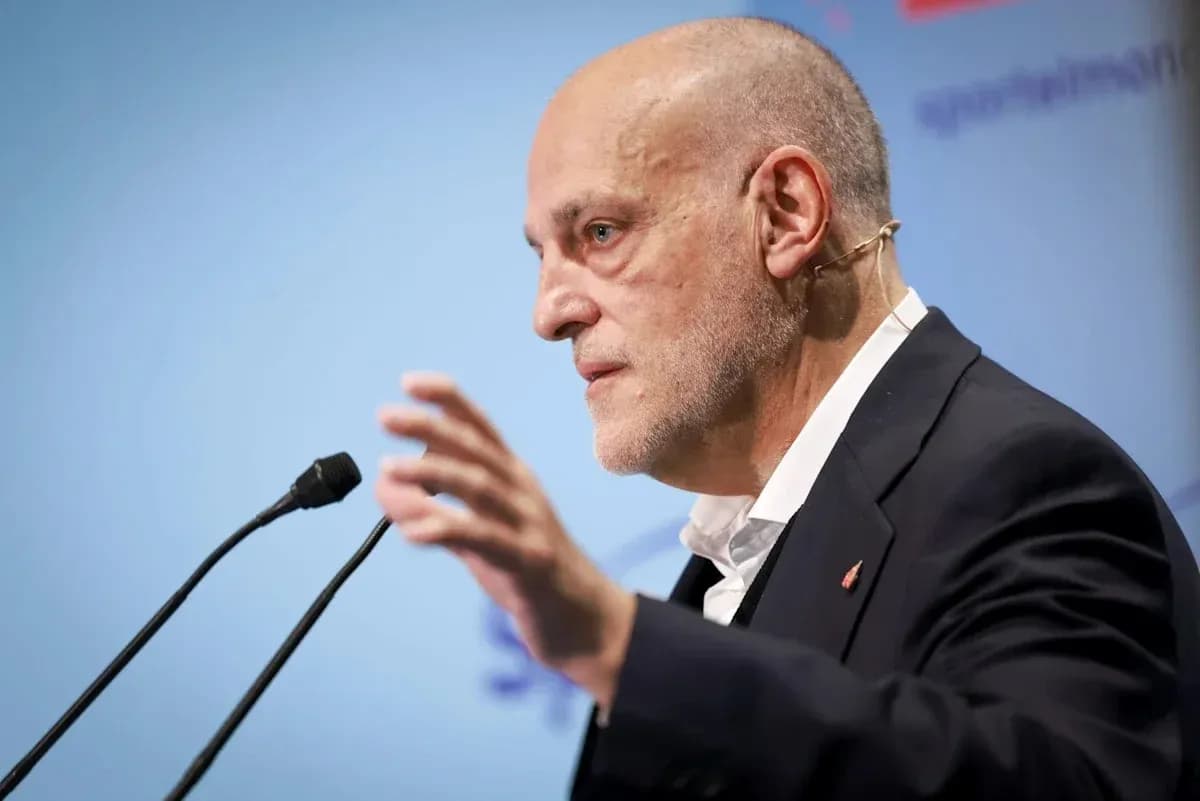
Into this Barcelona-led narrative stepped Javier Tebas, and he did not bother with nuance.
While much of the public and media noise has leaned towards Yamal, the La Liga president has nailed his colours to a different mast, openly backing Rodri. Speaking recently, Tebas underlined the midfielder’s World Cup as the decisive argument.
"With what Rodri has done in the World Cup, he deserves it again," he said, pointing directly at the tournament that has reshaped this year’s Ballon d'Or conversation.
It is a powerful line of reasoning. Rodri was, by almost any measure, the standout performer at the 2026 FIFA World Cup. He dictated Spain’s tempo, calmed every storm, and gave Luis de la Fuente’s side the platform to finally end a 16-year wait and lift the trophy for the first time since 2010.
Leadership. Composure. Presence. Rodri offered all three in the middle of the pitch, and he did it when the stakes were at their highest. In a World Cup year, that sort of dominance usually carries enormous weight in Ballon d'Or voting.
The case against Rodri
Yet the story is not that simple.
For all his brilliance in Qatar’s successor, Rodri carries a major handicap into this race: last season’s club campaign. Injury cut deeply into his year. He managed only 21 league appearances for Manchester City, a sharp drop for a player normally synonymous with reliability and continuity.
City’s failure to retain the Premier League title only adds to the problem. The Ballon d'Or, historically, tends to reward players who combine international glory with a complete, trophy-laden club season. On that front, Rodri’s dossier looks thin. Strip away the World Cup, and the file is almost empty.
So his candidacy leans heavily – perhaps entirely – on one month of football. An extraordinary month, yes, but still just one.
Yamal’s broader platform
Yamal, by contrast, arrives with a more rounded portfolio.
He has La Liga in his pocket with Barcelona. He has the World Cup as well. His performances at the tournament did not hit the same towering level as Rodri’s, or the explosive impact of Harry Kane or Kylian Mbappé, but he was there, contributing, winning.
That combination matters. Voters often gravitate to the player who can tick the most boxes: league champion, global champion, face of a new generation. Yamal fits that profile in a way Rodri, this year, does not.
So the choice becomes philosophical. Do you reward the player who reached the absolute peak of the sport for a month and carried his country to the summit? Or the emerging star whose season, taken as a whole, delivered more trophies and more minutes, even if his World Cup never quite matched the level of the man behind him in midfield?
Barcelona are clear. Tebas is just as clear, in the opposite direction.
The ceremony will answer one question: in a World Cup year, is one flawless tournament enough to outshine a rising champion with a fuller season behind him?