.svg&w=384&q=75 "GoalGist logo")
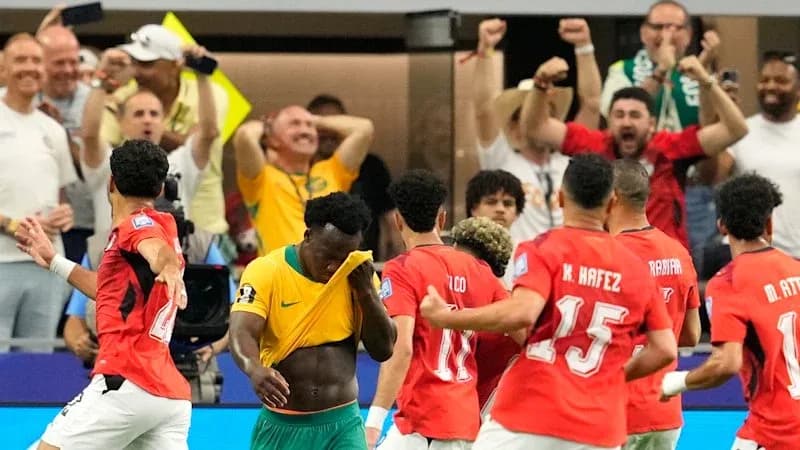
Australia's Struggle Against Egypt: A Tale of Frustration
Australia went into the break a goal down and seething, not just at their own lapse but at a first half that never quite felt under control.
In the dressing room the message was blunt. The coaching staff were unhappy that the referee played advantage on a foul but failed to come back with a booking. “Disappointing, but we’ve got to move on and be better in the second half,” was the verdict. The sense of injustice was real; the instruction to park it and respond was louder.
The real frustration, though, sat in the six-yard box.
A soft concession, a hard lesson
Egypt’s opener was the kind of goal that drives defenders mad. A routine set piece, poorly handled. Australia were slow to step up, the line not quite in sync, and an attacker possibly kept onside by that split-second hesitation. For a side that prides itself on organisation at dead balls, it stung.
“We’re disappointed we gave away a cheap goal from a set piece – normally we pride ourselves on that,” came the assessment. The admission was clear: a simple detail, badly executed.
That lapse handed Egypt exactly what they wanted. A lead to protect. A platform to sit deep, spoil, and squeeze the rhythm out of the game. From that moment, the Pharaohs dropped into a shell and dared Australia to break them down.
Egypt dig in, Australia push back
The pattern that followed was familiar. Egypt made the Socceroos work for every yard, forcing them to chase, to press, to cover huge distances. They snapped into tackles, then slowed everything down whenever they could. Contact meant a pause, a breather, another Australian protest waved away.
They were clever with it, too. A three-minute hydration break, a goal, stoppages for niggles, and yet only five minutes of added time at the end of the half. Given the volume of Egyptian time-wasting, that number felt insultingly low. In a perverse way, it was also a compliment: Egypt clearly respected the danger Australia posed if the game ever opened up.
For all the disruption, the more threatening side in open play was Australia. Before and after the goal, they carved out the better looks. The problem was the finish.
Behich sparked one of the brighter moments down the left, driving at Hany inside Egypt’s defensive third and forcing them backwards. The move eventually led to a long throw from Circati. Irvine and Souttar attacked it, the ball skimming on through a crowd before Herrington helped it on to Irankunda. The teenager recycled it neatly to Behich, who stepped inside and drilled low to the keeper’s right. A strong save, but a warning.
Seconds later, Irankunda nearly punished Egypt again, ghosting into space and almost finding the touch that would have levelled the match. The equaliser felt close, yet stubbornly out of reach.
Salah subdued, but always lurking
Egypt’s threat, inevitably, carried the name on everyone’s lips. Mohamed Salah did not explode into the game, and with recent hamstring tightness in mind he looked measured, almost restrained. He still found moments to remind Australia of the danger.
Running off the shoulder of Souttar, Salah timed one dart in behind perfectly, only for Herrington to read it and slide across to cut out the danger. Later, after Ashour went down under an errant arm from Bos to win a free-kick, Salah stood over the ball. Instead of going direct, he slipped a short pass square to Attia, whose long-range drive was struck cleanly and with menace. Australia’s back post cover held firm, but the warning signs were there: give Salah time and he will pick the right option.
Penalty shouts and a brutal blow
Controversy flared again inside the Egyptian box. Australia worked the ball into a crowded area, where an attacker squeezed between two defenders and managed a weak header on target. As he rose, Rabia’s arm made contact with the ball. It looked more ball-to-hand than deliberate, yet the appeal was instant. The referee, Nestor, tapped his own arm, inviting a second look but sticking to his original decision. No penalty.
At the back post, Volpato was hauled down by Havez, another incident that drew furious protests. Play went on. Two big calls, both waved away, and the sense of grievance grew.
Worse followed with the sight no Australian wanted to see. Jordan Bos, one of the side’s most dynamic outlets, stayed down and needed two trainers to help him from the field. He could not put weight on his left foot. As he disappeared down the tunnel, so too did a major part of Australia’s attacking spark. It looked highly unlikely he would return after the break.
A deficit, but not a lost cause
When the board went up, it showed five minutes of added time. It felt light, given everything that had gone on. Still, it was something, and Australia used it to push again.
Egypt’s lead remained fragile. They had punished a single lapse and then retreated into their shell, content to soak pressure and steal minutes. Australia, for all their annoyance with the officiating and the gamesmanship, knew the path back into the contest was simple enough: keep the ball, string passes together, and trust that the spaces would come.
“Once we get five, six, seven passes, we seem to find pockets of space,” was the view from the bench. “If we can do that better in the second half I’ve got no doubt we’ll create more opportunities for us.”
The chances were there in the first half. The urgency was there. The question, as they walked back out, was whether they could finally turn all that effort into the one thing Egypt could no longer waste: a goal.