.svg&w=384&q=75 "GoalGist logo")
Atalanta vs Sassuolo: Serie A Opening Night Analysis
The New Balance Arena’s first Serie A night of 2026–27 ended with a statement: Atalanta 2–1 Sassuolo, a scoreline that captured both Sarri’s intent and Aquilani’s resilience. Following this result, Atalanta sit 6th with 3 points, a home goal difference of +1 after scoring 2 and conceding 1. Sassuolo leave Bergamo 12th, still pointless, their away goal difference at -1 with 1 scored and 2 conceded.
This was not a tactical sketch; it was a fully inked blueprint. Both sides lined up in a 4‑3‑3, but the structures were built for very different purposes.
I. The Big Picture – Sarri’s new Atalanta, Aquilani’s patched Sassuolo
Maurizio Sarri’s first league outing with Atalanta leaned into control and verticality. The 4‑3‑3 was clear on paper and on grass: M. Carnesecchi behind a back four of D. Zappacosta, O. Kossounou, G. Scalvini and L. Bernasconi; a midfield trio of Ederson, G. Gaetano and M. Pasalic; a front line with N. Zalewski and G. Raspadori flanking G. Scamacca.
The early-season numbers, even after just one match, tell you the intent. At home, Atalanta have scored 2.0 goals on average and conceded 1.0, winning their only fixture and failing to keep a clean sheet but also never failing to score. It is the profile of a side prepared to accept some risk for attacking reward.
Sassuolo’s mirror 4‑3‑3 was more makeshift than manifesto. A. Muric started in goal, with a young back four of S. Cinquegrano, C. Odenthal, T. Macchioni and J. Doig. In midfield, V. Adzic and D. Bakola flanked the experience of N. Matic, while C. Volpato, K. Bowie and A. Lauriente formed a fluid but raw front three. On their travels, Sassuolo’s single outing has produced 1.0 goal for and 2.0 against, a snapshot of a team that can threaten but is still structurally exposed.
II. Tactical Voids – Injuries that shaped the game
This match was carved by absences as much as selections. Atalanta’s defensive depth was shredded: H. Ahanor and I. Hien were both out with muscle injuries, T. Kristensen with an ankle injury, and K. Sulemana with a knee problem. That forced Sarri to lean heavily on the composure of Scalvini and the athletic range of Kossounou, with Bernasconi stepping into a prominent role at left-back.
Sassuolo, meanwhile, arrived without an entire spine of Serie A experience. D. Berardi’s ankle injury stripped Aquilani of his natural talisman and penalty leader. D. Boloca (muscle injury), F. Cande and E. Pieragnolo (both knee injuries), I. Kone (broken leg), Y. Paz (knee injury), A. Pinamonti (injury) and S. Walukiewicz (muscle injury) left gaps at centre-back, full-back, midfield and centre-forward. The result was a youthful, technically inclined side that could circulate the ball but lacked a reference point in both boxes.
Disciplinary data for the league so far is still blank: no recorded yellow or red card distributions by minute for either side. That absence of card trends makes individual game management and positional intelligence even more central, especially for players asked to step up from the fringes.
III. Key Matchups – Hunter vs Shield, Engine Room battles
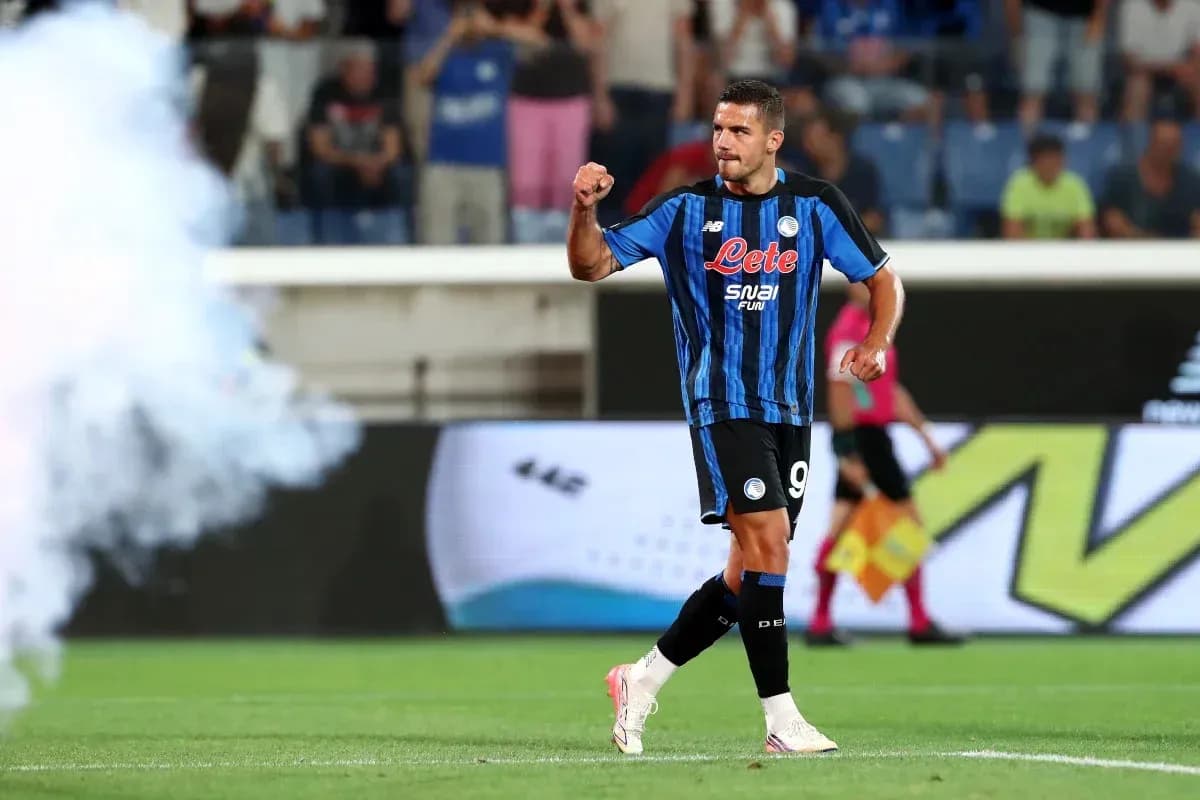
Hunter vs Shield tilted decisively Atalanta’s way. In attack, G. Raspadori emerged as a sharp, hybrid forward. Across 82 minutes he scored once from his only shot on target, worked tirelessly between the lines and in the channels, and underlined his two-way value with 3 tackles and 2 interceptions. His 8 duels with 6 won made him not just a finisher but a first presser in Sarri’s structure.
Off the bench, N. Krstovic offered a different kind of threat. In 30 minutes he scored once, took 3 shots with 2 on target and added 1 key pass from 11 total, playing at an accuracy of 81%. His presence gave Atalanta a late-game reference point to attack the spaces between Odenthal and Macchioni, and his movement into the box forced Sassuolo’s line deeper, relieving pressure on Atalanta’s midfield.
For Sassuolo, the unlikely “hunter” was a centre-back. C. Odenthal not only scored their lone goal with his only shot on target but also anchored the build-up with 65 passes at 98% accuracy. He blocked 1 shot, showing timing in the box, and committed 2 fouls as he tried to hold a high line against Atalanta’s rotating forwards. His dual role as both first passer and last defender highlighted how much Aquilani asked of him in Berardi and Pinamonti’s absence.
In the Engine Room, G. Gaetano quietly dictated Atalanta’s rhythm. He finished with 68 passes at 92% accuracy, 1 assist and 1 key pass, but the numbers only hint at his influence. Operating as Sarri’s interior playmaker, he stitched together the vertical lanes from Ederson into Raspadori and Scamacca, and out towards Zalewski. Defensively, 4 tackles and 1 interception underlined his willingness to collapse back into a compact 4‑5‑1 when Sassuolo built through Matic.
N. Matic, in turn, was Sassuolo’s metronome and shield. While the raw stats here are limited, his positioning was essential in protecting a young back four. Sitting in front of Odenthal and Macchioni, he tried to screen passes into Scamacca’s feet and delay Atalanta’s central combinations, forcing Sarri’s side to funnel attacks wide to Zappacosta and Zalewski.
IV. Statistical Prognosis – What this match says about both squads
Following this result, Atalanta’s overall profile is that of a side already aligned with its coach’s identity. Overall this campaign, they have 2 goals scored and 1 conceded, with an average of 2.0 goals for and 1.0 against. There are no penalties taken yet and none missed, so their attacking output is coming entirely from open play and structured moves rather than set-piece variance.
Sassuolo’s overall numbers are more fragile: 1 goal for and 2 against, an average of 1.0 scored and 2.0 conceded. Their biggest defeat on their travels so far is this 2‑1 scoreline, suggesting they can stay in games but lack the defensive solidity to withstand sustained pressure. With no penalties taken or missed, their margin for error in open play is slim, particularly without Berardi and Pinamonti.
Projecting forward, Atalanta’s 4‑3‑3 looks sustainable. The combination of Gaetano’s creativity, Raspadori’s work rate and Krstovic’s penalty-box presence gives Sarri multiple ways to attack deep blocks and high lines alike. The concern will be defensive fatigue: with several defenders missing through injury, the burden on Scalvini and Kossounou will be immense until reinforcements return.
For Sassuolo, the tactical idea is clear but incomplete. Aquilani wants a side that plays through the thirds, with Odenthal and Matic initiating and Volpato and Lauriente providing incision. But until the injured core returns, the team will likely oscillate between brave possession and fragile transitions. Their current away record – 1 defeat, 1.0 goal scored, 2.0 conceded – underlines that they can score, yet are one structural mistake away from losing control.
In narrative terms, this opener felt like a prologue. Atalanta have sketched out a season of high-possession, high-initiative football with multiple attacking protagonists. Sassuolo, stripped of several leaders, showed enough technical promise to suggest they will grow, but also enough defensive vulnerability to warn that the climb will be steep unless their injured spine returns quickly.