.svg&w=384&q=75 "GoalGist logo")
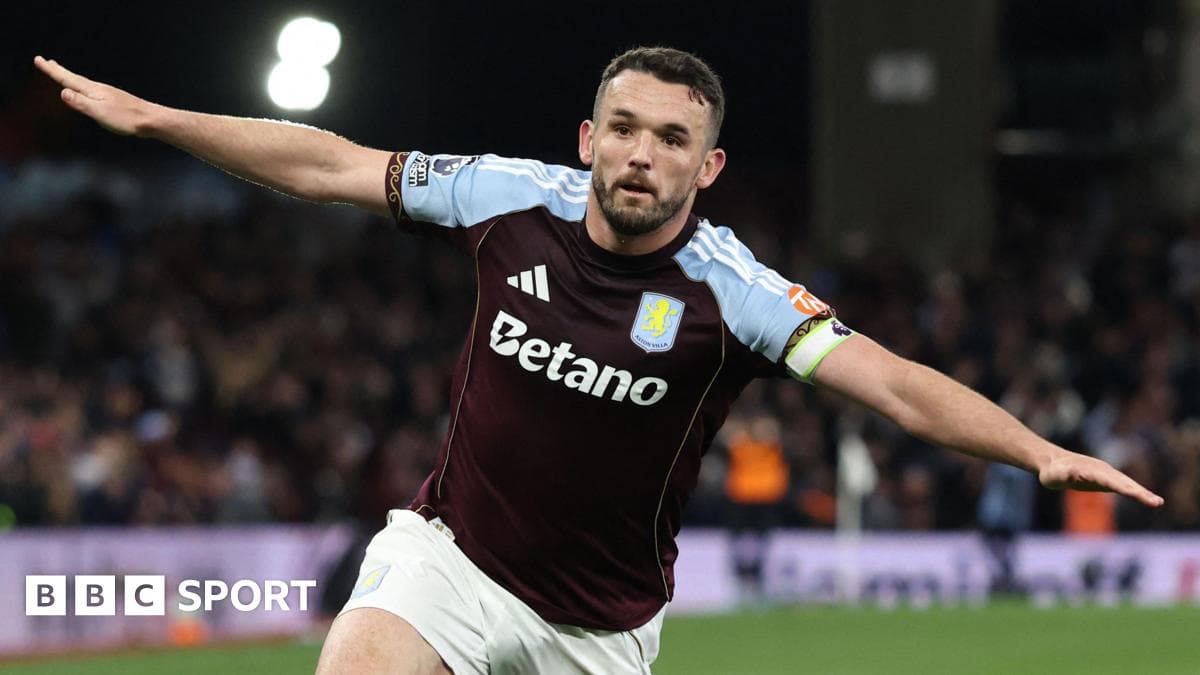
Aston Villa's Return to Champions League Football
Aston Villa are back where they once belonged – and where, for most of the past decade, they had no right to even dream of being.
Champions League football is returning to Villa Park.
Unai Emery’s side tore into Liverpool 4-2 on Friday night, a result that did more than just flatten last season’s champions. It confirmed Villa among Europe’s elite again, sealed with a swagger that spoke of a club refusing to be defined by its financial straitjacket or its statistical ceiling.
For Villa, this has been about more than a place in the top four. It has been about closure.
From Old Wounds to New Heights
Twelve months ago, they stood on the wrong side of the margins. They missed out on the top five on goal difference on the final day, beaten 2-0 at Manchester United in a match scarred by referee Thomas Bramall’s error that denied Morgan Rogers an opener and saw Emiliano Martinez sent off.
It hurt. It lingered.
This season, they did not wait for the final day or the fine print. They leapt over Liverpool into fourth and pulled themselves clear of Bournemouth, turning last year’s frustration into a platform rather than a scar.
Now comes Wednesday in Istanbul, a Europa League final against Freiburg and a shot at their first major European trophy since lifting the European Cup in 1982. That alone would define a generation for most clubs.
For Villa, it is only part of the story.
The League’s Great Overachievers
Strip away the noise, look only at the numbers, and this campaign should not exist.
Opta’s expected table has Villa in 12th. Mid-table. Safe, respectable, forgettable.
Instead, they sit eight places and 15 points better off than that model suggests, the biggest overperformance in the Premier League. Only Sunderland and Everton even clear the modest bar of outperforming by more than two places. Villa have smashed it.
The metrics say they should be ordinary. Seventh in the league for goals with 54, behind even 10th-placed Chelsea. Ninth for shots taken. Eighth for shots on target, trailing the rest of the top six, plus Brighton and Newcastle United.
Yet when they shoot, they make it count. Their shot conversion rate of 11% is bettered only by Brentford, Manchester City and Arsenal. Only Tottenham have outstripped their expected goals (xG) more than Villa, whose 46.42 xG has somehow produced 54 goals – 7.58 more than the models predict.
They do it their own way, too. Fifteen goals from outside the box – 28% of their total – a share no one else can match. Bournemouth and Fulham are the only other sides even above 20%.
And still, the picture is messy, imperfect, human. Villa have created 84 big chances and scored just 24 of them. A conversion rate of 29%, the lowest in the league. Nottingham Forest, by contrast, finish 46% of theirs.
The spreadsheets insist this should not be a Champions League team. The table says otherwise.
Emery’s Balancing Act
Emery has walked this tightrope without asking for sympathy.
“I am so demanding. Competing on Thursdays and Sundays are not excuses,” he said, as his team pushed through a season that refused to give them a breather.
Three years into his tenure, he talks about objectives met, about a “good balance” in his mind between ambition and reality. The reality is stark: while juggling a league campaign and a Europa League run that has taken them to Istanbul, Villa have consistently punched above their financial weight.
Since Emery’s appointment in 2022, only Wolves, Brentford, Brighton and Everton have a lower net spend than Villa’s £73.5m. They have had to work with the handbrake on, staying within profit and sustainability rules while trying to run with clubs throwing far more money at the same targets.
That context matters. It sharpens every result, every surge up the table.
The Cost of Progress
The price of staying compliant has been visible, and painful.
As the club celebrated Champions League qualification in May 2024 at their end-of-season dinner, Emery and head of football operations Damian Vidagany were not just toasting success. They were worrying.
How do you stay within PSR and keep climbing? The answer, in the end, was ruthless. Douglas Luiz was sold to Juventus for £43m in a rushed deal that underlined the tension between sporting ambition and financial reality.
Jacob Ramsey had already gone to Newcastle for £40m last summer. Another sale feels almost inevitable. Morgan Rogers, signed from Middlesbrough for £16m two years ago, has grown into a star. A strong World Cup with England would let Villa name a price close to £100m.
Champions League qualification gives Villa more leverage, but it does not erase the arithmetic. Selling a key player each year remains the most straightforward way to stay on the right side of the rules.
The numbers tell their own story. A loss of nearly £90m one year. A profit of £17m in 2024-25, the season they played in the Champions League. A £120m loss in 2022-23, and then a revenue drive that has pushed income to £378m – helped, but not without controversy, by higher ticket prices that have alienated some supporters.
The club is trying to grow fast enough to keep up with its ambitions. Not everyone likes the route.
Building a Bigger Stage
Off the pitch, Villa are trying to match their footballing rise with physical expansion.
Work has begun on rebuilding the North Stand, a project scheduled to finish by the end of next year. When it is done, Villa Park’s capacity will push past 50,000. The new Warehouse entertainment venue at the stadium is already complete, another piece in the puzzle of raising matchday revenue.
They need it. Every extra pound matters when your rivals are already entrenched in the Champions League economy.
Even so, Villa have felt like they are chasing from behind. A long pursuit of Conor Gallagher collapsed when Tottenham found the money to sign the Atletico Madrid midfielder, despite Villa having spent months on the deal. It was a reminder: intention is nothing without room to manoeuvre.
Rules, Frustration and the Next Step
Inside the club, there is irritation at having to navigate one set of financial rules domestically and another in Europe. The Premier League is moving to a squad-cost ratio system next season, allowing clubs to spend up to 85% of their income on player costs. Uefa’s limit is 70%.
Vidagany has spoken before about the need for regulation, but he has been clear: two systems that do not align make life harder for clubs like Villa, who are trying to break into the established order while playing in both arenas.
They have been operating under constraint, counting every decision, every transfer, every wage. And still they have found a way to crash the Champions League party twice in three years.
The handbrake has not quite been released. Not yet. But with another season among Europe’s elite secured, and a Europa League final on the horizon, Villa suddenly look less like overachievers and more like a club daring to ask the obvious question.
If this is what they can do with limits, what happens when they finally get to run at full speed?