.svg&w=384&q=75 "GoalGist logo")
Arsenal Considers Pacho Move Amid Rising Salary Stakes
Arsenal spent the summer tightening the screws on a title-chasing squad. Illan Meslier arrived on a free from Leeds. Piero Hincapie came in from Bayer Leverkusen for £34.5m. Christos Tzolis cost £34.12m from Club Brugge. Bruno Guimaraes, the headline act, joined from Newcastle for £75m. Ezri Konsa followed from Aston Villa for £51m.
Quality over volume. That was the message as the window shut on September 1, with Mikel Arteta and new sporting director Andrea Berta resisting the urge to panic-buy a forward.
Morgan Rogers, Vinicius Junior and Julian Alvarez were all seriously discussed. All three were viewed as potential solutions in attack. In the end, Arsenal chose restraint, preferring to trust what they had rather than pay over the odds for a second-choice option.
On paper, the defence looks loaded. Hincapie and Konsa have been added to a group already boasting William Saliba, Cristhian Mosquera, Ben White, Gabriel Magalhaes, Jurrien Timber, Riccardo Calafiori and Myles Lewis-Skelly. It reads like a unit built for a long title slog and deep cup runs.
Yet the market never really sleeps.
Pacho on the radar
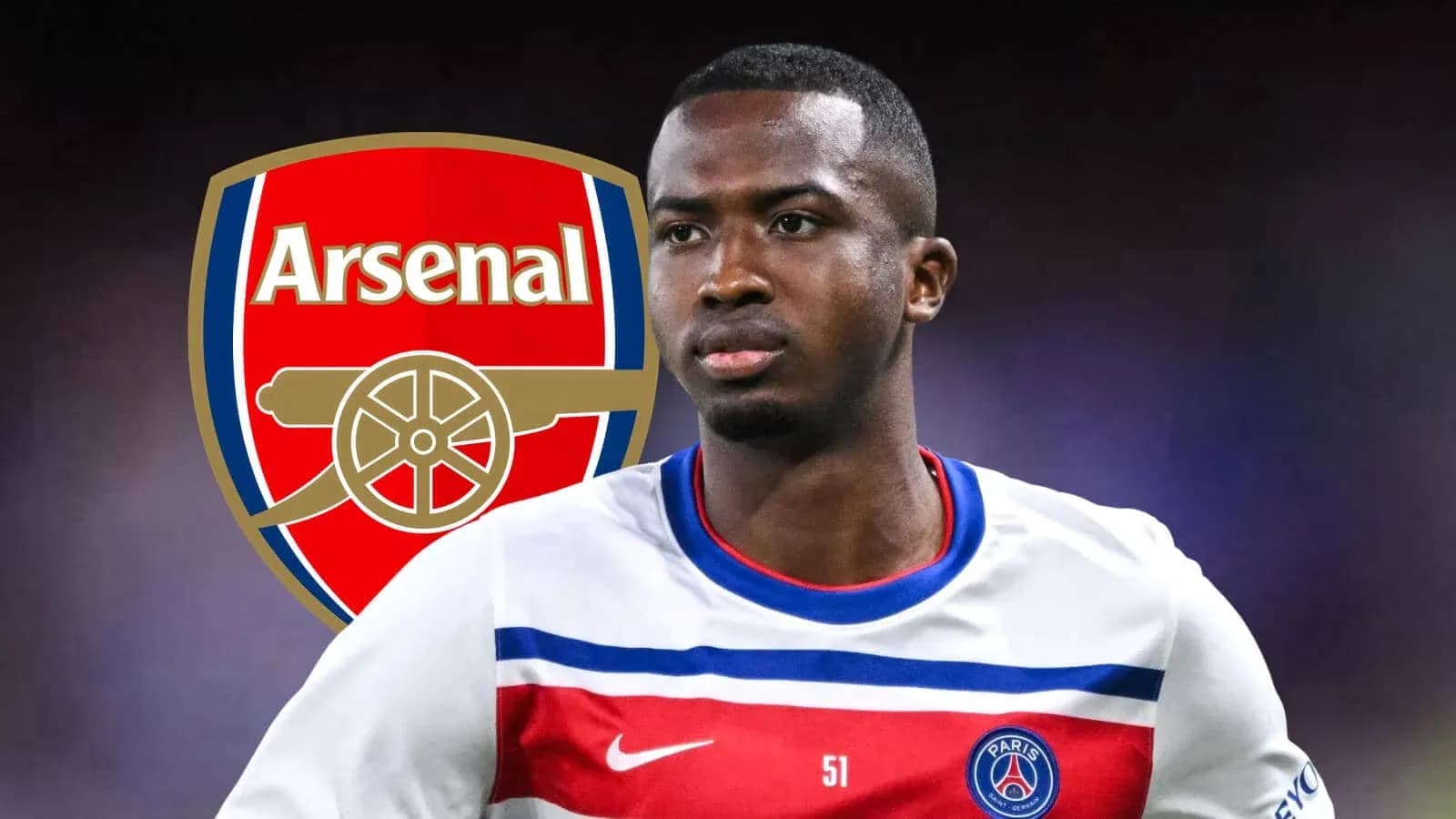
In France, William Pacho has just renewed his contract at Paris Saint-Germain. Even so, Bolavip reports that the Ecuador international “still has a market” and has “entered the plans of teams like Arsenal and Manchester City”.
Arsenal, the report claims, are open to making a move for the centre-back. The lure would not just be the project or the Premier League badge. It would be the pay packet.
Both English clubs are described as ready to put a “very lucrative salary” on the table to tempt the former Eintracht Frankfurt defender away from the Parc des Princes. Pacho currently earns around €11m a year in Paris. Any deal, the report states, would require Arsenal to go above that number to bring him to the Emirates Stadium.
For Manchester City, those figures “wouldn’t be a problem”. For Arsenal, the equation is trickier.
The wage structure bites
Bolavip underlines the dilemma. Arsenal “have the money, but they don’t usually pay these kinds of figures to their players”. Saliba is the club’s highest-paid defender on €14m per year, and only five players in the entire squad earn more than €11m.
Breaking that structure for a defender, even one of Pacho’s profile, would be a statement. It would also be a risk. Arsenal have worked hard to restore financial discipline after the more chaotic years of bloated contracts and difficult exits.
So the question hangs in the air: is Pacho the defender worth bending the rules for, when Arteta already has a stacked back line?
Carragher questions Arsenal’s missed Barcola chance
While Arsenal weigh up their next move at the back, debate rages over what they did — and didn’t — do in attack.
On The Overlap, Jamie Carragher admitted he could not understand why Arsenal didn’t go stronger for Bradley Barcola, who instead joined Liverpool from PSG.
“I’m happy it didn’t happen but I was looking at the Barcola thing,” Carragher said. “For me with Arsenal, left wing has always felt like where the drop is compared to [Bukayo] Saka, [Martin] Odegaard, [Kai] Havertz.
The new kid [Christos] Tzolis has made a decent start. But the longer the Barcola thing went on, and then Arsenal didn’t get Vinicius Jr or Alvarez, I was thinking is that [signing Barcola] not the one?”
Ian Wright, sitting alongside him, did not disagree.
“That is the player Arsenal need to sign,” the club legend insisted. “He comes in from a brilliant PSG side and he’s played with players who are on that level. Now he’s coming into a Liverpool side where he is that superstar and will bring them [his teammates] up there.
“That’s what we needed. Whether you think Morgan Rogers could have done that, I would have been happy with that. But Barcola was available.”
Arsenal chose to hold their nerve this summer, trusting their core and refusing to be dragged into auctions they felt did not represent value. Now, with Pacho’s name in the frame and the wage structure under scrutiny, the next big decision looms: do they double down on discipline, or take the financial leap that signals a new phase of their ambition?