.svg&w=384&q=75 "GoalGist logo")
Todd Boehly's Exit: Clearlake Capital Takes Full Control of Chelsea
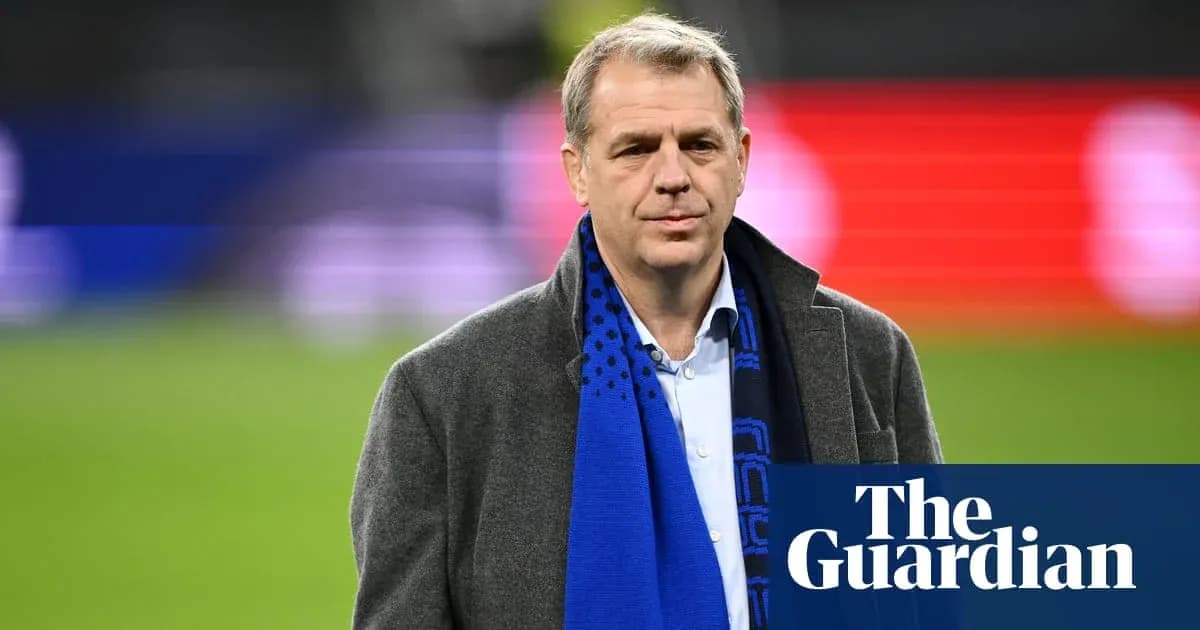
Todd Boehly arrived at Chelsea as the loudest voice in the room. He leaves as a footnote.
Four years on from fronting the £2.5bn BlueCo takeover from Roman Abramovich, the American and his fellow investor Mark Walter have been bought out. The headlines will scream about Boehly’s exit. The reality at Stamford Bridge is simpler: the real power has merely stopped pretending.
Clearlake Capital, the US private equity firm founded by Behdad Eghbali and José E Feliciano, was already running the club. It held the majority stake. It set the strategy. It drove the vision. The trio of Boehly, Walter and Swiss billionaire Hansjörg Wyss shared a 38.5% holding, but their influence had been ebbing away almost from the moment the ink dried on the deal in 2022.
Wednesday night’s confirmation that Clearlake now has full control only formalised what had long been obvious inside the boardroom.
Cracks in the consortium
The split did not arrive out of nowhere. Tensions within the ownership group surfaced two years ago, when disagreements over governance and direction spilled into public view. Boehly, once the confident frontman of the new era, began to doubt his relationship with Clearlake and pushed for a resolution.
People close to him insisted he had investors lined up to fund a full takeover. Clearlake’s response to that claim was an eye-roll and a counter-move: it started exploring the option of buying him out instead. Another idea floated from the Clearlake side was blunter still — Boehly could step down as chair and accept a largely ceremonial role.
No surprise that talks stalled. A fragile truce followed. Clearlake carried on shaping Chelsea in its own image, with Eghbali increasingly visible and increasingly central to every major decision. Feliciano stayed more in the background, recently adding an investment in MLB’s San Diego Padres to his portfolio. Eghbali, by contrast, found himself in the firing line, targeted by abusive chants from frustrated Chelsea fans as results faltered.
From frontman to fall guy
In the early days, though, this was Boehly’s show. He was the public face of the Abramovich handover, the man on stage, the man with the microphone. Clearlake watched while he appointed himself interim sporting director after key football executives departed.
“How hard can it be?” was the unspoken question. The answer arrived quickly and expensively.
Chelsea burned through around £300m in that first transfer splurge, assembling a squad that looked more like a collage of ideas than a coherent plan. Agents liked dealing with Boehly on a personal level but doubted his feel for the sport. There was a sense that his inexperience could be worked to their advantage.
The £325,000-a-week deal handed to Raheem Sterling became a warning sign. So did the scattergun nature of the recruitment. The chaos deepened when Thomas Tuchel was sacked early in the 2022-23 season and replaced by Graham Potter. Stability vanished. Identity blurred.
One anecdote summed up the naivety. Boehly later admitted he pushed to sign Marc Cucurella from Brighton after hearing that Manchester City wanted the Spain left-back. As transfer strategies go, copying the homework of your biggest domestic rival is not a sustainable model.
He was burned, and quickly. He became a punchline — the face of Chelsea’s excess, the owner who floated the idea of a Premier League All-Star game at a business conference, the man who casually predicted a 3-0 win over Real Madrid before a Champions League quarter-final in 2023. Chelsea lost the tie, of course, and the bravado looked foolish.
Clearlake tightens its grip
Those close to Boehly insist this was never meant to be permanent. The plan, they say, was always for him to step aside once a proper football structure was in place. In that sense, Chelsea today looks very different from the club that lurched through his first window.
The sporting department has been rebuilt, and then rebuilt again. From that lone interim sporting director, the club now has a battery of specialists: Paul Winstanley, Laurence Stewart, Sam Jewell, Joe Shields and Dave Fallows. The recruitment strategy has pivoted towards younger players on long, incentivised contracts, with an eye on both development and resale value.
Eghbali has been the driving force behind this shift. The ride has been rough. Under this ownership, Chelsea have qualified for the Champions League only once. Managers have come and gone, victims of inconsistency on the pitch and impatience off it. Yet Clearlake sources insist that this year, at last, some hard lessons have sunk in.
Last summer’s business was tighter, more coherent. The club turned to Xabi Alonso, a serious, upwardly mobile manager, and added established quality rather than simply chasing potential or hype. The sense of a plan, long missing, began to re-emerge.
By then, Boehly had already faded into the background. The talk of buyouts cooled, at least publicly, until this past summer.
The trigger and the exit
The spark, insiders say, came from Walter. Facing financial pressures in the US, he moved to liquidate assets, selling his stake in the LA Lakers. That decision cast a harsh light on his Chelsea position and, by extension, on Boehly’s.
The endgame followed. Clearlake moved to buy out both men. Jonathan Goldstein, a close ally of Boehly and another prominent member of the original consortium, also left the board. Wyss, however, remains attached to the project, investing through a Clearlake vehicle rather than walking away.
Boehly and Walter are understood to have made a modest profit on their Chelsea adventure. Not the transformational windfall some might have imagined when they walked through the door, but not a loss either. For them, the chapter closes here.
For Chelsea, the story barely pauses.
What really changes?
Day-to-day operations remain in the same hands. The leadership structure, the strategic direction, the football model — all of it continues to flow from Clearlake, with Eghbali and Feliciano at the top.
The real question now sits in concrete and steel, not in the boardroom.
Chelsea’s stadium dilemma has loomed over the club for years. The Guardian reported in September 2024 that the club were in talks over a potential move from Stamford Bridge to Earls Court. The Earls Court Development Committee has its own plan for the site, one that has planning permission but has stalled in practice. Chelsea’s interest has not gone away.
At the same time, the club has not abandoned the more complex, politically tangled prospect of redeveloping Stamford Bridge itself. Both paths remain on the table. Both will define the club’s future for decades.
Whatever decision is taken, Todd Boehly will not be in the room when it happens. In their statement, Eghbali and Feliciano were gracious, saying he “will always be a part of the Chelsea story and family”.
Given how quickly his influence evaporated, that feels generous. The next chapter at Chelsea will be written by Clearlake alone — and this time, there will be no doubt about who is really in charge.