.svg&w=384&q=75 "GoalGist logo")
Arne Slot Reflects on Liverpool's Challenging Season
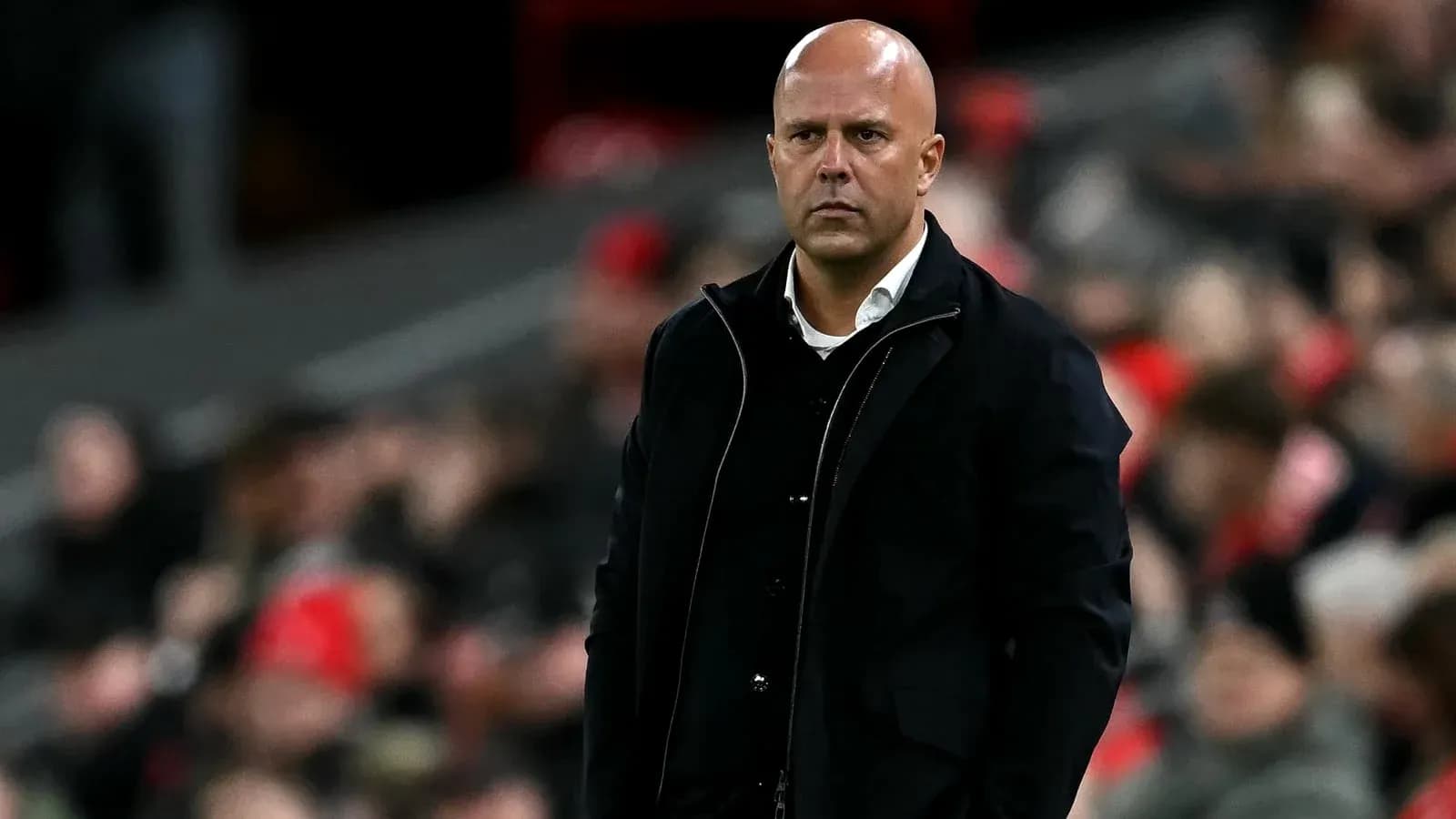
Arne Slot stood in the drizzle of Anfield and did something managers fighting for stature rarely do. He admitted he got things wrong.
Liverpool’s head coach watched a flat 1-1 draw with Brentford close out a title defence that never really caught fire, ending in fifth place and a season that felt like a long, slow comedown. The farewell that Mohamed Salah and Andy Robertson had hoped for never arrived. The performance, like the campaign, fell short.
Slot’s season of hard lessons
Slot did not hide behind excuses.
"Not what I would have loved us to achieve this season before we started," he said, reflecting on a year that promised a fight for the title and instead delivered a scramble for the Champions League places. "We, I, haven't been perfect."
He tried to widen the lens, to remind everyone that even in a title-winning year no manager gets every call right. But the specifics of this season are hard to ignore, and history will circle back to them.
At the heart of it sits Salah. The decision to bench Liverpool’s talisman in November and December, right in the middle of a catastrophic run of nine defeats in 12 matches, defined Slot’s first year. It fractured the dressing room hierarchy, it fuelled public criticism from Salah, and it ended with one of the club’s modern greats negotiating an early exit from a lucrative contract that still had a year to run.
Slot insists every call came from preparation and conviction.
"All the decisions I've made throughout the whole season has been only with one idea, and that's being very well prepared," he said. "Not every decision can be the right one so it would be stupid for me to sit here and say all the decisions I've made were the right ones."
Yet the sense lingers that he misjudged the balance between authority and pragmatism with his star forward. The fallout was immediate, the damage lasting.
Faith, youth and the choices that haunt
Salah was not the only flashpoint. Slot’s unwavering trust in several under-performing players became a running theme, a stubborn streak that fans and pundits alike questioned as the season sagged.
At the other end of the spectrum, Rio Ngumoha became a symbol of what might have been. The teenager’s talent was obvious, his energy badly needed, but his role remained limited until injuries and form issues left Slot with few alternatives. When Ngumoha finally featured more prominently, it felt less like a bold plan and more like a last resort.
These are the decisions that will be replayed in the post-mortem. Not fatal on their own, but stacked together they told a story of a coach still finding his way in the brutal rhythm of a Premier League title defence.
A season scarred by tragedy and injury
Slot did point to a reality that no tactics board can fix. The season was hit by a level of physical and emotional strain that would have bent most squads.
"If you asked me one word to describe this season, I would describe that with the word 'injury'," he said.
Even that felt like an understatement. Before a ball was kicked in anger, Liverpool were rocked by the death of Diogo Jota in a car crash on the eve of pre-season. The impact on the dressing room was immeasurable, the grief running far deeper than any discussion of systems or selection.
On the pitch, the numbers were stark. British record signing Alexander Isak missed 28 matches and started only eight league games. Alisson Becker, the club’s bedrock in goal, was absent for 20. First-choice right-back Conor Bradley lost 32 games to injury. Jeremie Frimpong missed 19, Wataru Endo 18. New 19-year-old centre-back Giovani Leoni saw his season end after just 81 minutes of his debut.
There were weeks when Slot barely had choices to make. "A lot of times I didn't even have to make decisions or choices," he admitted, a line that cut through the usual managerial defiance. Sometimes, he simply picked whoever was still standing.
Salah’s final act, and a familiar flaw
If this was indeed Salah’s last Anfield outing in Liverpool red, it was a quiet, bittersweet goodbye. The Egyptian still found a way to leave a mark, sliding in the assist for Curtis Jones’ opener, a reminder of his enduring class amid the noise that has surrounded his final months.
For a brief moment, Anfield stirred. The goal offered a glimpse of the old Liverpool: sharp, ruthless, in control.
Six minutes later, it was gone.
Kevin Schade rose to head Brentford level, and in that moment the season felt neatly distilled. Liverpool had the initiative, then let it slip. Again. The fragility that has stalked them all year surfaced one more time in front of a restless home crowd.
Brentford’s quiet stride forward
While Liverpool wrestled with regret, Brentford walked away with something more solid. A win would have delivered a first-ever European campaign, but ninth place still marked another step in the right direction.
"It shows we are a good football club," said head coach Keith Andrews. "It never should be taken for granted finishing in the top half... The fact we have been able to do that two years in a row is pretty special."
They leave Anfield with credit, if not the history-making result they wanted. Liverpool leave with questions.
Champions League secured, but at a cost
Slot can point to one line in the table as a shield: Champions League qualification secured despite everything. In a season that began with talk of retaining the title, that feels both an achievement and an indictment.
He has owned his mistakes. He has highlighted the chaos around him. He has reminded everyone that perfection is a myth in this game.
Now comes the hard part.
Salah is going. Robertson is leaving. The spine has been shaken by injury and grief. The margin for error next season will be thinner, the scrutiny harsher, the patience shorter.
Slot says every decision he made felt right at the time. The question now is simple: how many of his next ones can he afford to get wrong?