.svg&w=384&q=75 "GoalGist logo")
Argentina’s World Cup Defense: Chaos in Atlanta
Argentina’s World Cup title defense is a mess. A glorious, nerve-shredding mess that refuses to die.
They were minutes from humiliation against Egypt in Atlanta, 2–0 down to a side playing with conviction and edge, and briefly 3–0 down before a controversial VAR call dragged them back from the brink. Mostafa Ziko did eventually double the Pharaohs’ lead, and at that point Argentina looked finished. Out of ideas. Out of rhythm. Out of the tournament.
Then Lionel Messi decided he wasn’t leaving yet.
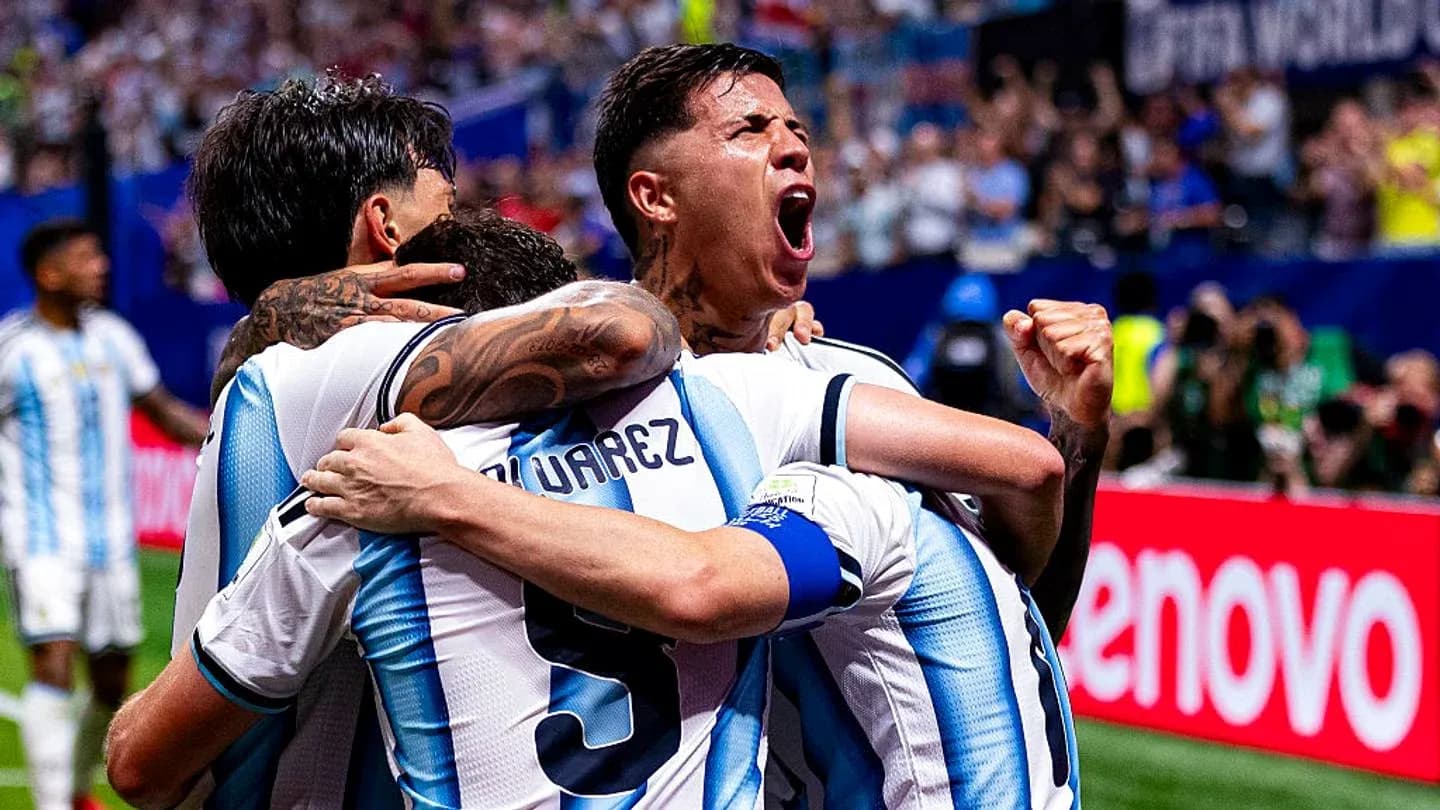
The captain, subdued and frustrated for long stretches, suddenly caught fire. His eighth goal of this World Cup dragged Argentina level, his overall tally in the competition climbing to 21. Before that, his delivery for Cristian Romero’s header had cracked open the game and the Egyptian resistance. By the final whistle, Argentina had turned disaster into delirium, and Messi was in tears — not of joy, exactly, but of sheer relief.
Now comes Switzerland in Kansas City. A very different challenge. Less chaos, more calculation. A stoic, drilled unit that will not offer the same open doors Egypt did. A place in the semifinals sits behind a locked defense, and Argentina must prove they have more than just drama in their locker.
Martínez still waiting for his moment
In goal, Emiliano Martínez remains the undisputed No. 1. He has not yet delivered the trademark, headline-stealing heroics that defined previous tournaments, but Argentina know how these stories usually end. The Aston Villa keeper rarely leaves a major competition without stamping his personality all over it. Penalties, late saves, mind games — his time will come, and Scaloni will not even think about changing him.
Ahead of him, the back four still feels like a puzzle missing a piece.
Nahuel Molina keeps his place at right-back almost by default. Argentina are light in that area, and while Molina has endured a rough tournament, he still offers more thrust and attacking ambition than Gonzalo Montiel. Scaloni desperately needs width from somewhere; for now, it has to come from the full backs, even if the defensive trade-off is uncomfortable.
Cristian Romero is expected to shake off a niggle and start. That matters. The Tottenham defender brings aggression and verticality, stepping out of the line to win duels and drive into midfield. His surging run and towering header against Egypt were emblematic of his importance — a centre-back who changes the tempo, not just clears his lines.
Alongside him, Lisandro Martínez faces a stern examination. The Manchester United defender has been vital in Argentina’s build-up, threading passes through pressure and helping them escape the press. But against Egypt his defensive fundamentals came under the microscope, and Switzerland will test that again. Breel Embolo, if fit and selected, is the sort of physical, channel-running forward who can bully smaller defenders. Martínez will need every ounce of timing and anticipation to stay ahead of him.
On the left, Facundo Medina should return to the XI if his knock has cleared. He started the tournament as first-choice left-back and only dropped out of the Egypt game due to fitness concerns, coming off the bench. If he’s close to full capacity, he is expected to replace Nicolás Tagliafico, offering more bite and a cleaner left foot in advanced areas. Argentina need that natural width to stretch a compact Swiss block.
De Paul’s engine, Mac Allister’s trust, Paredes’ edge
The midfield remains Scaloni’s security blanket.
Rodrigo De Paul is untouchable. His job is unglamorous but indispensable: cover ground, knit play, protect Messi, and set the emotional tone. When Argentina wobble, De Paul is usually the one barking, pressing, tackling, dragging them back into the fight. He starts. No debate.
Alexis Mac Allister holds his place too. On paper, Argentina might find better balance by swapping him for a pure playmaker, someone to unlock deep defenses with a killer pass. On the pitch, though, Scaloni trusts the Liverpool midfielder’s intelligence and positional discipline. Mac Allister gives structure, links phases, and rarely panics on the ball. Loyalty matters in knockout football, and he has earned it.
Leandro Paredes, meanwhile, quietly made one of the most important plays of the Egypt match. Deep into stoppage time, with the game still on a knife edge, he stepped in with a crucial intervention to prevent Egypt from snatching back the lead. That kind of moment sticks in a coach’s mind. Paredes brings bite, range of passing, and a certain streetwise edge that Argentina lean on when games get wild. He is in line to start again in Kansas City.
Enzo Fernández will likely operate from the left side of that midfield band, even though the lack of true width has clearly hurt Argentina at the start of the knockouts. He drifts inside, looks to combine, and tries to arrive in the box, but the touchline often feels deserted. Nico González, a more natural wide outlet, once again seems set to begin on the bench, an impact option if Argentina are chasing the game or need to stretch tired legs late on.
Messi and Lautaro, again
Up front, the story never really changes. It just finds new ways to twist.
Messi, 39 years old and carrying a nation’s expectations one more time, laboured for long spells against Egypt. His touch occasionally betrayed him, his bursts were shorter, the gaps between his moments of influence longer. Then, with Argentina staring down a humiliating exit, he reached into that familiar, almost mythic reserve. The assist for Romero. The thumping equaliser. The emotional outpouring at full-time. He is not the same player physically, but his ability to alter the entire mood of a match in a single passage remains untouched.
Alongside him, Lautaro Martínez is poised to return to the starting XI. Julián Álvarez is still not quite at full throttle after an ankle injury, and it showed. Lautaro’s influence off the bench against Egypt pushed him back to the front of the queue: sharper movement, more presence in the box, a constant threat on the shoulder of the last defender. His partnership with Messi is well-worn and trusted; they understand each other’s spaces, even when the performance is far from perfect.
So Argentina roll into Kansas City: bruised, flawed, but alive. The chaos of Atlanta bought them time. Switzerland will not be so generous.
This time, can the holders impose themselves from the start, or are they destined to live on the edge until this wild title defense finally snaps?