.svg&w=384&q=75 "GoalGist logo")
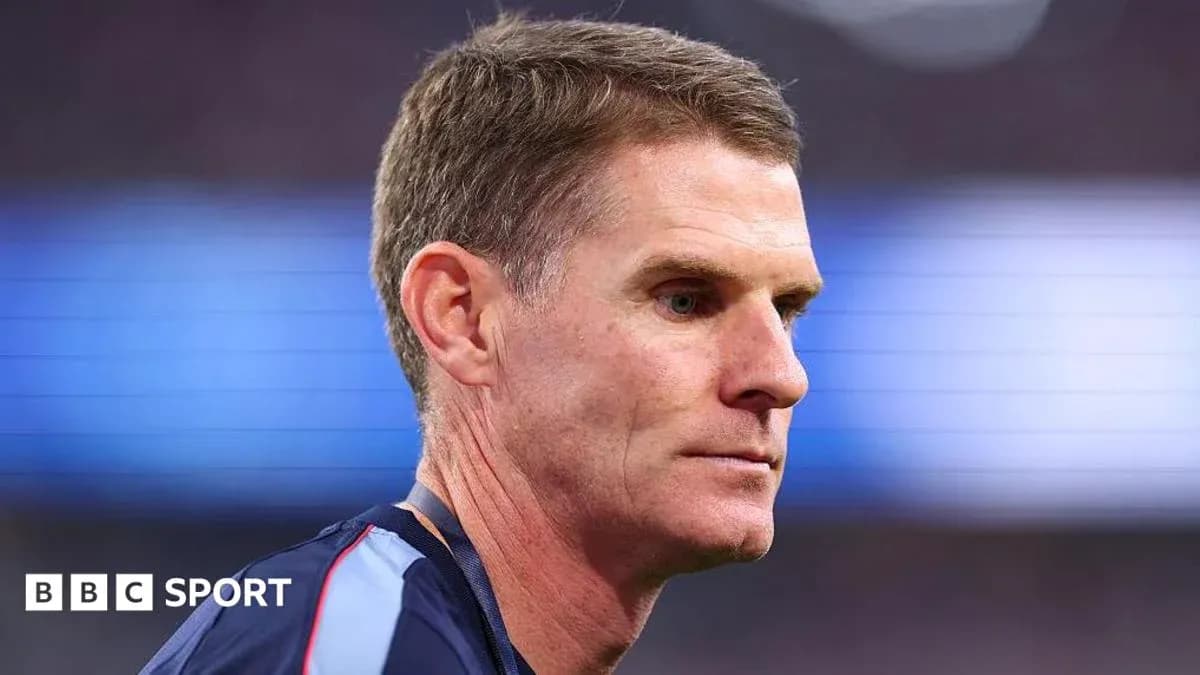
Anthony Barry Continues as England's Half-Time Interviewer at World Cup
Anthony Barry will continue fronting England’s televised half-time interviews at the World Cup, even after his stark on-air critique of the team’s display against Croatia raised eyebrows.
The assistant coach gave a blunt, almost forensic breakdown of England’s first 45 minutes in Dallas, with the game locked at 2-2. Thomas Tuchel’s side eventually powered to a 4-2 win, but Barry’s assessment cut through the scoreline and straight to the flaws.
Inside the camp, though, there is no sense of controversy. Quite the opposite.
Honest voice stays on air
England staff are convinced that putting Tuchel or players in front of the cameras during the interval would be a poor use of precious minutes. The head coach wants every second in the dressing room; the players need to reset, not perform.
Barry has become the bridge. He talks to broadcasters while Tuchel talks to his squad.
Crucially, Tuchel is understood to welcome the honesty. The assistant’s candour, rather than causing friction, has been embraced as a reflection of the standards expected in camp.
Half-time interviews are a relatively new wrinkle in World Cup coverage, described as a “request rather than mandatory”. Some nations send their manager, others a substitute or a member of staff. The tone varies wildly: from guarded platitudes to Barry’s unvarnished truth.
Against Croatia, there was no attempt to sugar-coat.
“Overall, a complicated and confusing first half from us really,” Barry said, summing up a chaotic opening. He spoke of “a lot of nervous energy early on” and suggested that might be “accepted and maybe expected in the opening game of a World Cup.”
Then he went deeper. England, he argued, made the wrong choices all over the pitch.
“We played long when we should play short and played short when we should play long really. Not playing through the gaps, so not allowing us to accelerate our game the way we wanted to.”
The penalty, he felt, should have settled England. It didn’t.
“You'd think the penalty would free us up and allow us to play more like us and look more like ourselves, but again we fall back into some fearful patterns.”
Set-pieces, as so often, bailed them out. “Yeah, we've always been able to rely on set-pieces. We get the second goal and again we're hoping that's the moment to free us up and move forward in the game. But, OK, we concede the second goal late on and now we have to speak about that at half-time.”
It was the kind of mid-game analysis usually reserved for the dressing room, broadcast live instead. Some viewers were startled. England’s hierarchy were not.
Barry will stay in that role as the tournament continues, the public face of England’s internal debrief while the head coach stays locked in the tactical battle.
Rashford fitness under watch
Away from the cameras, England’s medical team are monitoring Marcus Rashford ahead of Tuesday’s meeting with Ghana.
The forward came off the bench in Dallas to score England’s fourth goal, adding gloss to the win and underlining his value as a game-changer. After the match, though, he reported muscle discomfort.
There is optimism that the soreness will not rule him out against Ghana, but his condition is being checked carefully as the staff weigh risk against reward in a long tournament.
England move on with three points, a statement of attacking intent, an assistant unafraid to speak plainly on live television, and a key forward under assessment. The margins only get tighter from here.

