.svg&w=384&q=75 "GoalGist logo")
Anfield's Era Ends With a Whimper
The song came first. It often does at Anfield. “Don’t worry about a thing…” drifted out from The Kop, a defiant chorus of Bob Marley as another grim afternoon closed the book on Liverpool’s 2025/26 season.
No one inside the ground really believed it.
This wasn’t catharsis. It felt like a wake. Two more pillars of the modern Liverpool era waved their goodbyes. Mo Salah and Andy Robertson, symbols of a team that once swept up every major honour, walked around Anfield for the last time as Liverpool players. The applause was warm, the mood anything but.
Half of the squad Arne Slot inherited just two years ago has now gone. More will follow this summer. The churn is brutal, the direction uncertain.
A Season That Cannot Be Dressed Up
Strip away the sentiment and the cold numbers are damning. Liverpool finished fifth with 60 points. Champions League football is secured, but only because of a quirk of coefficients and expanded qualification. On any normal yardstick, this was a failure.
Sixty points would have left them ninth last season. Seventh the year before. Ninth three years ago.
It is the lowest tally to bring Champions League qualification since 2003/04, the season Gerard Houllier’s time at Anfield ended with a polite handshake and a photoshoot on the pitch. Back then, everyone agreed it had run its course. This time, it feels more complicated.
Liverpool ended the campaign with a limp 1-1 draw against Brentford. It extended a miserable run of just four wins in their final 14 games in all competitions. They failed to win any of their last four league matches. The finish was as flat as the football.
Supporters who lived through the 1990s don’t need telling what a slide can look like in real time. They remember Graeme Souness clearing out Kenny Dalglish’s ageing title winners at speed, then watching the club drift into mediocrity. The parallels are uncomfortable, and Salah himself has not hidden his concern as he closes the curtain on nine extraordinary years.
Slot on the Bench, Salah in the Middle
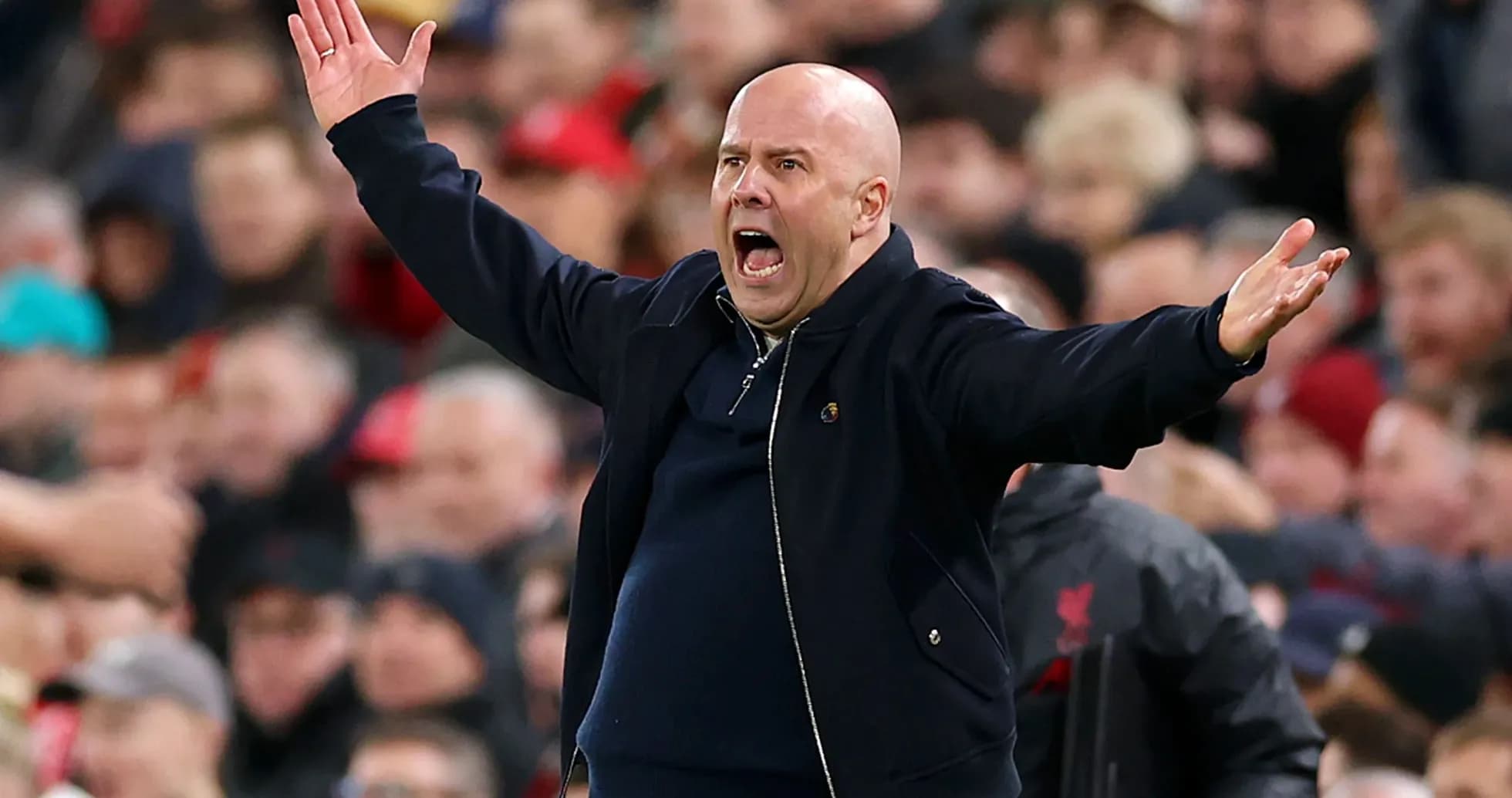
When the final whistle went, the eyes weren’t just on the players. They were on Slot.
This was his moment to step towards the supporters, to share the lap of appreciation, to stitch some sort of connection after the lowest league win percentage in a decade – just 17 victories. Instead, he sat. Alone, hunched, expression hard to read, as the squad circled the pitch.
Maybe it was reflection. Maybe it was fatigue. It didn’t look good.
The walk is a ritual at Liverpool. It is for both sides – players and coach thanking the crowd, the crowd acknowledging the effort. Slot stayed on the bench and the sense of distance grew.
Salah, by contrast, went the other way. He spoke to Sky Sports and cut straight to the core of the club’s identity: “They [the fans] don’t care that much about the result as long as you sweat and give your blood here, they’ll love you forever.”
That is the bargain at Liverpool. You show up. You give everything. You walk through the storm together. This season, the club has been through a storm of its own making, compounded by tragedy after Diogo Jota’s death in pre-season. The emotional toll has been heavy. The football has not matched the rhetoric.
Injuries, Choices and a Shrinking Squad
In his final press conference of the campaign, Slot was asked to sum up the season in one word. “Injury,” he replied.
On the surface, it’s understandable. Liverpool have carried a significant injury load. Yet the context matters. Back in October, Slot was clear that the squad size was a deliberate choice: “This is a decision we have made together, I completely believe in this, because if you have 25 [players] it’s very hard to manage your squad.”
You cannot celebrate a small squad in autumn and then spend winter and spring lamenting a lack of options, the strain of midweek and weekend games, and the inability to rotate without a drop in quality. Not when the Champions League has expanded and the Premier League’s pace rarely relents.
Slot warned even then that “if we end up with two, three or four injuries… things can become complicated.” They did. Yet the squad remained smaller than it needed to be, partly by design and partly by his own reluctance to trust certain players.
- Trey Nyoni, the gifted midfielder who debuted under Jurgen Klopp at 16, finished the season with just 21 league minutes.
- Federico Chiesa, marginalised yet again, managed 318.
- Wataru Endo, a seasoned international, just 170.
- Kieran Morrison, captain and standout for the Under-21s, made the bench 13 times. He played five minutes of senior football, in an FA Cup tie at Wolves.
The Harvey Elliott situation only deepened the sense of mismanagement. With Liverpool crying out for quality from the bench in the second half of the season, no agreement was in place to bring him back in January. The club carried a self-inflicted shortage into the most intense part of the campaign.
Injuries hurt Liverpool. Choices did, too.
Heavy Defeats and Heavier Standards
Slot has tried to contextualise the cup exits. The FA Cup ended with a 4-0 defeat to eventual winners Manchester City. The Champions League run died with a 4-0 loss to PSG, a side unbeaten in two-legged European ties for two seasons.
True, the opponents were elite. The manner of the defeats was not.
Liverpool’s standards, set by the likes of Virgil van Dijk, Robertson, Salah and Curtis Jones, are not built on honourable exits. All four have made it clear this season fell below what is expected of Liverpool Football Club.
Salah’s parting words at the AXA Training Centre hammered that home: “Being in Liverpool, winning something for Liverpool and winning games is the best thing that could happen to you all.” That is the culture he leaves behind, and the one Slot must live up to.
The Dutchman described Champions League qualification as “our lowest base,” then pointed to Chelsea and Tottenham as examples of big clubs missing out on Europe entirely. For some supporters, that sounded less like perspective and more like a softening of ambition.
Liverpool do not measure themselves against who failed. They measure themselves against trophies. A season that includes 4-0 exits, a run of four defeats in five, and no serious title or cup challenge is not framed as progress at Anfield. It is framed as failure.
Even the season’s longest unbeaten run – 13 games after a 4-1 home humiliation by PSV – carried caveats. The sequence included draws with Leeds (twice), Burnley and Fulham, and wins over Barnsley in the FA Cup and a West Ham side that would later be relegated. The numbers looked better than the performances.
Transition, Turmoil and a Summer of Decisions
The word around Anfield is “transition.” It has been for a while. The problem is that transition has become a constant state rather than a phase with a clear end.
Slot’s own future is not nailed down. He has one year left on his contract. So do the key decision-makers above him, Richard Hughes and Michael Edwards. The club is walking into a pivotal summer with uncertainty running from the boardroom to the dressing room.
The dressing room itself could be ripped apart again. Up to nine first-team players could go.
- Salah and Robertson are already heading out.
- Ibrahima Konate is out of contract.
- Chiesa and Endo are expected to be available.
- Curtis Jones, with only a year left and strong interest from Inter Milan, is widely expected to move.
- Alisson is wanted by Juventus.
- Joe Gomez, another with a year remaining, could be sold.
- Alexis Mac Allister may also be sacrificed for the right price.
If even a portion of those exits materialise, Slot will be left reshaping a squad that already feels thin. At present, Liverpool’s leading active goalscorer for the club going into next season is Cody Gakpo. Behind him, remarkably, stands centre-back Virgil van Dijk.
Slot has spoken about “a little transition” this summer, insisting it will not be as “drastic” as last year. On paper, it looks anything but little. It looks like major surgery.
A Song, a Storm, and a Question
As the stands emptied and the last echoes of Marley faded into the evening, the message from The Kop was clear enough: don’t worry, every little thing is gonna be alright.
The reality is harsher. The club is losing icons, the squad is frayed, the coach has yet to convince, and the bar set over the past decade has been missed by a distance.
Liverpool will return to the Champions League next season. The anthem will play, the flags will fly, and Anfield will feel like Anfield again for those nights.
The real test is whether this is a brief stumble or the start of another long slide into the kind of mediocrity this club thought it had left behind.