.svg&w=384&q=75 "GoalGist logo")
Andy Robertson: From Liverpool Legend to Tottenham's New Leader
Andy Robertson leaves Liverpool with his place in club folklore already carved in stone. A relentless presence through Jurgen Klopp’s golden era, he walks out of Anfield not just with a medal collection that fills a cabinet, but with a reputation as one of the finest left-backs of the Premier League age.
Now he walks into Tottenham Hotspur, a very different club at a very different moment, with a very clear job: raise the level.
The making of a Liverpool great
At Liverpool, Robertson was the benchmark.
- Two Premier League titles.
- A UEFA Champions League.
- An FA Cup.
- Two League Cups.
- A FIFA Club World Cup.
Every major trophy that mattered, he helped deliver.
In the Premier League era, Liverpool have never had a better left-back. In the club’s entire history, you are essentially arguing between Robertson and Alan Kennedy, the man who scored two European Cup-winning goals. That is the company he keeps.
Klopp’s system demanded full-backs who could run, press, and create at a ferocious tempo. Robertson was built for it. He tore up and down that flank, with and without the ball, like a man who treated the touchline as his personal racetrack. The intensity of his game matched the intensity of his manager’s football.
Rival coaches noticed. After Manchester United were beaten 3-1 at Anfield in December 2018, Jose Mourinho could barely believe what he had seen. He described Liverpool as “fast, intense, aggressive, physical, objective” and admitted he was “still tired from looking at Robertson,” who he said was making “100-metre sprints every minute”. It was hyperbole, but it captured the feeling: Robertson was a blur in red.
A running machine with bite
The numbers back up the eye test.
In 2020/21, Robertson covered 389.3km in the Premier League, the second-longest distance by any full-back, just behind Luke Ayling. For three straight seasons from 2019 to 2022, he led all Premier League full-backs for sprints. Nobody at his position moved more, or more explosively.
Season after season, he ran himself into the ground for Liverpool. The pressing was constant, aggressive, and intelligent, and it produced one of the most iconic defensive sequences the league has seen.
In that wild 4-3 win over Manchester City in January 2018, Robertson delivered his famous 13-second press: Bernardo Silva, Kyle Walker, John Stones, Ederson, Nicolas Otamendi – all hunted down in one outrageous, continuous burst. Anfield roared, and a cult hero was born. It was defending as theatre, and it summed him up: fearless, tireless, utterly committed.
Creative force from the flank
Robertson was not just a runner. He was a creator of the highest order.
Only two full-backs in Premier League history have posted 10 or more assists in three separate seasons: Trent Alexander-Arnold and Andy Robertson, in 2018/19, 2019/20 and 2021/22. Liverpool’s full-backs were playmakers from wide, and Robertson was central to that revolution.
His assist tallies in those seasons – 11, 12 and 10 respectively – put him in elite territory. Since arriving from Hull City for a reported £8million in 2017, no Premier League left-back has matched his attacking output.
From 2017/18 onwards, among left-backs he ranks first for chances created, big chances created, touches in the opposition box and successful passes into the final third. He has 56 Premier League assists, the most by any left-back. Only Lucas Digne has delivered more successful open-play crosses from that side.
Stack his numbers against all defenders, not just left-backs, and he still sits near the top: first for touches in the opposition box, second for chances created, second for big chances created, second for assists, second for open-play crosses, third for successful open-play crosses.
Ashley Cole probably still holds the crown as the Premier League’s greatest left-back. But Robertson is right on his shoulder.
Why Tottenham moved
So why Spurs, and why now?
At 32, out of contract at the end of the month, Robertson became one of the most attractive free transfers on the market. Tottenham were among several clubs pushing hard. They had already tried to bring him in during January, only for the deal to collapse when Liverpool could not recall Kostas Tsimikas from his loan at Roma.
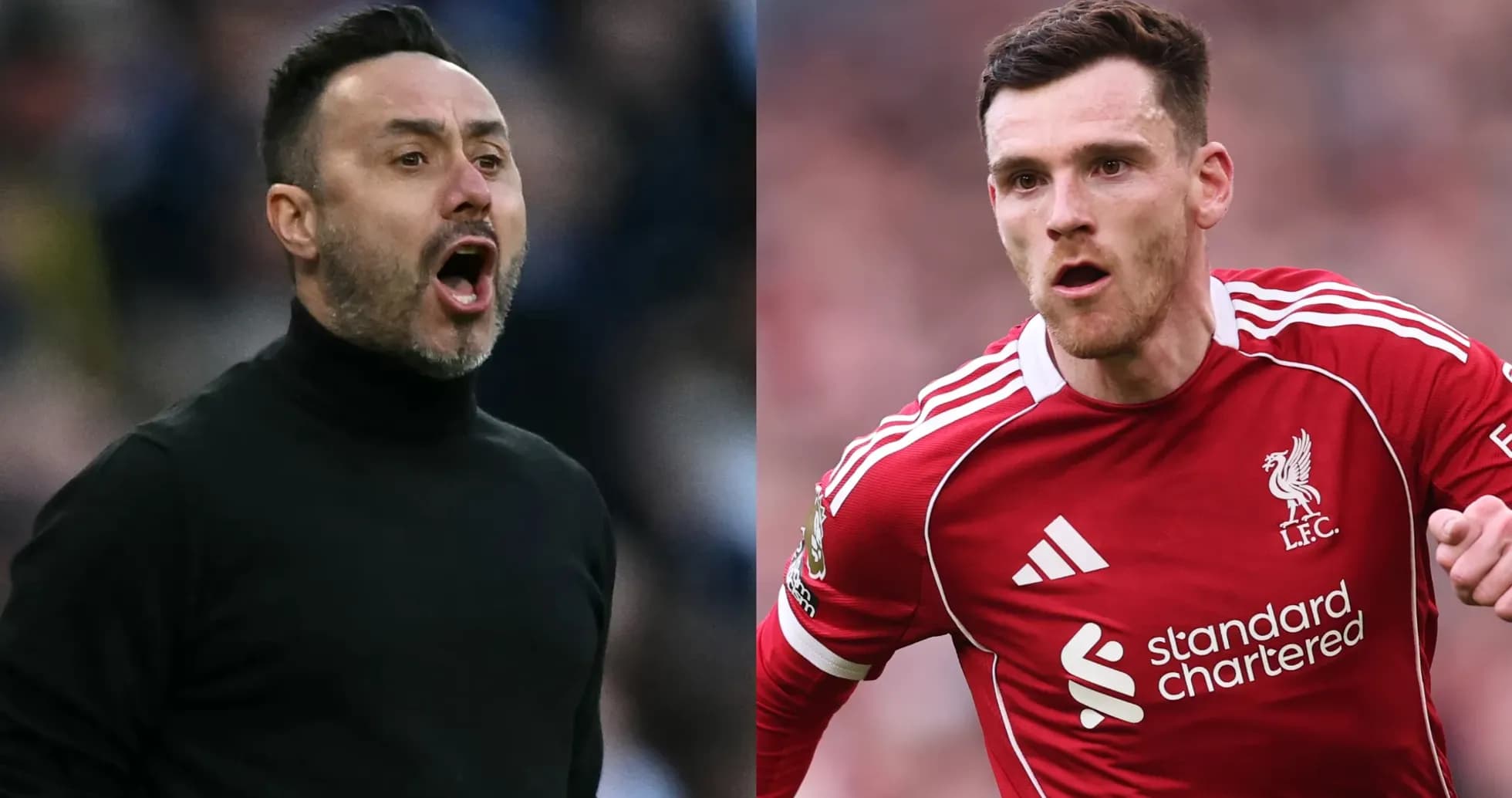
Roberto de Zerbi, newly in the Spurs dugout, was determined to go back in for him. Juventus reportedly circled, but Tottenham got their man.
On paper, they already had options at left-back in Destiny Udogie and Djed Spence. On grass, and in the dressing room, they were missing something else: hardened winners, senior voices, players who know what it takes to live at the top end of the table.
“He brings experience, mentality and qualities,” De Zerbi said when the move was confirmed. “He’s a big player for us.”
That line matters. Tottenham have just trudged through back-to-back 17th-place finishes. The culture has sagged. Standards have slipped. They do not just need legs; they need leaders. Robertson arrives as a serial winner, someone used to demanding more from himself and those around him every single day.
What’s left in the tank?
The obvious question: what version of Andy Robertson are Spurs getting?
He will captain Scotland at the FIFA World Cup 2026, which tells you plenty about his current level. Last season, 2025/26, he started 11 Premier League matches for Liverpool and came off the bench 13 more times. Across all competitions, he featured in 35 games. He is no longer the ever-present he once was, but he is still heavily involved at the sharp end.
The heat map from his final Liverpool campaign underlines how attack-minded he remains. He may not storm into the opposition box quite as frequently, yet he still pushes high, still offers width, still stretches games.
Crucially for Spurs, his output still outstrips what they already have. Per 90 minutes last season, Robertson played more passes into the box than any Tottenham left-back: 5.07, compared to 2.67 for Spence and 1.75 for Udogie.
His tackle success rate? A commanding 75 per cent, again clear of Spence (61.36 per cent) and Udogie (61.29 per cent).
He delivered 0.92 successful open-play crosses per 90, more than double Spence (0.44) and almost three times Udogie (0.34). He also created more chances per 90 – 1.54 – than either of his new rivals (0.81 for Spence, 0.44 for Udogie).
These are not the numbers of a fading force. They are the numbers of a player who can walk into Spurs’ starting XI on merit.
The right player for De Zerbi’s Spurs
De Zerbi wants full-backs who can think, combine, and commit. His football demands technical quality, bravery on the ball, and aggression without it. Robertson ticks every box.
He will give Tottenham balance on the left, reliable delivery from wide areas and an outlet when they look to build from deep. He will also give them something that cannot be measured on a spreadsheet: edge. The willingness to press hard in the 90th minute as he did in the ninth. The refusal to accept sloppiness. The example set every day at the training ground.
Tottenham are not signing the 24-year-old version who arrived at Liverpool with lungs of steel and a point to prove. They are signing the 32-year-old who has seen everything, won everything, and still burns to compete.
For a club desperate to change its direction, that might be exactly the version they need.

