.svg&w=384&q=75 "GoalGist logo")
Al-Ittihad's Khamis Al-Zahrani Issues Warning to Aouar and En-Nesyri
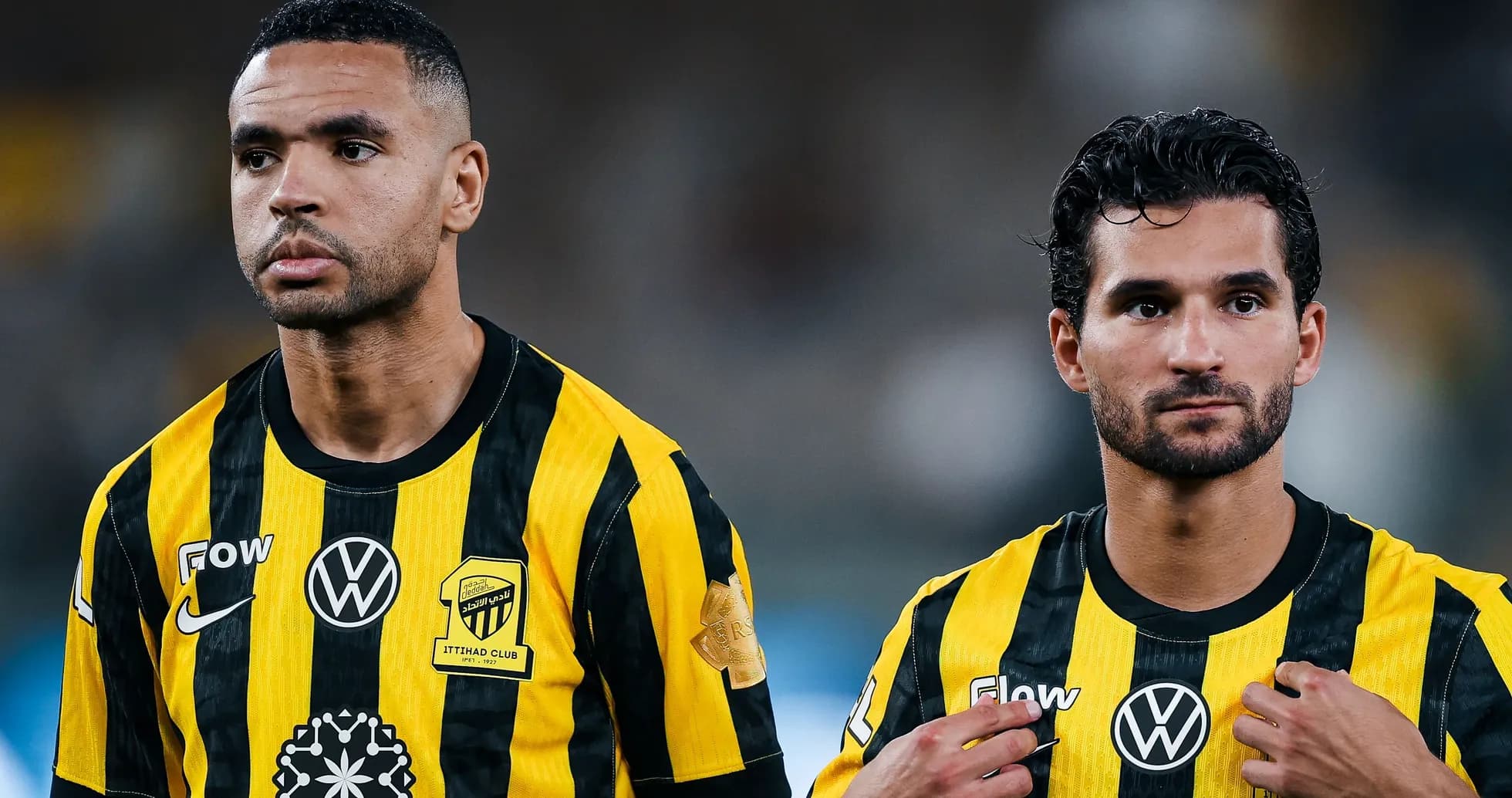
Al-Ittihad great Khamis Al-Zahrani has fired a clear warning shot at two of the club’s biggest foreign names, urging Houssem Aouar and Youssef En-Nesyri to walk away from Jeddah before the new season begins.
For the former midfield leader, the problem is not star power. It is fit. And time.
Al-Zahrani, speaking to Al-Arabiya, painted a stark picture of a club heading into what he called “a very big season” with a squad that does not match the demands of new German coach Jens Wissing.
Al-Ittihad, he argued, lacks the one thing a title-chasing side cannot do without: depth in the right areas.
“The team suffers from a problem in depth, especially with the ideas of the new German coach Jens Wissing,”
he said, before turning his focus directly on the heart of the pitch. The midfield, in his eyes, is nowhere near ready for what Wissing wants to implement.
Al-Zahrani did not spare the big names. He stated that neither Aouar, nor Fabinho, nor En-Nesyri can deliver the roles Wissing is expected to demand — roles built on direct play, aggressive pressing, and rapid transitions. In other words, high-intensity, vertical football that leaves no room for passengers.
For a club of Al-Ittihad’s size, that is a brutal assessment.
The message from the legend is simple: act now.
He stressed that the club must move quickly, with Fabinho, Aouar and En-Nesyri all under the microscope as Wissing shapes his squad. The Brazilian’s situation is already complicated by the end of his contract, placing even more urgency on the decision-making process.
“These matters require speed in decision-making, in addition to quality in selection,”
Al-Zahrani insisted, pointing out that the coach has now had enough time to study the dressing room, “put his finger on the wound,” and identify where the gaps truly are. Those gaps, he believes, must be filled with “distinguished signings.”
Behind the scenes, that process appears to have already started.
Al-Zahrani revealed his understanding that Al-Ittihad plan to bring in two midfielders: one to replace Fabinho directly, and another with a similar profile to Mamadou Doumbia. Aouar’s fate, he added, is tangled in the complex puzzle of the squad list and the cap on foreign players.
It leaves the Algerian playmaker in a precarious position. Stay and fight for a role that may not exist in Wissing’s system, or leave before the season begins, as the club icon suggests.
The stakes are high, and the clock is loud.
“Al-Ittihad faces a thorny matter, and time is extremely tight,”
Al-Zahrani concluded, underlining not only the tactical and squad-building issues, but also the financial constraints surrounding the club. On top of that sits a new coach, one whom he described as lacking extensive experience in leading a club the size of Al-Ittihad.
A giant of Saudi football stands at a crossroads: reshape the core, or risk watching another season slip away while its biggest names wonder if they still belong.

