.svg&w=384&q=75 "GoalGist logo")
Achraf Hakimi Faces Trial for Rape Allegations Amid World Cup Campaign
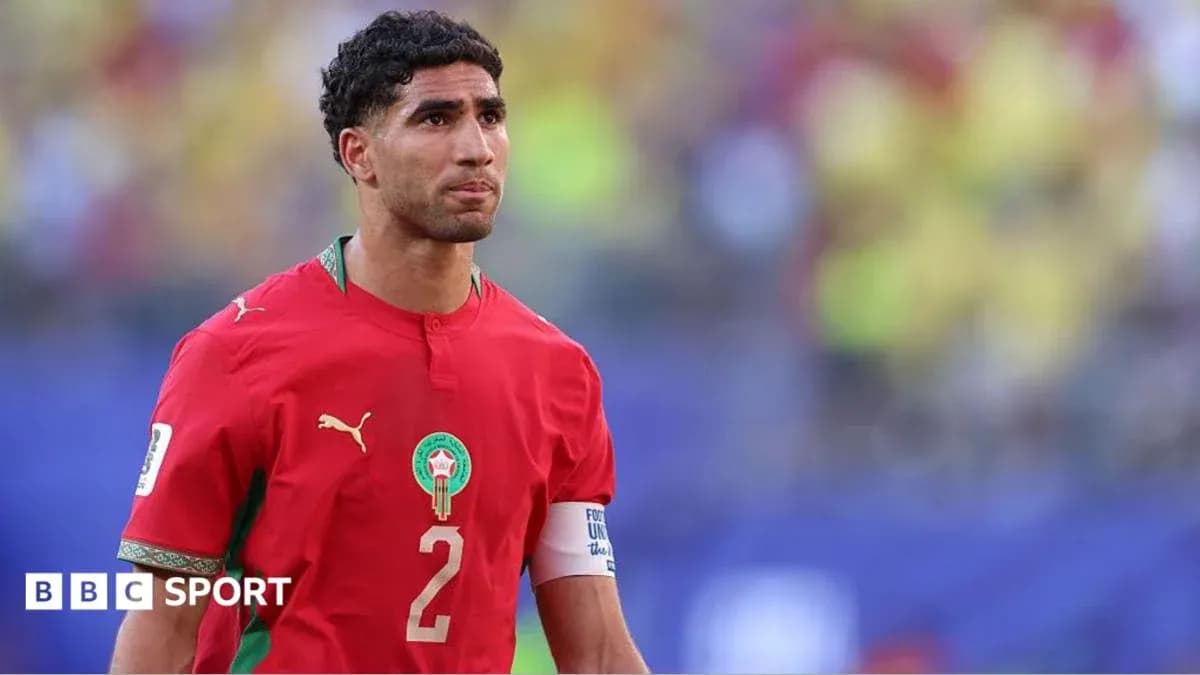
Achraf Hakimi, captain of Morocco and one of the most recognisable full-backs in world football, has been ordered to stand trial for rape in France, casting a long shadow over his World Cup campaign and his glittering club career.
French prosecutors confirmed that the Paris St-Germain defender will face trial over an allegation that he raped a 24-year-old woman at his home in the Paris region in 2023. The public prosecutor's office in Nanterre opened a preliminary investigation in March of that year, and an investigating judge ruled in February 2026 that the case should go to court.
French media report that Hakimi, now 27, recently failed with an appeal to have the case thrown out.
A captain under scrutiny
Hakimi is set to lead Morocco into their second World Cup group match, against Scotland on Friday (23:00 BST), with the legal case looming heavily in the background. Throughout the process he has consistently denied the accusations.
On Friday, he broke a long public silence with a pointed statement on social media.
"The justice system looked me in the eye and said, 'If you weren't famous, there would never have been a case,'" he wrote.
"I chose to remain silent for years. I believed that maintaining my dignity, being patient, and trusting in the justice system would allow the right decisions to be made.
"Today, a story that isn't mine is being told at the expense of my family, my life, and above all, the truth. I sometimes feel like I've become an easy target.
"I've been waiting for this trial since day one. And now I'm eagerly awaiting it. Finally, I'll be able to speak."
A trial date has not yet been set, but the decision to proceed has already intensified the glare on one of the central figures of Morocco’s golden generation.
Relief and resolve from the complainant
On the other side of the case, the woman who made the complaint has welcomed the ruling.
Her lawyer, Rachel-Flore Pardo, said in a statement that the decision brought her client "relief and hope" after what she described as more than three years of gruelling legal proceedings.
"Relief that she has been heard by the justice system and will have the right to a trial," Pardo said.
"Hope that this trial will help other women and further weaken the wall of denial and impunity surrounding sexual violence, including in the world of men's football."
The courtroom battle to come now sits alongside a wider debate about accountability and power within the men’s game, where allegations of sexual violence against high-profile players are surfacing with increasing regularity.
World Cup complications
For now, Hakimi remains with the Morocco squad, based in the United States for the group stage of a World Cup spread across three nations.
All three of Morocco’s group fixtures are being played on US soil, which simplifies matters in the short term. The picture becomes more complex if they progress.
From the knockout rounds up to the quarter-finals, matches can be staged in the US, Canada or Mexico. Should Morocco advance and be scheduled to play in either Canada or Mexico, Hakimi could face significant hurdles entering those countries because of the pending case.
Canada’s government states that it can deny entry to any person who has "committed or been convicted of a crime". While Hakimi has not been convicted and denies the allegation, the existence of an ordered trial may yet test the boundaries of that policy.
The issue is not theoretical. Last week, Ghana midfielder Thomas Partey was barred from entering Canada and missed his country’s World Cup opener against Panama. Partey, 32, has pleaded not guilty to seven charges of rape and one count of sexual assault relating to allegations by four women between 2020 and 2022, and is due to stand trial next year.
For tournament organisers, national associations and players, these cases are forcing urgent, uncomfortable questions about who is allowed to represent their country on the biggest stage, and under what conditions.
From history-maker to defendant
Hakimi’s football story, until now, has been one of relentless ascent.
He made his international debut for Morocco in 2016 at just 17 and has since amassed 97 caps. His surging runs from right-back and unflinching competitive edge turned him into a symbol of Morocco’s rise, culminating in the 2022 World Cup in Qatar, where they became the first African nation ever to reach the semi-finals.
At club level, he joined Paris St-Germain from Inter Milan in 2021 and has collected 13 trophies with the French champions, including back-to-back Champions League titles over the past two seasons. Few full-backs in the modern game carry such a blend of status, silverware and global recognition.
Now that status guarantees something very different: that every step he takes at this World Cup will be viewed through the lens of an impending trial.
As Morocco chase another deep run on the pitch, a far more serious contest awaits Hakimi in a French courtroom. How the game, and the wider public, respond to whatever comes next may say as much about modern football as any result this summer.

