.svg&w=384&q=75 "GoalGist logo")
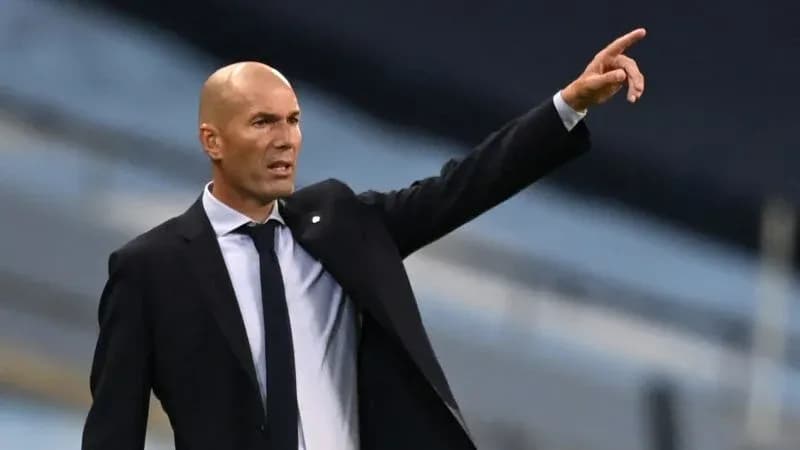
Zinedine Zidane Appointed Head Coach of France National Team
Zinedine Zidane is back where many in France always believed he would end up.
The French Football Federation confirmed on Tuesday that the 54-year-old has been appointed head coach of the national team on a four-year deal, stepping into the seat vacated by Didier Deschamps after a bruising end to the 2026 World Cup.
Deschamps’ long reign – 14 years of finals, trophies, and a defined identity – ended in disappointment in North America. Les Bleus, among the pre-tournament favourites, fell to eventual champions Spain in the semifinals, then slipped again in the third-place match against England. A giant of a generation walked away, and a vacuum opened.
France has chosen the one man with the stature to fill it.
Zidane’s return, France’s reset
For Zidane, this is the job he has circled for years. Since leaving Real Madrid in 2021 after his second spell in charge, his silence on the club scene spoke loudly. He was waiting. France was the job.
“I have often said there is nothing greater than the French national team. It is therefore a joy and obviously a great honor to become the coach of France. It is also a responsibility,” Zidane said at his unveiling, thanking FFF president Philippe Diallo, the Executive Committee and paying tribute to Deschamps’ 14-year tenure. He added a nod to those who shaped him: “I also have a special thought today for all my teachers. Needless to say, I have a lot of ambition for the French Team!”
Ambition has never been in short supply with Zidane, and neither has delivery.
His task now is clear: lift the mood of a wounded giant and drive a squad stacked with attacking talent back to the summit of world football. The expectation is blunt and unapologetic – win the World Cup again, as soon as 2030.
A legend returns to his stage
Zidane does not walk into Clairefontaine as a mere former player. He arrives as the defining symbol of France’s first golden era.
He dragged Les Bleus to their first World Cup title in 1998, scoring two thumping headers in the 3-0 demolition of Brazil at the Stade de France. Those goals did more than win a trophy; they etched a new identity for French football, one that still hangs above the crest in the form of a star.
Two years later, he was again the conductor as France claimed Euro 2000. No World Cup winner had ever followed up with the European Championship in the next cycle. France, with Zidane at its heart, did.
That is the glory. The scars are just as vivid.
His final act in a France shirt came in Berlin in 2006, in a World Cup final that felt scripted for a farewell coronation until it twisted into infamy. Sent off for headbutting Marco Materazzi, Zidane left the stage in a way no one expected, watching from the tunnel as Italy beat France on penalties.
The country has never really let that image go. Nor has it forgotten everything that came before it. His return now offers a chance, if not to erase Berlin, then to write something powerful enough to stand alongside it.
From Madrid maestro to international novice
This will be Zidane’s first job in international management, but he arrives with a club résumé few can touch.
At Real Madrid, he mastered the chaos. Three consecutive Champions League titles. Two La Liga crowns. Two Club World Cups. A dressing room full of egos, Ballon d’Or winners and global superstars, all bent to a single purpose. That is not a small reference point when you are about to walk into a France squad led by Kylian Mbappé.
Zidane’s greatest strength at Madrid was not just tactical structure; it was emotional control. He knew when to protect, when to provoke, when to step back and let the talent breathe. His record in knockout football, especially in Europe, turned tight nights into a personal domain. France will want that same calm, ruthless edge in major tournament football.
International football, though, is a different rhythm. Less time on the training ground. Fewer matches. Longer gaps. Zidane will have to translate his ability to manage short, intense runs in the Champions League into the stop-start reality of national team life.
A galaxy of forwards, a puzzle of balance
If Zidane wanted tools, France has handed him an overflowing box.
Mbappé remains the headline act, a forward who already defines eras rather than seasons. Around him, the options are dizzying: Ousmane Dembélé with his chaos and dribbling; Michael Olise with his craft; Désiré Doué and Bradley Barcola representing the next wave of French attacking flair.
The challenge is not finding quality. It is finding harmony.
France has wrestled with that balance ever since lifting the World Cup in 2018. The team has oscillated between explosive attacking lineups and more cautious structures, often struggling to fuse its offensive firepower with the defensive rigidity that marked Deschamps’ best sides.
Zidane must solve that equation. He did it at Madrid by building a platform behind his stars, giving freedom to the front while trusting the spine. With France, he will be asked to replicate that, but under the glare of a nation that scrutinises every selection, every tweak.
He inherits a group used to going deep at tournaments, used to pressure, used to expectation. That can be a blessing. It can also suffocate. Zidane’s aura, his authority as a legend, will be tested not in the easy nights, but in the moments when decisions cut across reputations and status.
Chasing a rare double
There is also history at stake for Zidane himself.
He already owns the World Cup as a player. Now he steps into the race to join the tiny, elite group who have lifted it as both player and manager. Deschamps got there first in French colours. Zidane, once his teammate, now chases him from the dugout.
The arc is irresistible: the man who defined France’s rise in 1998, who left the stage in a storm in 2006, now charged with leading a new generation to their own defining moment.
The World Cup in 2030 looms large on the horizon. Between now and then lie qualification campaigns, continental battles, and the constant noise that surrounds any France team stacked with stars and ambition.
Zidane has wanted this job for a long time. Now he has it, with the country watching and a squad capable of anything. The question is no longer whether he would return to the national team.
It is what kind of legacy he will leave this time.