.svg&w=384&q=75 "GoalGist logo")
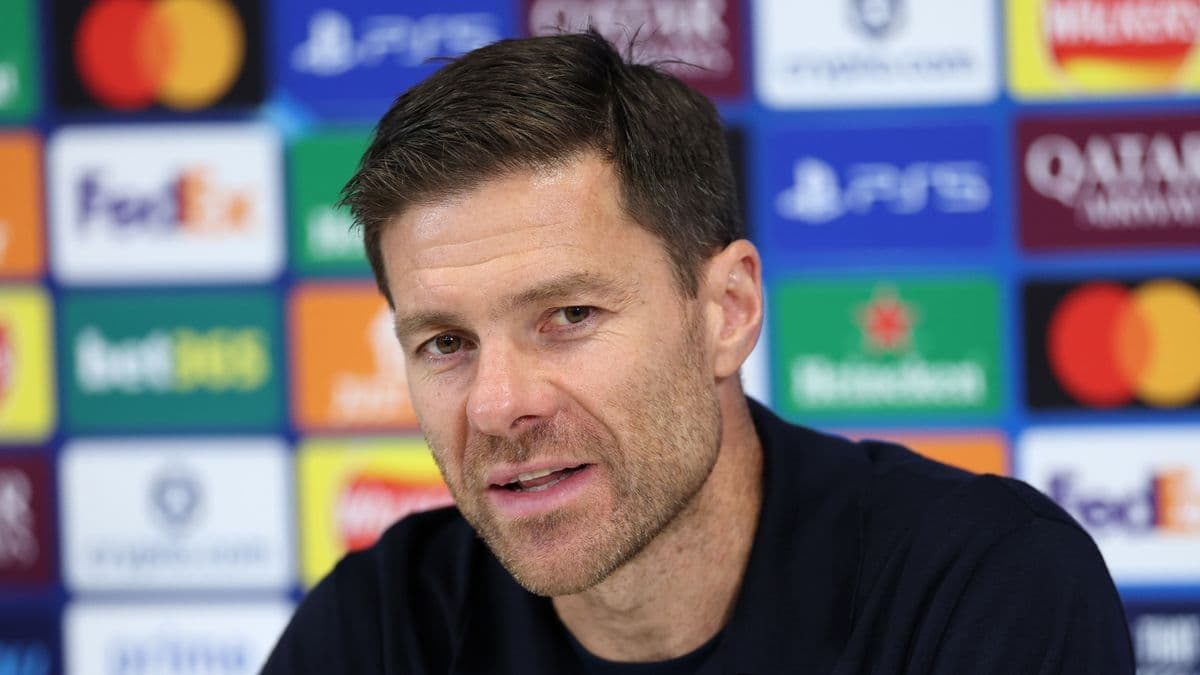
Xabi Alonso's Impact at Bayer Leverkusen: From Relegation to Unbeaten Season
When the whistle went at the BayArena on May 18, 2024, Xabi Alonso didn’t punch the air or beat his chest. He turned, almost instinctively, to his staff. The celebrations were shared, not claimed. Yet there was no hiding the truth: a 44-year-old in just his second managerial job had just ripped up the Bundesliga’s record book.
Bayer Leverkusen, the club long mocked as “Neverkusen”, had gone an entire league season unbeaten. Thirty-one years after their last major honour, the cruel nickname was flipped on its head. “Neverlusen” was born, and Alonso was the architect.
From relegation fight to European obsession
When Alonso walked into Leverkusen in October 2022, they were 17th in the Bundesliga. He spoke then about playing an “important role”. Ambitious words, but no one – not even a former Real Madrid and Liverpool metronome with a brain built for structure and space – could have forecast what followed.
Leverkusen did not just improve. They transformed. They pressed with fury, built with calm, and played with a clarity that made Europe sit up. The invincible season in 2023/24 was the crescendo, a campaign where Leverkusen conceded just 24 league goals. The next best defence, Stuttgart, let in 39. The gap was a statement.
It matched Alonso’s own doctrine. “Defence is a fundamental part of our identity. Defence wins titles,” he said during his time in Madrid. His Leverkusen side lived that line.
The effect was inevitable. The biggest jobs in Europe stopped being rumours and became choices. For Alonso, the decision narrowed to two old homes: Real Madrid or Liverpool.
Liverpool wait, Madrid bites, Chelsea lurk
Liverpool wanted him in the summer of 2024 as Jürgen Klopp’s successor. The fit was obvious: a beloved former player, a tactical purist, a natural leader. Alonso said no. He chose to stay at Leverkusen, calling it the “right place to develop as a coach”.
That didn’t mean he lacked a plan.
In the background, the route was drawn: Real Madrid, 12 months later. The Santiago Bernabéu came calling at the start of the 2025/26 season and Alonso walked into perhaps the most unforgiving job in world football. Less than eight months later, he walked back out.
The Madrid machine had claimed another coach. His reputation, though, remained strangely intact. People know what that environment can do, even to the best.
When his departure was confirmed in January, speculation snapped straight to Liverpool. Anfield had already started to turn on Arne Slot as their title defence unravelled. Performances sagged, results slipped, and the atmosphere darkened. Yet Liverpool’s hierarchy chose continuity. Slot, they decided, would stay, at least to the end of the season, with a plan to back him again in the summer.
That stance changed the landscape. For once, Chelsea were not being dragged into a straight fight with Liverpool.
A rare free run for Chelsea
The two clubs have collided repeatedly in the market: Moisés Caicedo, Romeo Lavia, most recently Jeremy Jacquet. This time, despite Alonso’s emotional ties to Liverpool, the path looks strangely clear for Chelsea.
From Chelsea’s point of view, it is a gift. A young, elite-level coach whose profile mirrors almost perfectly what BlueCo want: tactically sharp, development-minded, comfortable working with a project rather than a finished article.
Talks have already taken place between Chelsea and Alonso’s camp, according to sources. The club want a head coach in place before the World Cup kicks off next month. They know the squad needs surgery after another bruising Premier League campaign. They also know they must sell the idea that the head coach will be more than a passenger in a recruitment machine.
Chelsea are ready to back Alonso heavily this summer. The offer is simple: take the keys, reshape the squad, and build something that can finally justify the vast outlay and lofty rhetoric at Stamford Bridge.
Tactics, talent and the Palmer question
Alonso’s blueprint is clear. At Leverkusen he favoured a 3-4-2-1, a shape that gave him width, overloads in midfield and protection at the back. His teams were expansive with the ball, ruthless without it. Players were expected to run, to press, to suffer for possession.
The most striking example of his work came in the form of Florian Wirtz. Under Alonso during that unbeaten season, Wirtz delivered 18 goals and 20 assists in 49 games in all competitions. A No.10 with licence to drift, combine and destroy.
Wirtz’s first season at Liverpool has not matched that level. He has struggled to adapt, one of several reasons Liverpool supporters dream of Alonso eventually landing at Anfield. They have seen what he can do with a gifted playmaker.
Alonso himself once explained the approach: “I only have to support that talent, and I only need to create players that will help him shine and to show that talent, because if you don't provide that sustainability, that talent won't be consistent.”
Drop that sentence into west London and it sounds like a manifesto for Cole Palmer.
Palmer has endured a difficult season. Injuries have interrupted his rhythm, but the bigger issue has been freedom. Under Mauricio Pochettino, when he was allowed to roam, to take risks, to dictate the tempo in the final third, he produced his best football in a Chelsea shirt. This season, that looseness has disappeared.
Alonso’s track record with attacking players will be one of the major selling points for Chelsea’s hierarchy – and one of the main reasons supporters are already picturing Palmer thriving in those half-spaces, with a structure behind him built to let his talent breathe.
Defence first, or nothing at all
For all the talk of Wirtz and creative freedom, Alonso’s Leverkusen were anchored by their defensive steel. Twenty-four goals conceded in a full league season is not a quirk; it is a system working at its absolute peak.
That is exactly where Chelsea are failing.
They have already shipped 49 league goals this term, six more than the entire 2024/25 campaign with two matches still to play. Only eight teams in the division have conceded more. Enzo Maresca and Liam Rosenior have both publicly lamented individual errors and structural flaws at the back. Those complaints have become a grim soundtrack to Chelsea’s season.
The club know it has to change. A starting-level centre-back is a priority this summer, and the intention is clear: the new head coach – whether Alonso or someone else – must have a voice in that signing. For Alonso, that detail will be decisive. If Chelsea present a model where the head coach is kept at arm’s length from recruitment, the former Spain midfielder will think very carefully before stepping into Stamford Bridge.
A crossroads for both sides
Alonso’s next move carries real weight. He still holds an elite reputation. The Madrid stint is viewed less as a failure and more as another chapter in the Bernabéu’s long history of chewing up coaches. He has, in many eyes, been granted a free pass.
Chelsea, under BlueCo, do not offer that luxury. Managers have come and gone at dizzying speed. Promises of patience have repeatedly collided with the reality of poor runs and restless owners. Any coach walking into that environment knows the risks.
Alonso will, too. He will study the pattern, the sackings, the public briefings. He will ask how much control he truly gets, how much time, how much trust.
Yet all the signals suggest he wants back in this summer. He is too driven, too competitive, to sit on the sidelines for long. BlueCo, for their part, believe the timing is perfect: a club in need of an identity, a coach with a clear one, and a fanbase desperate for something coherent to believe in.
So the question hangs in the air over Stamford Bridge: does Xabi Alonso see Chelsea as the platform to rebuild his story – or as just another madhouse to avoid?

