.svg&w=384&q=75 "GoalGist logo")
World Cup Final: Messi vs. Mbappé and the Stakes
The World Cup has reached that strange, weightless pause before the final act. England are still arguing with themselves, managers are being scrutinised, politicians are booking flights, and somewhere in New Jersey Lionel Messi and Kylian Mbappé are preparing to decide a Golden Boot and a World Cup in the same 90 minutes – or more.
Messi and Mbappé are locked together on goals. The Argentine sits top of the Golden Boot standings thanks to one extra assist, a neat statistical nod to his role as both conductor and finisher. The debate now bubbling away is a very modern one: should a goal in the final count for more than one in the third-place play-off? It’s the kind of argument that tells you everything about how bloated this tournament has become – and how desperate we are to weigh and rank every last moment.
England’s Autopsy and Tuchel’s Tightrope
Back in England’s camp, the inquest has barely started to cool. Thomas Tuchel is staying on, his job intact despite the substitutions that helped send England out in the semi-finals. The players, unsurprisingly, were left puzzled by a game plan that seemed to require rescuing every time it was put to the test.
One reader, James Moriarty, crystallised the nagging doubt. Tuchel had been praised all tournament for “game-changing substitutions”, but if the bench saves you every time, what does that say about your starting XI? In an era of five substitutes, managers talk about “finishers” and “second-wave plans”, but England felt like a team forever trying to fix problems they had created for themselves. They were, as Moriarty put it, “staggeringly lucky” to get as far as they did, and clearly the weakest of the semi-finalists.
Tuchel now has a third-place play-off to navigate – that strange, hollow fixture that pretends to be a prize. Does he go full strength and chase a consolation medal, or share minutes around a squad that still looks mentally and physically drained? The logic says rotation: a half each for the goalkeepers, time for Ollie Watkins and Ivan Toney to stretch their legs, a deserved run-out for Kobbie Mainoo. The emotion, though, lies elsewhere. England’s gaze has already drifted to the next cycle, the next reset, the next argument.
Rodri’s Revival and a Hint of Change
Away from the noise, there has been quiet joy in watching Rodri reassert himself on the biggest stage. After an ACL injury that cast real doubt over his long-term level, the midfielder has grown back into his body and back into his authority. This World Cup has felt like a personal reclamation: trust in his knee restored, rhythm rediscovered, presence undeniable.
There is a suspicion – and it is only that for now – that this might have been his last act in a Manchester City shirt. No declarations, no announcements, just a sense that his performances have put him on the cusp of a decision. Those conversations will come in the weeks ahead. For now, his World Cup belongs to the here and now, to a player who looked like he might never be quite the same and has instead looked better than ever.
Madrid, Mourinho and Alexander-Arnold’s Second Chance
Club football, of course, never truly leaves the stage. At Real Madrid, the Mourinho sequel is already underway and Trent Alexander-Arnold is relishing the change. The England right-back, who left Liverpool last year for a move that felt both bold and bruising, endured an injury-hit first season in Spain and never fully nailed down a starting place.
Now Dani Carvajal has gone, the path is clear. Mourinho’s return in June – after a season in which Madrid surrendered LaLiga and went out in the Champions League quarter-finals – has injected a harsher edge. Alexander-Arnold calls it “intense”, talks of high demands and a willingness in the squad to learn and improve. After so long out, he is simply glad to be building a proper base for a season in which he expects, and is expected, to be Madrid’s first-choice right-back.
This is his window. Mourinho, for all the drama, has always trusted players who respond to his demands. Alexander-Arnold’s talent has never been in doubt. His durability, and his fit in a more rigid system, will define his Madrid story from here.
Power, Politics and a President for Life?
Over the road from the football itself, Fifa politics continue with their usual, unstoppable momentum. Gianni Infantino has secured formal endorsement from more than 200 of Fifa’s 211 member associations for a fourth term as president, despite the unrest swirling around the organisation in the wake of the Folarin Balogun suspension scandal.
Only a small group of associations are yet to send letters of support. A handful of European FAs are holding out, with Germany the most notable absentee from the list of backers. It will not matter. Infantino is heading for another landslide at the March congress, another mandate from a global electorate that long ago learned to live with Fifa’s contradictions.
As Mel Brennan once wrote, football survived Sepp Blatter, Jack Warner and Chuck Blazer. It will survive Infantino too. The game always has. It always will. The question is what state it will be in when he finally walks away.
Leaders in the Stands, Banners on the Pitch
The final itself has drawn not just fans but heads of state. Spanish prime minister Pedro Sánchez will be in New Jersey to watch Spain face reigning champions Argentina, before flying on to Algeria for an official visit. Donald Trump will also attend, with the White House describing the match as a fitting conclusion to a tournament that has showcased the United States’ ability to host the world.
Off the pitch, Argentina’s players have already drawn political fire. After their semi-final win over England, some squad members displayed a banner asserting Argentina’s claim to the Falkland Islands. The reaction in London was swift: Downing Street says Keir Starmer supports the idea of Fifa investigating the incident. Once again, a World Cup has reminded everyone that football never truly escapes geopolitics. It just stages them in front of a larger audience.
Argentina’s Edge and Romero’s Steel
On the grass, Argentina have built their run on more than Messi’s left foot. Cristian Romero has been a constant, snarling presence at the back. In the white and blue of La Albiceleste, he has become the hard edge of a side that leaves “no yard uncovered and no stud unshown”, a defender who relishes being the last barrier before Emiliano Martínez.
Alongside Lisandro Martínez, Romero has been arguably Argentina’s most consistent outfield player at this tournament, Messi and Martínez aside. His aggression, timing and refusal to yield have given Argentina the platform to reach a third World Cup final in four editions. It is a remarkable level of sustained excellence in an era when national teams rarely enjoy continuity.
Media, Memories and the Long View
In the United States, the tournament has also served as a farewell tour for Fox’s current World Cup line-up. Geoff Shreeves, the sideline voice with the air of a middle-aged Oliver Twist, signs off. Tom Rinaldi departs with his pocket squares and soft-focus monologues. Chef Nick tones down his culinary experiments as the final four offer little scope for gastronomic theatre. Even Jameis Winston, the perpetually over-cranked fan correspondent, steps away from the camera and, with it, his baptism-by-electric-chair energy.
The World Cup always leaves ghosts in the broadcast truck. In 1966, at Villa Park, Argentina beat Spain with two goals from Artime, abandoning their traditional defensive caution and hinting at a different footballing future. That match report still lives in the archives, a reminder that every tournament thinks it is the most important thing that has ever happened, and every one eventually becomes history.
The Comedown and What Comes Next
For fans, the looming comedown is already here. The late nights, the early alarms, the strange recalibration of body clocks to group-stage kick-off times – all of it will be gone in a couple of days. Some will turn to the South American leagues, others to MLS, hunting for a fix that feels anything like this.
Club football will roar back. It always does. Real Madrid will chase trophies under Mourinho. Manchester City will wait on Rodri’s decision. England will argue about Tuchel’s tactics until the next manager, the next missed chance, the next glorious failure.
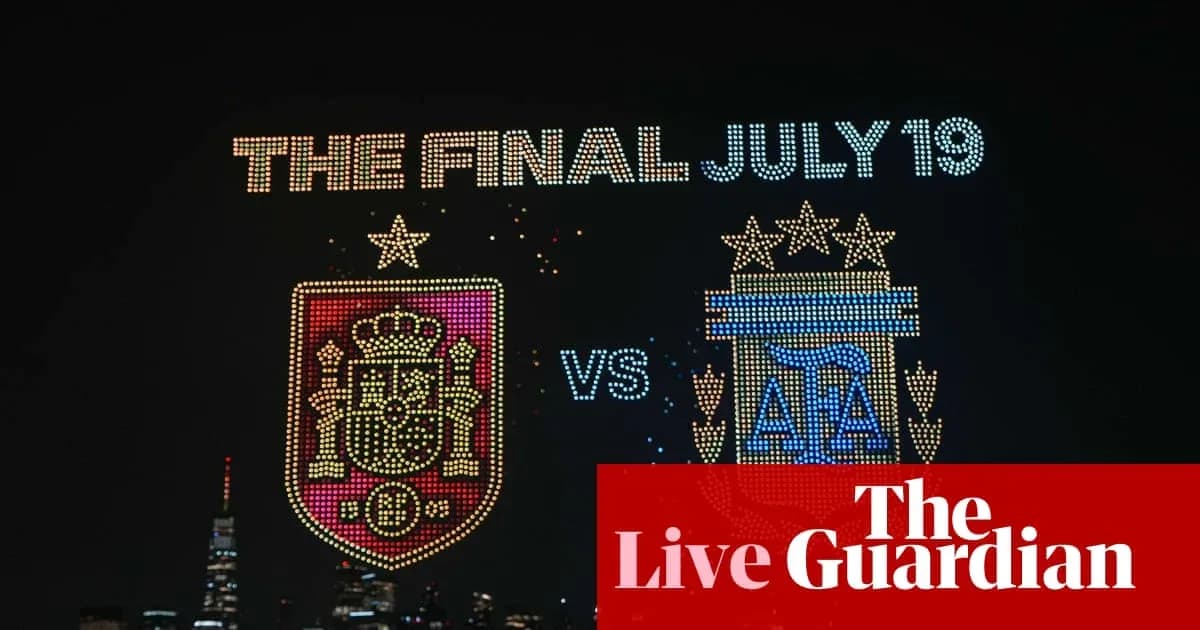
But first, there is a final. Messi against Mbappé. Spain against Argentina. A Golden Boot in the balance, a World Cup on the line, presidents in the stands and a sport once again trying to contain everything it is – and everything it wants to be – in one last game.

