.svg&w=384&q=75 "GoalGist logo")
World Cup 2026 Preview: Giants and Outsiders
The World Cup that wouldn’t stop growing is finally here.
In less than 12 hours, Mexico and South Africa will walk out for the opening game of a tournament that will stretch to 104 matches, 48 teams and more debates than most fans ever asked for. Kick-off is at 8pm. The arguments have already started.
Is this the boldest World Cup ever staged, or the most bloated? Over the next month, we’ll find out.
Giants circling the trophy
On the pitch, the cast is irresistible.
Spain arrive as European champions and bookmakers’ favourites, armed with the deepest, most balanced squad in the field and a midfield that looks almost unfair on paper. They want to bolt a World Cup onto their Euro crown and restore the aura of their 2010 peak.
France lurk just behind them, all teeth and talent. Back-to-back finalists, loaded with depth, they have the firepower to rip through anyone: Kylian Mbappé, Ousmane Dembélé, Michael Olise, Désiré Doué. If both France and Spain top their groups as expected, they can’t meet until the semi-finals. That potential clash already feels like a date circled in red.
This is also Didier Deschamps’ last dance in the France dugout. Runners-up four years ago, his squad knows exactly how close they came. They will not need reminding.
England, meanwhile, arrive with something they haven’t always carried to a World Cup: conviction. Euro 2024 ended in familiar heartbreak, a 2-1 defeat to Spain in the final, but the response has been ruthless. Gareth Southgate’s cautious blueprint is gone. Thomas Tuchel has torn it up and gone for intensity, risk and aggression.
He has not tiptoed into the job either. Phil Foden, Cole Palmer, Trent Alexander-Arnold – big names, big omissions. Tuchel has picked a squad to fit his system rather than his sponsors. If it works, he’ll be hailed as the man who finally freed England. If it doesn’t, those selection calls will be thrown back at him with interest.
Then there are the defending champions.
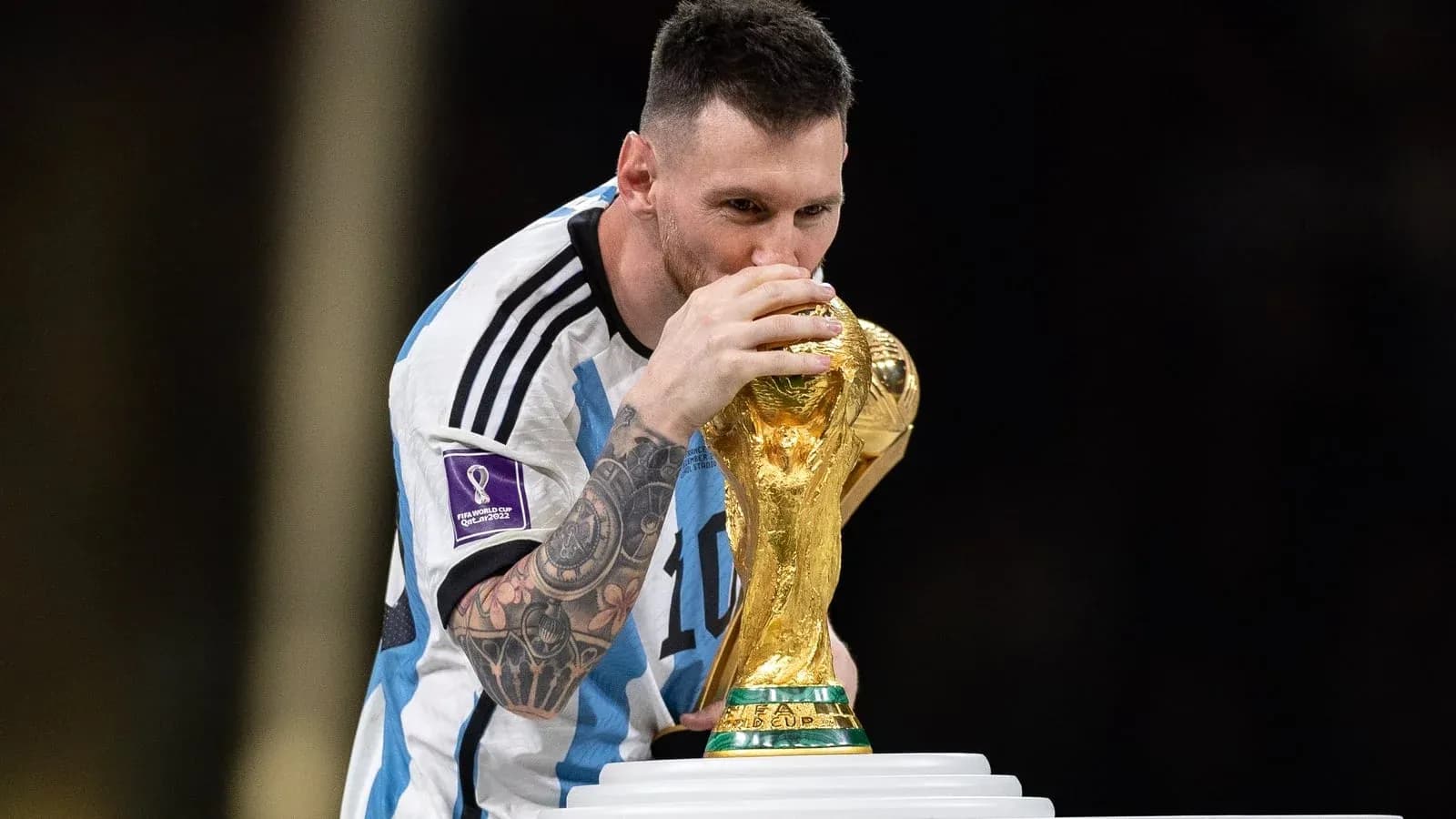
Argentina, still led by Lionel Messi, are chasing history: the first back-to-back World Cup winners since Brazil in 1962. Messi, now 38, is straining for one last peak, one more month where he bends a tournament to his will and pushes himself beyond Diego Maradona’s already-mythic status in the national psyche. If he can drag Argentina over the line again, the debate ends.
Brazil, under Carlo Ancelotti, sit in that uneasy space between fearsome and flawed. They still have stars – Vinícius Júnior, Raphinha, Marquinhos – and the attacking punch to hurt anyone. But their qualification campaign stuttered, and questions linger over a midfield that no longer intimidates as it once did. The badge still carries weight. The team, perhaps, a little less.
For Portugal and Cristiano Ronaldo, this is the last roll of the World Cup dice. The captain has hoovered up almost every major honour available to him, but this trophy remains the glaring gap. Whether his personal quest sharpens Portugal or distracts them will define their month.
And, as the old line insists, you never write off Germany. Not with Julian Nagelsmann in charge, not with their tournament pedigree. They are not the most fancied side this time, but that has never stopped them before.
Behind the giants, a cluster of dangerous outsiders waits. Colombia, Senegal, Morocco – all capable of turning a seeded team’s World Cup into a three-game cameo. They won’t all land a punch, but someone will.
A World Cup stretched to breaking point
The footballing storylines are rich. The format is something else entirely.
Forty-eight teams. Twelve groups. A group stage that feels less like a pressure cooker and more like a safety net. The top two in each group go through automatically, joined by the eight best third-placed sides. Two-thirds of the field will reach the knockouts. Jeopardy, that essential World Cup ingredient, has been watered down.
Teams can lose twice and still sneak into the last 32. The structure looks tailor-made to protect the heavyweights from early elimination – a sponsor’s dream, a neutral’s concern.
The downside is obvious: a swollen first phase filled with fixtures that feel like undercards nobody asked for. Germany v Curaçao on Sunday, Spain v Cape Verde on Monday – potential hammerings dressed up as World Cup drama. Qatar v Switzerland, Uzbekistan v Colombia – important for the nations involved, but unlikely to stir much emotion beyond their borders.
There’s even the chance that Ireland’s famous Italia ’90 quirk – reaching the knockouts without winning a single game – could be matched or beaten. Low-scoring, safety-first groups might be rewarded again. Purists will wince. Pragmatists will shrug.
All of this means the tournament may not truly catch fire until the round of 32. That suits the bigger nations, who can treat the early games like an extended pre-season with points attached.
Heat, fatigue and carefully managed stars
There’s another opponent waiting for every team: the climate.
Matches will roll through cities like Miami, Houston, Guadalajara and Mexico City, where extreme heat in June and July is a regular feature, not a freak event. FIFA has already ordered mandatory hydration breaks at the 22nd and 67th minutes of every match, no matter the conditions, and daytime fixtures have been pushed towards air-conditioned stadiums. Even so, the heat will bite.
On paper, that should tilt the tournament slightly towards the likes of Spain, Brazil, Argentina and Mexico – nations more accustomed to playing in heavy, suffocating conditions. On grass, it will come down to how well players’ bodies cope after another brutal club season.
The calendar has left little room for recovery. The teams that go deep will play eight matches. Eight high-intensity games, in heat, with travel, across a month. Injuries and fatigue will shape the story as much as tactics.
That’s why the sport’s biggest names may spend as much time on the bench as on the pitch in the early days. Messi, Neymar, Lamine Yamal, Bukayo Saka, Nico Williams – all are likely to be managed carefully through the opening group fixtures, wrapped in cotton wool where possible and unleashed only when necessary.
For Spain, that approach feels especially important. Their status as favourites rests heavily on their depth, but the fitness of Yamal hangs over them. A hamstring problem has clouded his availability for the group stage. The good news: they can afford to ease him in. The bad news: without him, they lose a spark that has become central to their attacking identity.
A test of fans’ stamina too
The strain will not fall solely on the players.
For supporters at home, especially in Europe, this World Cup is a test of endurance. Irish fans, in particular, face a schedule that laughs in the face of sleep. Brazil’s opener against Morocco kicks off at 11pm on a Saturday night. Argentina’s first game starts at 2am on a Wednesday. Alarm clocks, blackout curtains and industrial-strength coffee will be as essential as wall charts and sticker albums.
In the stands, fans will wrestle with long distances, heat, and a match calendar that stretches attention as much as it stretches legs. The tournament is asking a lot: of broadcasters, of spectators, of players, of patience.
But then, that’s the gamble FIFA has taken. Expand the World Cup, squeeze in more teams, more matches, more markets, and trust that the quality at the sharp end will justify everything.
The football will decide whether it was worth it. The last whistle blows on 19 July. Only then will we know if this vast, sprawling World Cup earned its place in the game’s history – or simply proved that bigger is not always better.