.svg&w=384&q=75 "GoalGist logo")
VAR Blunder in Manchester Derby: The Cost of Speed
“Quick, quick, quick, quick! Go, go, go, go, go!”
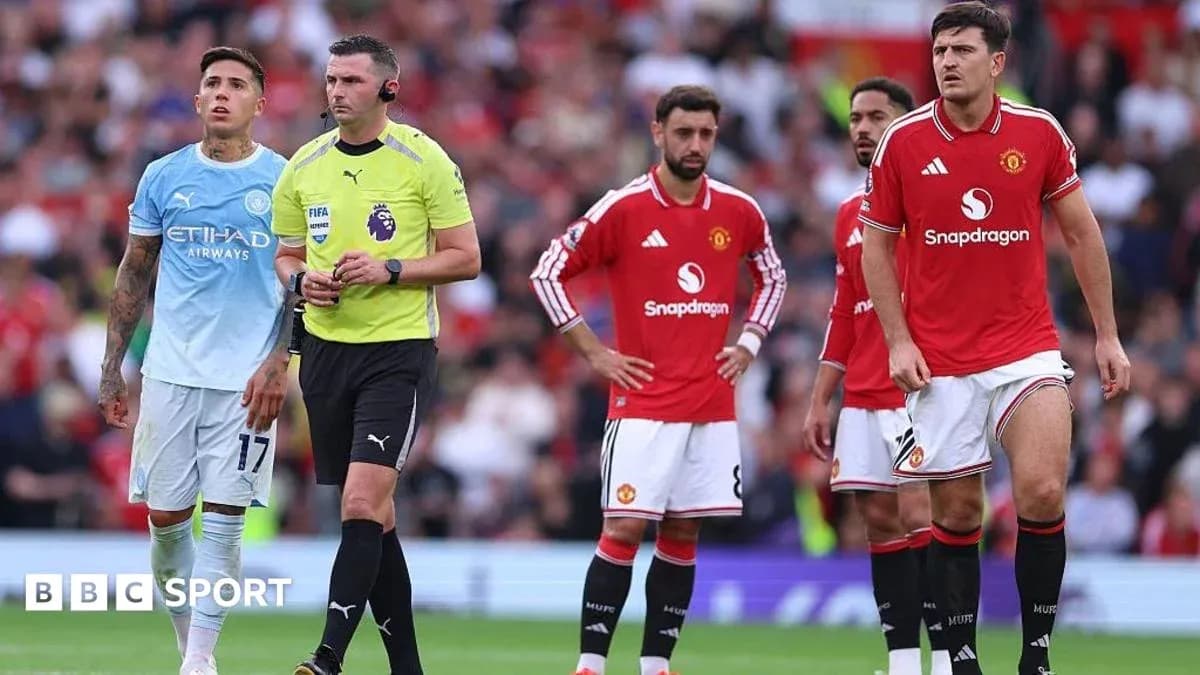
The soundtrack to Erling Haaland’s Manchester derby winner was not the roar of the Etihad but the frantic voice of VAR Matt Donohue, racing through a review that would become one of the Premier League’s most damaging officiating blunders.
He thought he was being efficient. Instead, he helped deliver a catastrophe.
Enzo Fernandez stood three yards offside when he went to attack the cross. Somehow, neither Donohue nor his assistant VAR, Blake Antrobus, picked it up. The goal stood. Manchester City 1-0 Manchester United. And another storm around VAR.
When speed beats sense
Refereeing has always lived under a harsh light. VAR turned that light into a microscope. This season, the Premier League doubled down on “more efficient application of VAR to reduce delays” as one of its key principles.
The game asked for speed. It got haste.
“Let’s go, let’s go, let’s go, let’s go!” Donohue urged, his tone betraying the urgency. It sounded less like a forensic review, more like a scramble. Not calm. Not clinical. Rushed. Chaotic. Everything a video official is told not to be.
Week after week, officials are reminded that fans hate delays. Pundits hammer the point. Phone-ins rage about “killing the flow”. In the Premier League’s own stakeholders’ survey, the main demand around VAR was clear: be quicker.
That pressure is real. It is not a defence.
City manager Enzo Maresca, who benefited from the mistake, still recognised the strain.
“To make a decision in 10, 20 seconds is not easy for them,” he said. “Sometimes they make mistakes. I make mistakes, players make mistakes. It’s part of our job.”
Howard Webb, head of referees, has tried to answer the calls for speed. The numbers say it has worked. Average VAR delays, including the time taken for the referee’s stadium announcement, have dropped from 46 seconds per game to 36.
But the price is starting to show. The only other accepted VAR error this season – the missed penalty for Arsenal at Aston Villa – also came from an incident cleared too quickly.
The message is supposed to be simple: cut time, not corners. On Sunday, that line was crossed.
The moment it went wrong
The most serious mistake did not actually come when Donohue hurried through the final phase of the check. It came earlier.
On the first replay of Josko Gvardiol’s cross, Donohue told the replay operator to freeze the frame at the moment Gvardiol struck the ball. He then jumped straight into the semi-automated offside technology.
That should never have been the starting point.
The VAR team needed to watch the entire attacking sequence, from the cross leaving Gvardiol’s boot to Haaland’s header. Only then do you understand where everyone is, what they do, and who affects play. That full-picture awareness would have flagged Fernandez’s position and involvement.
Instead, they sliced the move into pieces and ignored the wider shot until later. By the time they revisited the penalty area, their focus had narrowed to a single question: did Fernandez touch the ball? A touch would have created a new phase and left Haaland offside.
Everything else – including the original offside position of Fernandez – drifted out of view.
Donohue has taken most of the heat. Yet Antrobus’ role, or absence of one, was just as costly. The AVAR is there to challenge, to spot what the main VAR might have missed, to act as a safety net.
Across the entire review, Antrobus’ only audible contribution was “no, yeah” about a possible touch from Fernandez. One second later, Donohue said: “final decision is goal, check complete.”
The check and balance never arrived.
A history that cuts both ways
Antrobus is not new to long, complex VAR checks. The only truly lengthy delay in the Premier League this season came in Brentford v Sunderland, when a Dan Ballard goal was disallowed for a subjective offside against Kevin Danso. That stoppage lasted more than four minutes.
Antrobus was AVAR that day as well. The length of that review drew heavy criticism in some quarters. Yet that time, he played a crucial part in guiding VAR Tim Wood to the correct offside call against Danso.
Did that backlash weigh on his mind during the derby? Did the memory of being slammed for taking too long push him towards silence on Sunday?
No-one can say with certainty. The result, though, is there in cold daylight.
There is also the presence of the support VAR, stationed in the operations room next to the match hub at Stockley Park. That official can step in on matters of protocol, a final safeguard for process. They saw the review unfold. They did not intervene.
Even after the goal, there was still a window. Under protocol, the decision could have been corrected before the restart. It never was.
Specialists under the spotlight
Pro Ref has poured time, money and training into VAR. The aim is clear: make it slick and accurate. But when a mistake of this scale happens, the investment feels irrelevant. The system failed at its most basic task.
Calls to appoint VAR specialists have grown louder. Yet by the Premier League’s own definition, that is exactly what Donohue is.
Three seasons ago, Pro Ref invited referees to apply to become dedicated video officials. Candidates went through aptitude tests. Around 15 reached the final training stages, and 10 have since worked as VARs in the Premier League.
Donohue is one of them. Sunday was his 65th game as a video official. His progress has been strong enough to earn a place on the international list, with appointments in Uefa club competition qualifiers over the summer.
He has made errors before. Almost all officials have. That is the nature of a role where every frame is dissected. Only two VARs – Nick Hopton and Neil Davies, both from the same accelerated programme – have gone the past two seasons without a recognised mistake.
The idea of asking referees to give up the whistle and spend their careers in a darkened room is hardly an easy sell. Nor is it a guarantee of excellence. Lee Mason and Mike Dean, appointed as the Premier League’s only full-time VARs after retirement, were both removed by Webb within months because of repeated errors.
Spain offers a warning too. La Liga and its second division use a full team of officials who only work as VARs and never take charge on the pitch. The controversies have not gone away. At the start of last season, the Spanish VAR team somehow missed that a goalscorer was offside when the ball was played. The headlines there looked very familiar.
A football problem, not just a VAR problem
Pro Ref will now have to explain how its processes allowed a VAR in one of the season’s biggest fixtures to rush through a review with such desperation.
Contrast that with West Ham’s stoppage-time equaliser at Arsenal last season. That check dragged on for more than four minutes. It irritated everyone. But it reached the correct conclusion and the goal was ruled out.
The sport’s growing obsession with speed is starting to chip away at the very reason VAR was introduced: to correct the big, clear errors.
Right now, the technology is not just fighting its own flaws. It is fighting a culture that would rather be quick than right.