.svg&w=384&q=75 "GoalGist logo")
U.S. Men's National Team Prepares for Home World Cup Opener Against Paraguay
INGLEWOOD, Calif. — The World Cup is back in the United States, and this time there are no excuses.
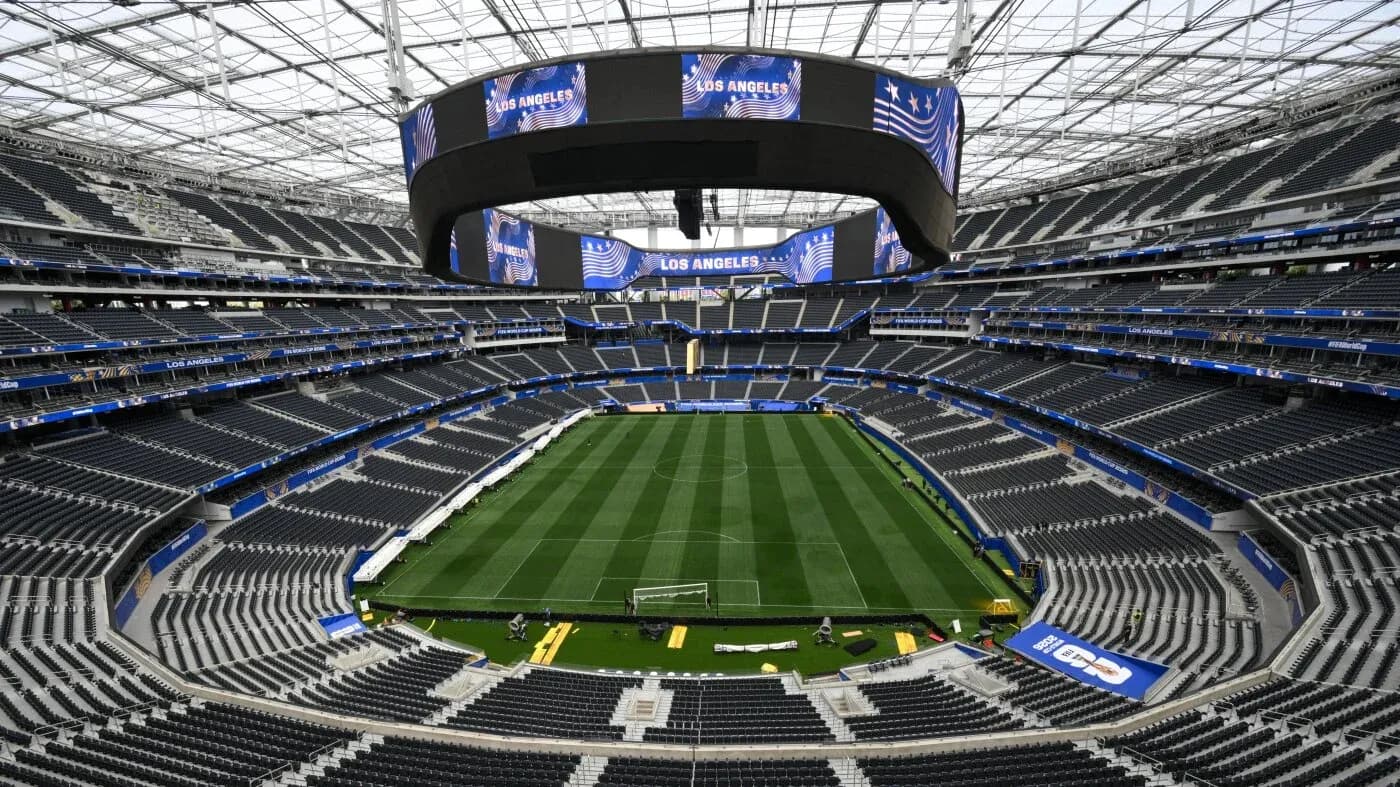
Under the lights in Southern California on Friday night, the U.S. men’s national team walks into a moment the federation has been circling for the better part of a decade: a home World Cup opener, against Paraguay, with a generation that has been told it is different. Better. Ready.
For a country that has spent 30 years chasing the game’s elite, this is the stage it has been begging for.
A tournament 30 years in the making
The World Cup has not touched American soil since 1994. In that time, the sport has grown, the infrastructure has hardened, and the expectations have shifted. The inferiority complex that once defined U.S. soccer hasn’t vanished, but it has been challenged by something new: genuine, top-level talent.
The record still bites. Since that surprise run to the quarterfinals in 2002, the U.S. has collected only three World Cup wins in total. Tournament after tournament ended with the same conclusion — effort and spirit, yes; quality and depth, not quite.
This edition feels different because it has to. Hosting the 2026 World Cup is not just a logistical triumph. It is the test of a footballing project that has poured money, time and belief into closing the gap on Europe and South America.
“This is for me the biggest opportunity to grow the game, to inspire people, to show that American players are at the level of the rest of the world,” midfielder Tyler Adams said on Thursday, capturing the mood inside the camp.
A new kind of U.S. team
For once, the U.S. doesn’t arrive at a World Cup selling plucky underdog stories. It arrives with starters from the Premier League, Serie A and beyond.
Adams, the heartbeat in midfield, plays his club football in England. Behind him, Chris Richards and Antonee Robinson are entrenched in Premier League back lines, no longer prospects but regulars trusted in one of the world’s most unforgiving leagues.
Weston McKennie has carved out a central role at Juventus, a club that measures itself in trophies and European nights. Christian Pulisic, once the teenage face of American promise, now 27, has rebuilt and rebranded himself as a genuine star at AC Milan, carrying one of Italy’s giants on his shoulders in big moments.
This is the core U.S. Soccer has been waiting on: not just one or two outliers overseas, but a spine of players who live the highest level every week. The question now is whether that experience translates when the pressure of a home World Cup wraps itself around them.
Paraguay first, and no room for error
The first examination comes against Paraguay, ranked No. 40 in the world and hardly interested in playing the role of respectful guest.
The two sides know each other’s temperature. In a friendly last November, the U.S. edged a 2-1 win, a match that ended with tempers flaring and a stoppage-time scuffle between players. It was a reminder that Paraguay rarely goes quietly.
“We know that they're gonna be super, super aggressive, so we're going to have to match that. We saw that the last time we played them,” U.S. forward Tim Weah said, leaning into the physical edge this opener is likely to carry.
Paraguay arrives with a problem of its own. Its brightest young talent, 22-year-old midfielder Julio Enciso, was stretchered off in the first half of the team’s final warm-up match last week. His status for Friday is in serious doubt, a potential blow to their creativity and attacking punch.
If Enciso cannot start, Paraguay loses a player capable of unsettling a defense with one sharp movement or pass. For the U.S., that’s an opening — but also a trap. A wounded opponent often defends deeper, tackles harder and leans into the kind of chaos that can derail a favorite on opening night.
A group with no hiding places
The stakes do not end with Paraguay. After Friday, the U.S. turns quickly to Australia next week, then closes the group on June 25 against Turkey. It is a section with no true superpower, but also no soft landing.
Drop points early and the pressure inside this home World Cup could swell fast. Take control of the group from the start and the narrative shifts: from hope and hype to something more tangible.
The U.S. has waited more than 30 years to host this tournament again, and nearly as long to prove it belongs in the same breath as the game’s traditional powers. Now the world’s biggest event is back on American soil, and the question is no longer whether the country is ready to stage it.
It’s whether this team is ready to own it.

