.svg&w=384&q=75 "GoalGist logo")
U.S. vs Australia: Expectations and Key Players Ahead of Clash
The United States step into this clash with Australia carrying something they haven’t always owned at major tournaments: expectation.
After dismantling Paraguay, the consensus among observers is blunt. This should be a U.S. win.
Tom Hindle doesn’t dance around it. The performance against Paraguay, he argues, set a standard that, if replicated, turns this into a comfortable afternoon. The pre-game needle and talk of physicality add spice, but on pure quality, he sees only one likely outcome. The U.S., in his view, simply have too much.
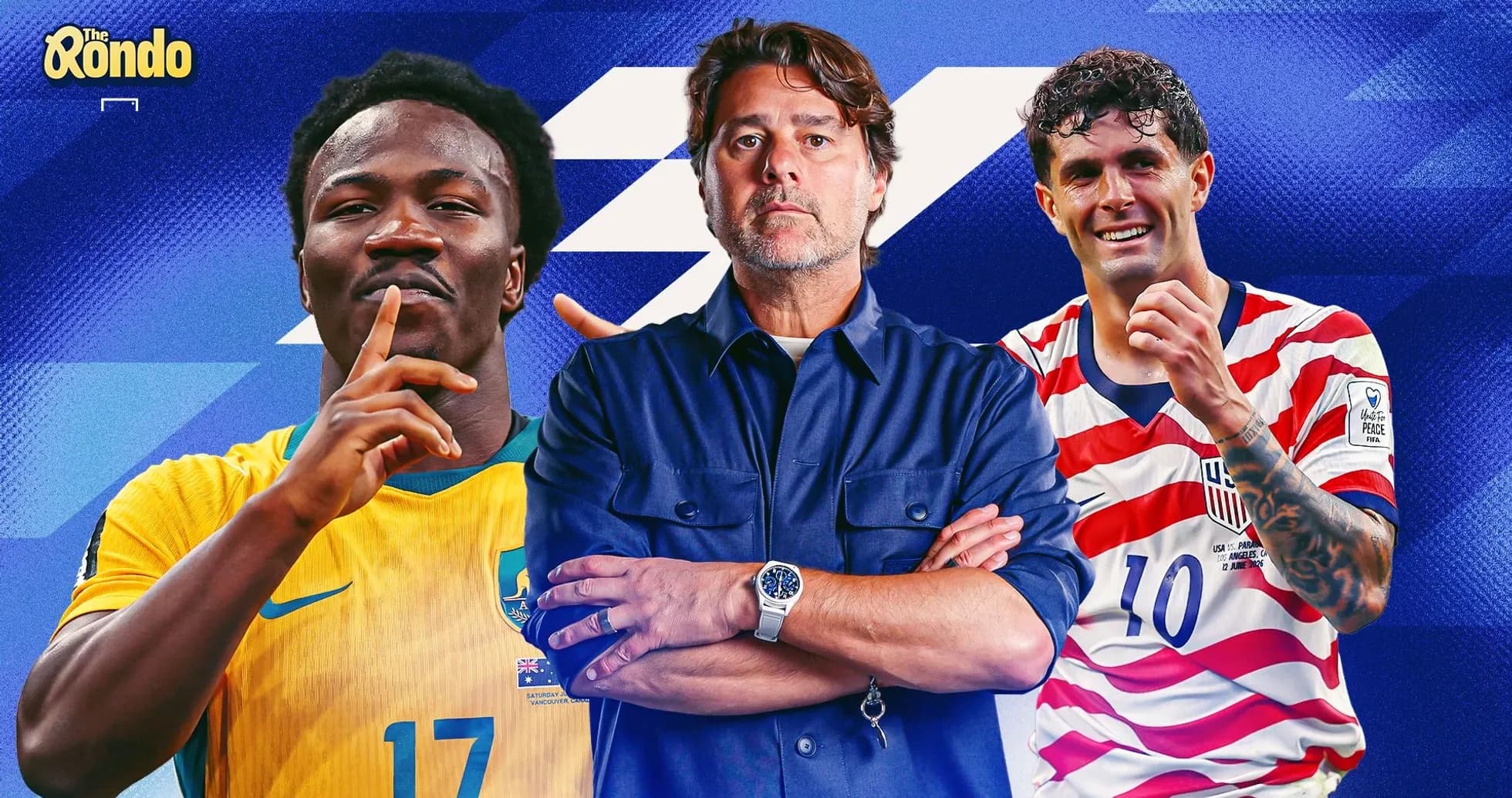
Ryan Tolmich lands in the same place, but with a different route. He sees a scrap. Tight, physical, decided by the few players capable of ripping a game open in a single moment. Australia have one of those in Nestory Irankunda, who lit up Turkey. The U.S., though, have more of those match-winners, and a fresh reminder of what complacency can cost after Turkey’s misstep. Lesson learned, he suggests; trap avoided.
Alex Labidou pushes it further into narrative territory. He also has the U.S. edging it, but not without drama. In his script, it goes to the wire, decided late by Gio Reyna, the continuation of a redemption arc that still feels only half-written.
The Pulisic problem
Then comes the cloud over all that optimism: Christian Pulisic.
“Losing your best player ain’t good,” Hindle says, stripping it back to basics. This squad has depth at striker, he points out, and not much else. Pulisic is the system’s beating heart, the reference point for almost everything the U.S. do in the final third. Without him, they are something else entirely — and not in a good way.
The real intrigue, Hindle notes, sits with Mauricio Pochettino. Does he risk his talisman, push for the win now and buy himself the luxury of rotation in the final group game? Or does he wrap Pulisic in cotton wool and trust the rest to get it done? Hindle leans toward starting him, then shutting him down for two weeks. But Pochettino, he reminds, is the one paid to make that call.
Tolmich sounds more alarmed. Australia will be hard to break down, and few in this squad can unpick a defense like Pulisic. The opener against Paraguay was the perfect example: a one-v-one win, a moment of individual brilliance that turned pressure into a goal. On Friday, Sergiño Dest was asked who, aside from himself, is the best U.S. player at beating a defender. His answer was immediate: Pulisic. If that option disappears, someone else has to start making defenders uncomfortable. That’s not a small ask.
Labidou widens the lens. He believes the U.S. should still have enough to get past Australia without their star, but the bigger picture worries him. This team, he suggests, sits on the edge of something potentially special in this tournament. To actually step through that door, they need their best player fit and firing. Anything less, and the ceiling drops.
Australia’s wild card
This Australia side is awkward to pin down. Hindle calls it “a bit of a weird generation” — not many names shining at the top end of the Premier League, but that doesn’t make them fodder. The sport’s discourse leans heavily toward Europe; that can blur how good players outside that bubble really are.
One thing is clear: Nestory Irankunda is no secret anymore.
Tolmich zeroes in on him as the danger man. The U.S. defense, he notes, has been “a little bit sloppy” in recent months, and this back line can be exposed by pace. Irankunda has plenty of that. Put him in a foot race with Tim Ream and there’s only one winner. Add Chris Richards coming off an ankle injury and fullbacks who love to bomb on, and the picture sharpens: Irankunda is the one who can flip this match on its head in a heartbeat.
Hindle expects the young winger to keep Dest busy down the left. Labidou, agreeing on Irankunda’s threat, shifts his own pick to the other end of the pitch: Mathew Ryan. The veteran goalkeeper, with a long résumé in Europe, has been openly confident about Australia’s chances all week. Against Paraguay, Matt Freese barely had to make a save. If this turns into a tight, one-chance-either-way kind of game, Ryan’s experience and shot-stopping could tilt the balance.
U.S. game-changers under the spotlight
If Australia sit in a back five and dig deep, as Hindle expects, this becomes a showcase — or an examination — of the U.S. attacking core.
“All of them,” he says when asked which American needs a big day. Pulisic is the obvious answer, but Hindle singles out Malik Tillman as someone who needs to add more bite with the ball. Against Paraguay, Tillman’s off-ball work was “elite,” his pressing and positioning top class, yet his contributions in possession lagged behind. A goal or assist here could transform his confidence and unlock another level.
Tolmich turns to Folarin Balogun. Paraguay offered space; Australia won’t. That means the No. 9 has to adapt. If Pulisic can’t go, the responsibility to carry the attack shifts heavily toward Balogun. He can shoulder that load, Tolmich argues, either by finishing chances himself or by linking play and bringing teammates into dangerous areas. In a crowded game, that ability becomes vital.
Labidou circles back to Tillman, especially in a scenario where Pulisic is absent or limited. Pochettino might have stumbled upon something new by deploying the Bayer Leverkusen midfielder as a No. 8 rather than a classic No. 10. If Tillman sustains his recent form from that deeper role — combining industry with incision — the U.S. should, in Labidou’s eyes, be able to lock up the group.
What if they don’t?
That’s the other side of this fixture. What if the U.S. stumble?
Hindle’s view is pragmatic. It would be bad, he concedes, but not fatal. In many tournaments, three points can still drag you out of a group. From a pure qualification standpoint, the damage might be limited. From a momentum standpoint, though, it’s a different story. Needing something, or worse, needing a win in the final group game is precisely the scenario a serious contender tries to avoid. “Get it done early,” he urges.
Tolmich goes stronger. Dropping points here, he argues, would make topping the group extremely difficult and could set up a nightmare meeting with Argentina down the line. This match, in his mind, doesn’t just shape the group. It shapes the entire route through the tournament.
Labidou takes it into the realm of history. It wouldn’t be “devastating,” he says, but it would feel painfully familiar. Two decades of near-misses, of chances to take the next step only to be dragged back by a flat performance or a poorly timed setback. U.S. Soccer, he stresses, needs this team to win the group. It’s a statement about the investment in Pochettino, about whether this project is actually moving forward. The mandate is clear.
Get it done.