.svg&w=384&q=75 "GoalGist logo")
Thomas Tuchel to Lead England into Euro 2028 Despite World Cup Heartbreak
Thomas Tuchel will lead England into Euro 2028 despite the storm swirling around him after the World Cup semi-final collapse against Argentina.
The 52-year-old, hired in November 2024 to push England beyond Gareth Southgate’s near-misses, remains backed by the Football Association following Wednesday’s 2-1 defeat in Atlanta – a result that reopened old wounds and old arguments.
FA stands firm after semi-final heartbreak
Anthony Gordon’s goal had England on the brink of history, a first men’s World Cup final since 1966 suddenly within reach. They were organised, composed, and ahead in a game that had threatened to suffocate under its own tension.
Then came the turn.
Tuchel, renowned for his tactical detail and game management, reached for safety. His defence-first changes dragged England backwards, inviting Argentina on. Territory slipped, pressure grew, and the semi-final tilted. By the final whistle, England were out, beaten late, and left with the familiar sting of what-might-have-been.
Those decisions have put the German coach under fierce scrutiny. His approach, hailed when he was appointed as the man to go “one step further” than Southgate, is now being questioned as another chance on the world stage slipped away.
Yet the FA is not blinking.
Tuchel’s original contract covered only this World Cup, but in February he signed an extension through to 2028. The plan has not changed. Nor, publicly at least, has his.
“I have a contract until the home Euros and I’m looking forward to that even like now it is difficult to look that far ahead,” he said after the defeat, speaking through the pain of a night that cut deep.
FA chief executive Mark Bullingham echoed that support from Georgia, stressing the effort rather than the outcome.
“It is heartbreaking to be so close,” he said. “The players and Thomas gave it everything today and the squad, coaches and staff could not have worked harder during the tournament.
“I would like to thank them all – and also give my heartfelt thanks to our wonderful fans here in the USA and at home. We felt your support every step of the way and we are all so disappointed not to go further.”
The message was clear: disappointment, yes. Doubt, no.
From Atlanta agony to a Miami afterthought
There is no early flight home. Not yet.
England returned to their Kansas City base after the loss, the mood heavy, the journey quiet, the sense of a missed opportunity hanging over the group. But the tournament is not finished. A week after beating Norway in the quarter-final at Hard Rock Stadium, they will go back to Miami for the game nobody wants.
A third-place play-off against France.
It is a fixture that feels like a punishment more than a prize, a match both squads would rather watch than play.
“A lot of big, big, big football nations are eliminated before the semi-final, so, yeah, it is an achievement,” Tuchel said of reaching the last four. He knew it was the wrong moment for that line, and he admitted as much. “No one wants to hear that at the moment. Me neither, because we demand the most of ourselves. That’s just the nature of being competitive.”
That competitiveness now has to be redirected towards a game that carries little glamour but plenty of professional obligation.
“The nature of being so competitive also puts the next game into perspective,” he added. “Nobody of these (England) players, nobody of French players wants to play this match. They want to play in the final. We gave everything to be in the final.
“Everyone plays to win the World Cup, but it is what it is. We have for a day less and to recover, but we will do it professionally, of course.”
The task is as psychological as it is physical. England must lift themselves from the floor, lace up again, and face a France side dealing with the same hollow feeling.
Pain now, pressure later
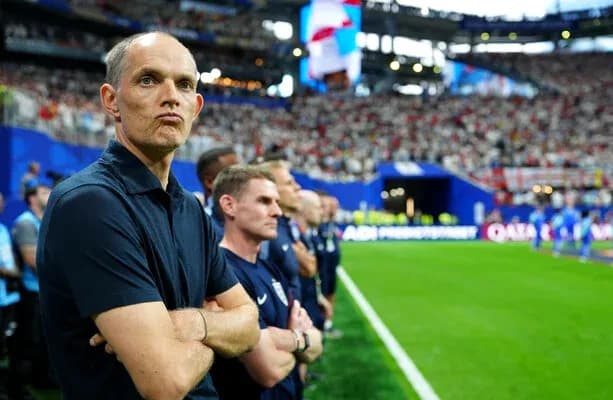
Tuchel cut a restrained figure in the aftermath. No grand speeches, no attempts to spin the defeat into something it was not.
“I didn’t say a lot (to the players afterwards),” he admitted. “Nothing what you say in the dressing room can take away the pain or the disappointment, of course.
“We all know these moments, so I said let’s take it with respect, let’s digest it first. Accept that we gave everything. That is a big part in a defeat.
“Did we do everything to arrive in this semi-final? Did we give everything? 100 per cent we did, and I think the fans will realise that and do realise that.
“The second of all is to bounce back, to react. That’s what you have to do on highest level in sports. It’s what is demanded and what we will do.”
That, now, is the challenge. England’s players have to respond in Miami. Tuchel has to respond in the months and years to come.
Because the FA’s backing, while firm, comes with a clear expectation. This was supposed to be the campaign that showed England could convert promise into trophies under a different kind of manager. Instead, the familiar story played out again: a lead, a retreat, a ruthless opponent, and a long flight home without the trophy.
Euro 2028 will be on home soil. The stakes will be higher, the scrutiny sharper, the margin for error even smaller.
Tuchel keeps the job. The question is whether he can keep the country’s faith.