.svg&w=384&q=75 "GoalGist logo")
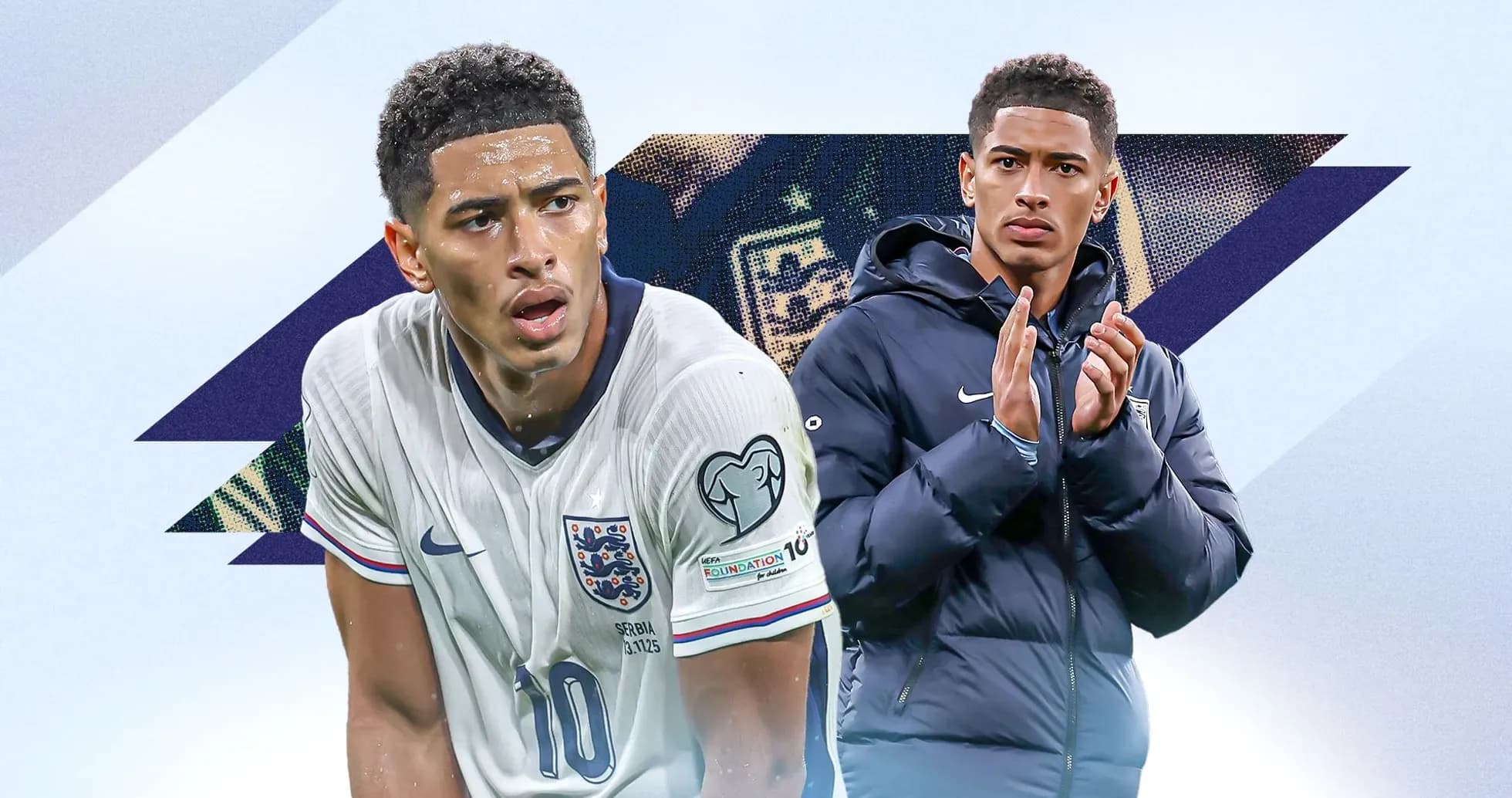
Thomas Tuchel's England Job: The Battle Between Jude Bellingham and Morgan Rogers
Thomas Tuchel has not tiptoed into the England job. He has kicked the door in and told everyone inside that no seat is reserved, no name is inked on the teamsheet. Not even Jude Bellingham’s.
In that vacuum, Morgan Rogers has walked through.
The Aston Villa playmaker has dragged his club form onto the international stage and turned himself into a genuine problem for his manager – the good kind. During qualifying, as Tuchel tinkered with systems and partnerships, Rogers became a reliable creative outlet, knitting moves together, finding pockets, asking questions. The goals have not flowed, but that was never the point. He is a pure No.10, a classic link man behind Harry Kane, and Tuchel has treated him as such.
Bellingham, by contrast, has been in and out. Injuries, recoveries, missed camps. While he healed, the competition grew sharper.
Tuchel has been explicit about the battle.
“Rather than finding the best players a position to just have them on the field, it's maybe better to put everyone in their best position and have a competition. At the moment, the competition is between the two of them,” he said back in November, drawing a clear line between Bellingham and Rogers for the role behind Kane.
On form alone, Rogers has a compelling case. His past year in a Villa shirt has been the best of his career, and he has carried that confidence into England duty. He plays with the conviction of a man who has been told he belongs, and Tuchel has publicly confirmed that he has earned his shot.
For Bellingham, the equation is harsher. Talent is not in question. Output is. He has to show Tuchel that he can give more than the man currently in possession of the shirt.
That task is not made easier by the noise around him.
Bellingham has always played with edge. Strut. A visible sense that he is the main event. Sometimes that energy lifts a team; sometimes it spills over. The 3-1 defeat to Senegal last June was the flashpoint that still lingers. A VAR call went against England, and Bellingham’s furious reaction drew as much attention as the decision itself.
Tuchel was quizzed about it by TalkSport after that friendly at the City Ground and, tellingly, did not rush to dampen the fire.
“I think he brings an edge, which we welcome and which is needed if we want to achieve big things,” he said. “It needs to be channelled. The edge needs to be channelled toward the opponent, towards our goal and not to intimidate team-mates, or to be over aggressive to team-mates or referees.”
Then came the line that has followed him ever since.
Tuchel, trying to humanise the debate, invoked his own mother when asked about how Bellingham comes across on television.
“I see that it can create mixed emotions. I see this with my parents, with my mum that she sometimes cannot see the nice and well-educated and well-behaved guy that I see… If he smiles, he wins everyone, but sometimes you see the rage, the hunger and the fire, and it comes out in a way that can be a bit repulsive. For example, for my mother, when she sits in front of the TV, I see that, but in general we are very happy to have him, he's a special boy."
It was clumsy, and it stuck. From that moment, every Bellingham grimace, every glare at an official, every flicker of frustration has been run through the lens of “edge” versus “repulsive”.
He did not pull on an England shirt again until November, as he worked back from surgery. When he did return, the relationship with Tuchel was immediately under the spotlight.
Tuchel benched him for the first game of that international break against Serbia. Statement made. Three days later, Bellingham was back in the XI against Albania, but the evening ended with another talking point rather than a performance. With six minutes to go in England’s final qualifier, Tuchel called him ashore. Bellingham appeared to gesture angrily as he left the pitch.
“That's the decision, and he has to accept the decision,” Tuchel said afterwards. “His friend is waiting on the sideline, so you need to accept it, respect it, and keep on going.”
The manager framed it as a simple hierarchy issue. The public saw something else: a superstar who does not enjoy being treated like everyone else in the squad.
Away from the touchline drama, the wider reaction to Bellingham has taken on a sharper edge. Former England striker Ian Wright has been one of the most forceful voices defending him, and he has not shied away from calling out what he sees.
“I don't think they're ready for a black superstar who can move like Jude is moving. They can't touch him," Wright said of parts of the English media and fanbase. "He goes out there, he performs, he does what he does. It's too uppity for these people.
“They all love N'Golo Kante. He's a humble Black man, gets on with what he's doing. Someone like Jude frightens these people because of his capability and the inspiration he can give. Because if you are outspoken, Black, and playing to that level and not caring, that frightens certain people. It's a tiring exercise to speak about.”
The debate around Bellingham has become a storm of attitude, identity, body language and expectation. Somewhere inside that storm sits the simple football question: how well is he actually playing?
When he is at his best, the answer is obvious. England look different. Faster between the lines, more daring, more willing to punch through the middle of the pitch. He can change the tempo of a game with one carry or one pass. But those peak displays have thinned out recently. The highlight reel moments have given way to patches of anonymity, flickers rather than full performances.
That leaves Tuchel standing at a fork in the road before England’s opener in Dallas.
Does he back one of the most gifted midfielders on the planet, gambling that the stage and the stakes will drag Bellingham to his highest level – and trusting that the emotional spikes can be managed rather than feared? Or does he reward the form, discipline and clarity of Rogers, a player with far less tournament experience but a current level that is impossible to ignore?
Tuchel has tried to provoke a reaction from his No.10-in-waiting, to stoke that inner fire without letting it burn the house down. Instead, his own missteps on the microphone and the endless chatter around Bellingham’s personality have drowned out the more important question of his output.
The shirt on his back this summer will read No.10. That much is settled. Whether he actually starts as England’s No.10 against Croatia is not.
Either way, Bellingham will not slip quietly through this World Cup. If Tuchel trusts him and he catches fire, he has the tools to drag England deep into the tournament. If the volatility wins out – in his form or his temperament – the story will be about flare-ups, not flourishes.
The coin is in the air. England’s fate may depend on which side of Jude Bellingham lands first.

