.svg&w=384&q=75 "GoalGist logo")
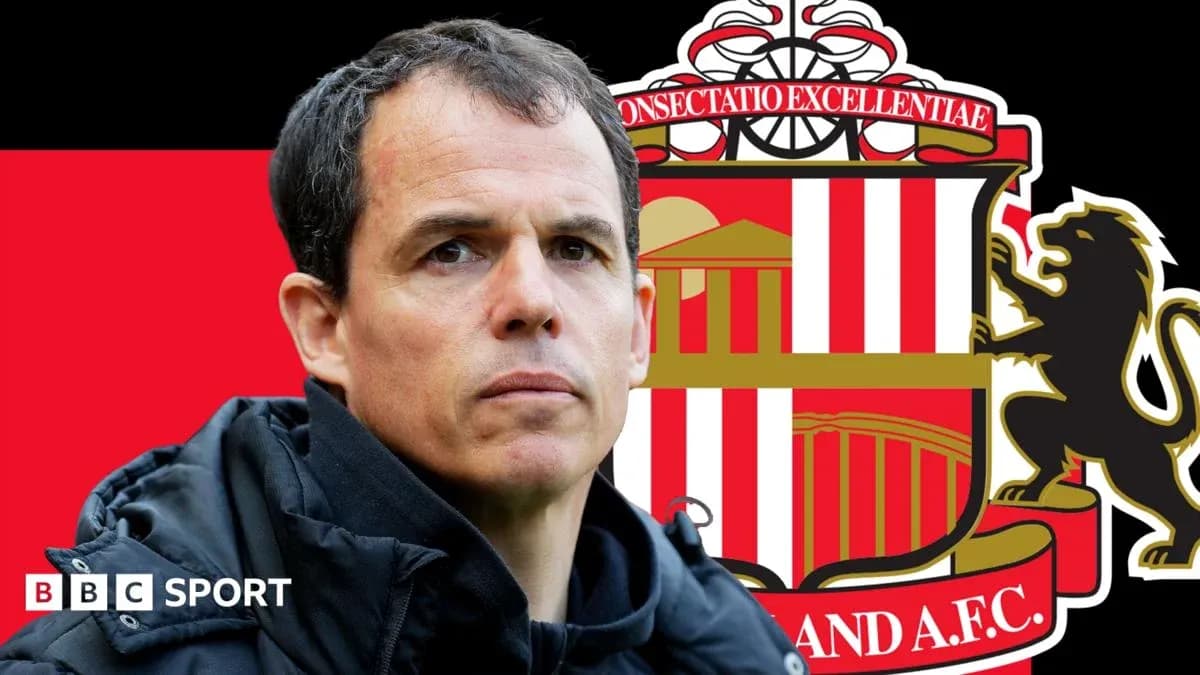
Sunderland Faces Early Setback as Diarra Injured
Sunderland’s Premier League plans have taken an early hit, but Régis Le Bris isn’t in the mood to panic.
The Black Cats boss confirmed that Habib Diarra will be out for around six to eight weeks with a hamstring injury, a setback that cuts into the momentum of a standout pre-season.
“It’s frustrating, but we have to manage it and we will find solutions,” Le Bris said, laying out the reality without softening the edges. Diarra had impressed him over the summer, not just with sharpness but with maturity. The Frenchman highlighted how the midfielder had found “more clarity on the pitch” and a better understanding of his own qualities and how they mesh with the demands of the Premier League. Losing that just as the season starts hurts.
Three transfer “boxes” ticked
If Diarra’s injury is a problem, Le Bris believes Sunderland’s transfer work gives them the tools to cope.
“We ticked our three boxes,” he said, breaking down the window with the precision of a coach who knows exactly what he asked for.
- Box one: experience at the highest level. Kevin Danso and Thomas Meunier arrive with serious pedigree, players who have seen enough of elite football not to be rattled by the pace or pressure of England’s top flight.
- Box two: youth with proof. Malick Fofana and Dayann Methalie are not just prospects; they already carry “proven experience” despite their age, the kind of profiles that can grow quickly if the environment is right.
- Box three: raw, high-ceiling talent. Juan Riquelme Angulo and Jules Ahoka fall firmly into the “huge potential” category. They are the long-term bets, the players Sunderland hope to develop into Premier League weapons.
“We have to manage the different positions because it’s already a big challenge,” Le Bris admitted. “In the end, we are happy.” The squad is bigger, deeper, and far more layered than a year ago. Now he has to blend it.
Talbi’s future still open
Not every situation is settled. Chemsdine Talbi could still leave for Turkey before the window shuts, and Le Bris made it clear the door remains open.
“A move remains possible so it’s important to respect both parties. We’ll see,” he said. There was no attempt to talk down the player’s quality. Quite the opposite. “He’s still a good player, huge potential, but after that you still have a window to decide if it’s the right pathway here.”
Le Bris insisted he believes Talbi can succeed at Sunderland, but he underlined that the decision cannot be one-sided. “It’s a question of mutual confidence and you have to respect the player’s choice.” If Talbi stays, he’s part of the project. If he goes, it will be on terms everyone accepts.
Angulo the “third striker” – and the mindset that comes with it
One of the more intriguing new faces is Angulo, who arrives as part of that high-upside group. Le Bris was clear about his role.
“He will fill this third striker position,” the head coach explained. That sounds like a supporting part, but he framed it as something demanding and strategic rather than a token squad number.
“I think it’s important to match the demand of this position. You have to be an underdog, be patient, but also with the potential to play because it’s important across the different competitions we will have.”
In other words, Angulo must live in the tension between waiting and seizing. He might start as the third option, but with domestic and European fixtures stacking up, the chances will come. Le Bris wants a hungry understudy, not a spectator.
Chasing “painful” challenges
Le Bris is not hiding from the scale of what’s coming. He wants it.
He pointed back to last season’s 3-0 defeat to Brentford as a reference point. “It was painful,” he admitted. Sunderland were outplayed. “They were intense, well-organised, consistent. They have a clear identity.” That night underlined the gap between where Sunderland were and where they want to go.
Now, he sees Thomas Frank’s side as the kind of benchmark Sunderland must embrace, not fear. With Brentford’s new signings, Le Bris believes they have “added an ability to play through” pressure, making them an even more complex opponent. “It’s going to be an exciting challenge,” he said, and you could hear that he meant it. His team, he insists, “need big challenges.”
Ready for Europe’s strain
Those challenges won’t just come in the league. European football looms, and with it the strain that can break thin squads and expose weak planning.
“At the minute, I am happy,” Le Bris said of Sunderland’s depth. He expects to work with 22 or 23 players, depending on injuries, a group large enough to rotate without losing identity. The key, in his eyes, is that “if they are available, everyone will feel a part of the team and the project.”
That sense of belonging isn’t a slogan. It’s a management tool. “I think it’s important to manage the energy,” he added. With extra games, extra travel and extra pressure, energy – physical and mental – becomes a currency.
Diarra’s injury is an early reminder of how quickly plans can be tested. Sunderland believe they’ve built a squad to absorb those shocks. The season will reveal whether that belief holds when the fixtures tighten and the “underdogs” are asked to carry the weight.