.svg&w=384&q=75 "GoalGist logo")
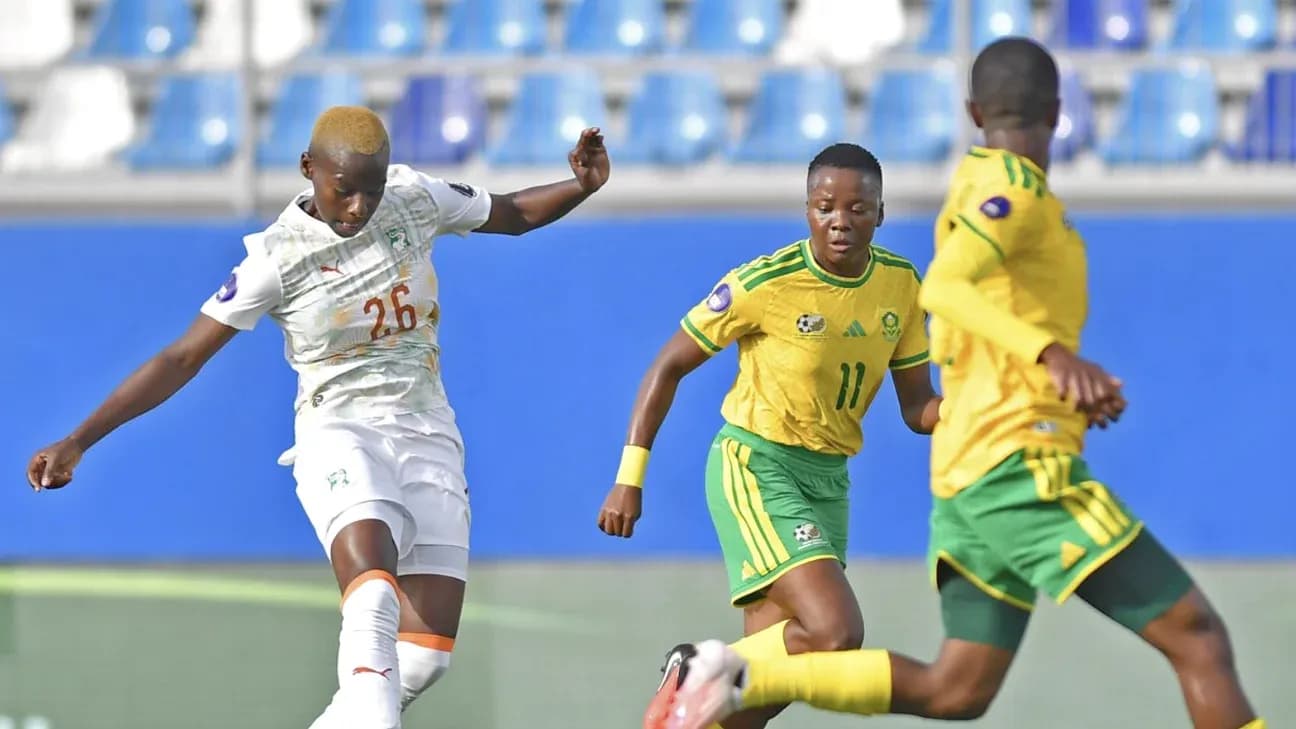
South Africa's Banyana Banyana Claw Back to Draw with Ivory Coast
South Africa clung to their Women’s Africa Cup of Nations hopes in Casablanca, dragging themselves off the canvas to snatch a 2-2 draw against Ivory Coast that keeps Group B alive – just.
For an hour, Banyana Banyana looked like a side drifting out of the tournament. By the end, they were throwing bodies forward, fists clenched, and leaving the pitch with at least a sliver of belief.
Torn apart, then torn into
The warning signs came early and were brutally clear.
Twice in the first half, Ivory Coast sliced through South Africa on the counter, and twice Grace Sery finished with clinical calm. She struck first on 18 minutes, then again on 36, as Banyana’s defensive shape crumbled under the weight of quick transitions and poor organisation.
South Africa barely offered anything in response. One moment of class from Linda Motlhalo – a clever ball slipped into Thembi Kgatlana’s path – forced Aramatou Diakité off her line to smother, but that was it. Kgatlana, marooned up front, looked like a ghost of the forward who once terrorised defences at will. Isolated. Starved of service. Easy to mark.
At half-time, with Tanzania already holding three points and Ivory Coast on course for a second win, South Africa’s campaign looked in serious trouble.
Kgatlana answers the questions
Kgatlana has heard the whispers. That the Tigres UANL striker’s best days in Banyana colours are gone. That without Jermaine Seoposenwe beside her, she no longer bends games to her will.
The second half in Casablanca pushed back against that narrative.
Desiree Ellis turned to her bench and to Ronnel Donnelly, a player who has attracted more criticism than most despite limited minutes for Mamelodi Sundowns. She is not Seoposenwe, and she does not pretend to be. But she brings something else: a willingness to fight for every aerial ball, to pin defenders, to make space for others.
Suddenly, Kgatlana had a partner, not a gap, next to her.
When Donnelly carved out room for herself shortly after coming on but couldn’t get a shot away, it looked like another half-chance gone. Instead, the ball was recycled back to Kgatlana. She drove inside, picked her spot, and pulled one back with just under 20 minutes plus stoppage time to play.
One swing of her right boot, and the questions quietened. Not gone, but quieter.
Donnelly’s vindication, Magaia’s hammer blow
The pressure built. Ivory Coast, who had cruised through much of the match after their early dominance, began to feel the strain.
Donnelly kept battling, backing into defenders, winning headers, dragging the Ivorian backline deeper and wider than they wanted to go. This is why Ellis keeps her around. Not for the highlight reels, but for the dirty work that allows others to shine.
Deep into stoppage time, that work finally paid off.
A long ball, a flicked header from Donnelly, and suddenly Hildah Magaia was in position. No hesitation. She thumped home the equaliser, a ruthless finish that turned a likely defeat into a lifeline.
From 2-0 down and on the brink, South Africa had clawed back a point. Not enough to relax. Just enough to keep the door open.
Group on a knife-edge
The draw leaves Ivory Coast on four points from two games with a +3 goal difference, boosted by their 4-1 demolition of Burkina Faso in their opener. Tanzania, who beat South Africa 2-1 in their first match, sit on three points with a +1 goal difference going into their clash with Burkina Faso.
South Africa, with their first point and a -1 goal difference, remain in danger. Burkina Faso, still without a point, are the group’s basement side.
The maths is blunt: Banyana Banyana must beat Burkina Faso on August 4 to have any chance of reaching the quarter-finals. Head-to-head results will decide ties on points before goal difference comes into play, so every duel now matters, every margin counts.
One last roll of the dice
Ellis knows her team cannot afford another flat opening. If South Africa want to not only win but potentially boost their standing in any tiebreak scenario, they may have to start on the front foot and stay there.
The closing stages against Ivory Coast offered a template. A front four of Donnelly, Kgatlana, Lebohang Ramalepe and Magaia stretched a strong Ivorian side and finally gave Banyana some bite in the final third. It was chaotic at times, but it was dangerous. It looked like a team refusing to bow out quietly.
South Africa go into that final Group B match with their backs to the wall, their margin for error gone. What remains is choice: drift out with a whimper, or go after Burkina Faso with the same pride and defiance that turned a lost cause in Casablanca into a fighting chance.

