.svg&w=384&q=75 "GoalGist logo")
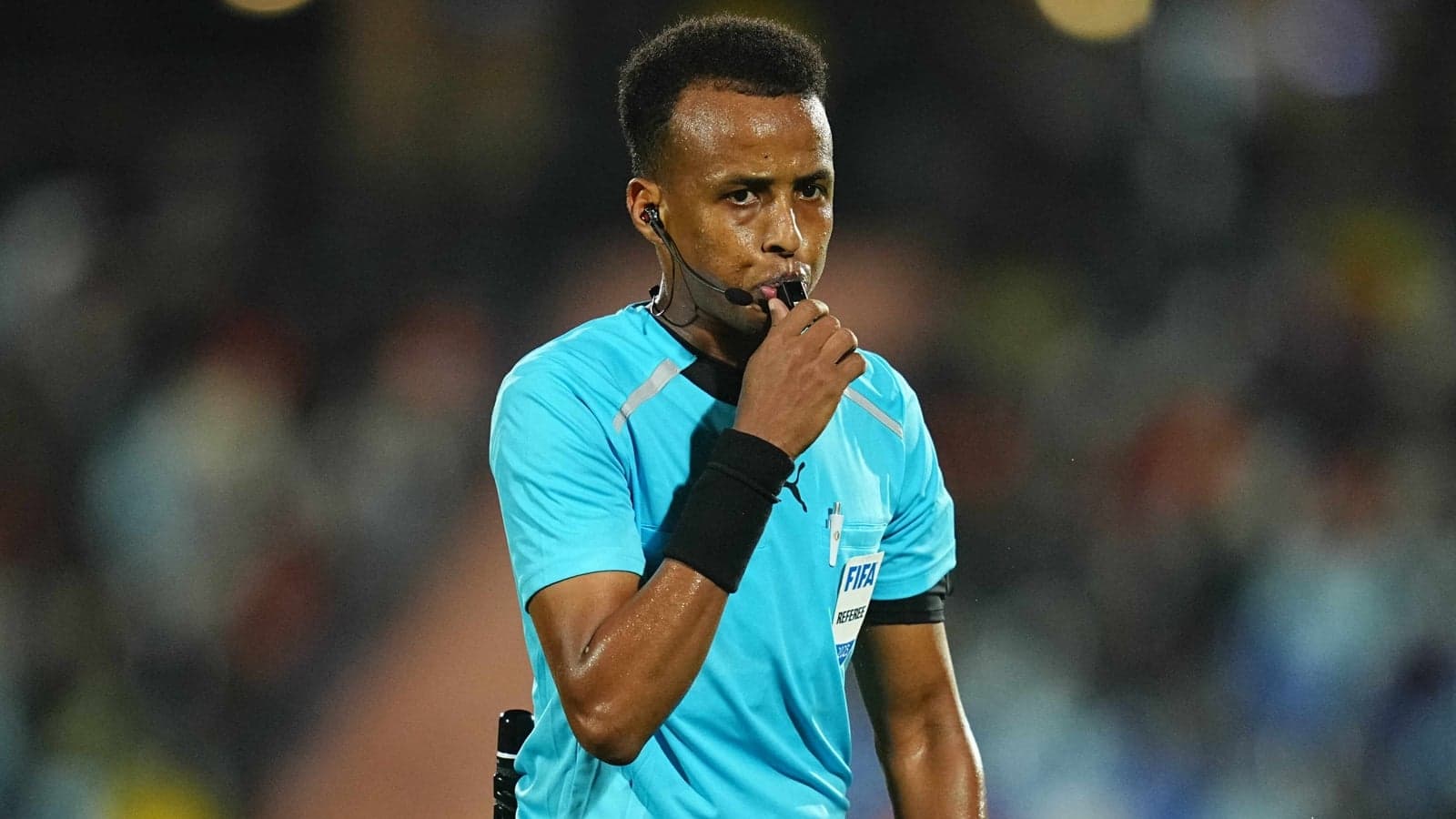
Somali Referee Omar Artan Denied World Cup Dream at US Airport
The World Cup has always promised to be a stage for dreams. For Somali referee Omar Artan, that dream ended at a US airport.
Artan, named men's referee of the year in 2025 by the Confederation of African Football and poised to become the first Somali to officiate at a World Cup, was turned back on arrival in Miami. His case has become the sharpest flashpoint yet in the collision between US security policy and football’s global showpiece.
White House task force stands firm
Andrew Giuliani, executive director of the White House Task Force for the World Cup, defended the decision at an event hosted by the Atlantic Council in Washington, insisting the tournament remains open to players and coaches but not to everyone who wants a World Cup accreditation.
"To this point we've had 35 teams that have come into the United States," Giuliani said. "No players, no coaches have been denied. There have been some officials that have been denied, and for good reason."
A US State Department official later stated that the Somali referee was "associated with suspected members of terrorist organisations," a designation that, under US law, "mak[es] the traveler ineligible for admission to the United States."
Artan, who had been on the brink of making history for Somalia, instead found himself on a flight home, his World Cup debut over before it began.
Security lines drawn
Pressed specifically on Artan’s case, Giuliani framed the decision as part of a broader effort to shield the tournament from potential abuse.
"We're striking that balance between making sure that any bad actors that... try to come into the country under the guise of the World Cup will not get access to the United States," he said.
Somalia sits on a US travel ban list introduced under President Donald Trump as part of a wider immigration crackdown. That policy backdrop has turned Artan’s exclusion into a symbol of how hard lines at the border can cut into the fabric of the global game.
Giuliani, son of former New York mayor Rudy Giuliani, repeatedly stressed that the focus is on security, not on blocking teams from competing.
He said President Trump wants a "level playing field" for all participating nations, while at the same time ensuring "that people that are directly working, let's say, with the IRGC (Islamic Revolutionary Guard Corps) have no ability to access the United States of America."
Iran forced to adapt
Iran have felt the consequences of that approach more than most. All three of their group matches will be played on American soil, yet the team have had to shift their training base to Mexico because of the ongoing military conflict with the United States.
The Iranian football federation says its allocation of tickets for supporters has been revoked, and that some members of the team’s support staff have been denied visas.
Giuliani confirmed that "all the Iranian coaching staff is coming in," but acknowledged that "some Iranian officials" will be absent — again, he said, "for very good reason."
He hinted at concerns over misrepresentation among some applicants.
"There are some people that claim that they are coaches that may not be coaches," he said, declining to go into detail.
The message is clear: the United States will host the World Cup, but on its own security terms, even if that means sidelining officials and staff who would ordinarily be routine participants in the tournament machinery.
Heavy security, no “credible threats”
Giuliani insisted there are currently "no credible threats" to the World Cup. Even so, he said the US intelligence community has "tripled down" on its efforts and will stay locked in "between now and whenever the final goal is scored on July 19."
For players, coaches, and most fans, those operations will remain invisible, humming in the background as the football takes over.
For Omar Artan, and for the Iranian staff left on the wrong side of the border, the reality is far more tangible. Their absence will not change who lifts the trophy in July. It does, however, underline a stark truth about this World Cup: the lines between sport, security, and geopolitics have never been more tightly drawn.