.svg&w=384&q=75 "GoalGist logo")
Shooting Stars Kick Off 2027 NPFL Season with Home Victory Over Inter Lagos
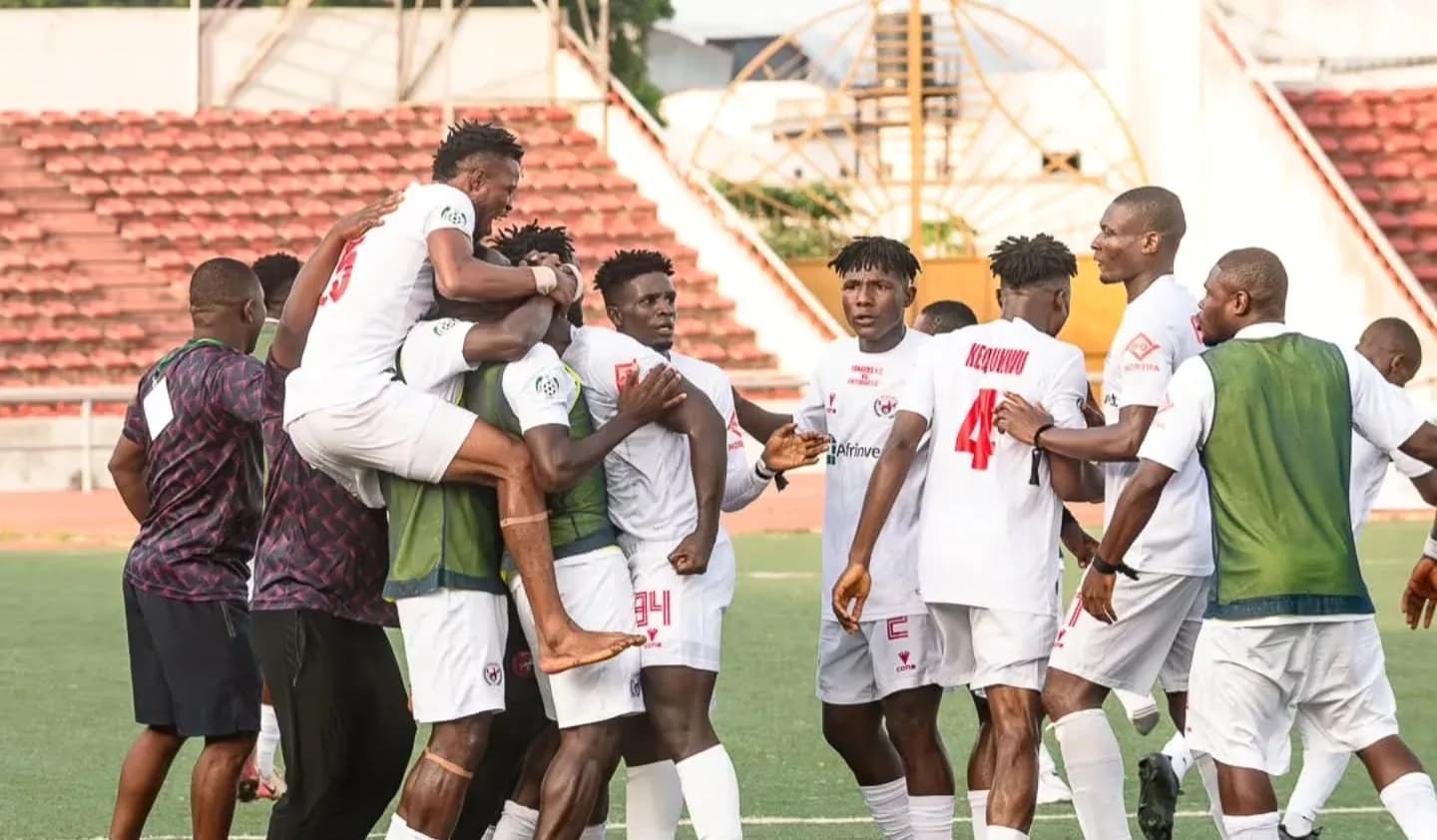
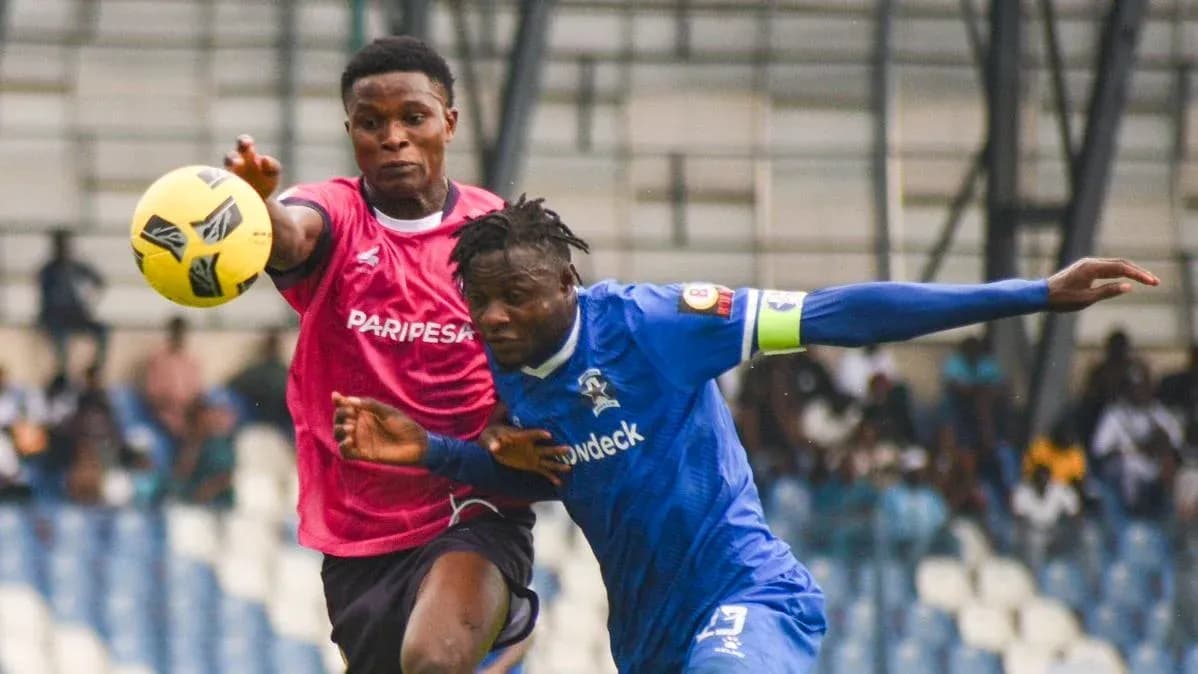
On a hot NPFL opening day at Lekan Salami Stadium, Shooting Stars announced their intentions for the 2027 season with a 2–1 home win over debutants Inter Lagos. The scoreline matched the table: the hosts sitting top with 3 points and a goal difference of +1, the visitors bottom with 0 points and a goal difference of -1. It was a match finished in regulation, but the tactical story hinted at longer arcs that will define both campaigns.
Shooting Stars arrive in this season with a clear early identity: proactive at home, willing to front‑load their risk. Overall this campaign, they have played 1 match, all of it at home, winning that single fixture 2–1. At home, they are averaging 2.0 goals scored and 1.0 conceded, a profile that speaks of controlled aggression rather than cagey caution. There is no clean sheet yet, and no sign of a low‑block mentality: they have failed to keep a clean sheet in any of their 1 total matches, but they have also not failed to score once.
Inter Lagos, by contrast, step into the league as a side still learning the terrain. On their travels they have played 1 match, losing it 2–1, with an away average of 1.0 goal scored and 2.0 conceded. Overall, that is their entire sample so far: 1 total game, 1 defeat, 1 goal for, 2 against. The numbers are thin, but they already sketch a side that can threaten in transition yet is vulnerable when forced into extended defensive phases.
Lineups
The lineups tell us how both managers chose to navigate this tactical landscape. Shooting Stars’ starting eleven was built around a strong domestic spine: M. Lawal in goal, protected by a back line featuring I. Yusuf and G. Adelowo alongside D. Ojietefian and J. Amusat. In front of them, O. Akala and O. Olaloke formed the central platform, with A. Taheer, L. Emmanuel, and A. Dalhatu supporting S. Ibrahim as the attacking spearhead.
Without explicit formation data, the structure must be read from the profiles: Akala and Olaloke suggest a double pivot capable of screening and recycling, while Emmanuel and Dalhatu, both wearing creative midfield numbers (14 and 8), hint at a side comfortable playing between the lines. Ibrahim, in the 27 shirt, looks every inch the roaming forward tasked with stretching the back line and attacking the space behind Inter Lagos’ defenders.
Inter Lagos answered with a youthful, energetic unit. F. Bala started in goal, shielded by a defensive core of C. Bonaventure, T. Oshomo, J. Arowolo, and A. Aliyu. Ahead of them, D. Adigun and N. Uchenna offered legs and bite in midfield, while A. Quyum (10) and M. Ezekiel (15) provided the creative and connective tissue. Up front, K. Iyede and L. Kamaldeen led the line, a pairing designed to punish any overcommitment from Shooting Stars on the break.
Disciplinary Profiles
The disciplinary profiles add another layer to the tactical picture. Shooting Stars’ only yellow card this season has come in the 16–30 minute window, accounting for 100.00% of their cautions. That suggests an early, perhaps over‑eager press, where challenges fly in as the tempo is still settling. Inter Lagos, meanwhile, have split their cautions evenly: 50.00% of their yellows arriving between 16–30 minutes, and 50.00% in the 91–105 minute band. The early card mirrors Shooting Stars’ intensity, but the late caution points to a team that can become stretched and desperate as matches drift into added time.
There is also a psychological subplot: penalties. Shooting Stars have earned 1 penalty in total this campaign and failed to convert it, with 1 missed and a 0% success rate. That missed spot‑kick is not a mere statistical footnote; it will hang over future high‑pressure moments. Inter Lagos, by contrast, have yet to take a penalty this season, with 0 awarded, 0 scored, and 0 missed. In any tight future meeting, the home side’s recent miss could shape who steps up and how confidently.
Matchup Analysis
From a “Hunter vs Shield” perspective, Shooting Stars’ attack has already shown it can deliver multiple goals at home, while Inter Lagos’ away defence has conceded exactly 2 on their travels. The intersection is clear: a home side averaging 2.0 goals at Lekan Salami Stadium against a newly formed away unit conceding 2.0 per match. If Shooting Stars maintain their current home tempo, the visitors will be forced once again into a reactive, counter‑punching role.
In the “Engine Room” battle, the contest between Shooting Stars’ central duo of O. Akala and O. Olaloke and Inter Lagos’ D. Adigun and N. Uchenna will be decisive. Akala and Olaloke must balance their duties: screening transitions against Iyede and Kamaldeen while also feeding Emmanuel, Dalhatu, and Ibrahim in advanced zones. Adigun and Uchenna, on the other hand, need to break Shooting Stars’ rhythm, turning interceptions into quick vertical passes toward Quyum and the forwards.
Tactically, the late‑game discipline numbers offer a warning for Inter Lagos. With 50.00% of their yellow cards arriving after 90 minutes, they are prone to fouls when chasing the game. Against a side like Shooting Stars that already draw penalties—albeit missing their only one so far—reckless late challenges in the box or on the edge could be costly.
Statistically, the prognosis for the matchup between these two sides—if replayed in similar conditions—would lean toward another narrow home win. Shooting Stars’ overall goal difference of +1 (2 scored, 1 conceded) reflects a team that edges matches by fine margins but controls key phases. Inter Lagos’ overall goal difference of -1 (1 scored, 2 conceded) frames them as competitive but still porous. Without xG data, the raw returns still suggest that Shooting Stars’ offensive structure, supported by a settled spine and home advantage, currently outweighs Inter Lagos’ embryonic defensive solidity.
As the NPFL regular season unfolds, this fixture feels like a prologue: Shooting Stars setting a standard at the top, Inter Lagos absorbing hard lessons at the bottom. The numbers are small, but the patterns are already visible—and in Ibadan, the early signs say the home side intend to make Lekan Salami Stadium a difficult place to visit.