.svg&w=384&q=75 "GoalGist logo")
Serge Gnabry's Tactical Revival at Bayern Munich
Serge Gnabry’s 30th birthday in mid-July 2025 looked like a quiet milestone on paper. It turned into the start of a personal revival. Within weeks, the winger many at Bayern Munich had quietly moved into the “sellable asset” column had forced his way into Vincent Kompany’s best XI.
It wasn’t just a feel‑good story. It was necessity.
Bayern’s attacking hierarchy seemed set: Harry Kane, Michael Olise and Luis Diaz were untouchable. Kompany’s 4-2-3-1 left one open lane – the No. 10 role. With Jamal Musiala out for months after a fibula fracture, the path cleared for Gnabry. The competition was thin, the opportunity huge.
Lennart Karl, still a teenager, was rated highly but not yet as a week‑to‑week solution. Nicolas Jackson only arrived on Deadline Day at the start of September and needed time to adjust to the pace and pressure in Munich. By the time he had settled, Gnabry had already planted his flag.
In the biggest matches, Kompany’s choice was blunt: Gnabry or nothing. Karl’s emergence gave the coach a credible alternative. Jackson’s early chances slipped away with underwhelming performances. Musiala did eventually return in January, but by then Gnabry had banked trust and minutes that would have seemed unthinkable a year earlier.
Musiala’s Battle on and off the Pitch
Now the landscape has shifted again. The only fixed points in Bayern’s attack are Kane, Olise and Diaz. Behind them, the fight for the fourth spot has turned into a full‑scale scrap.
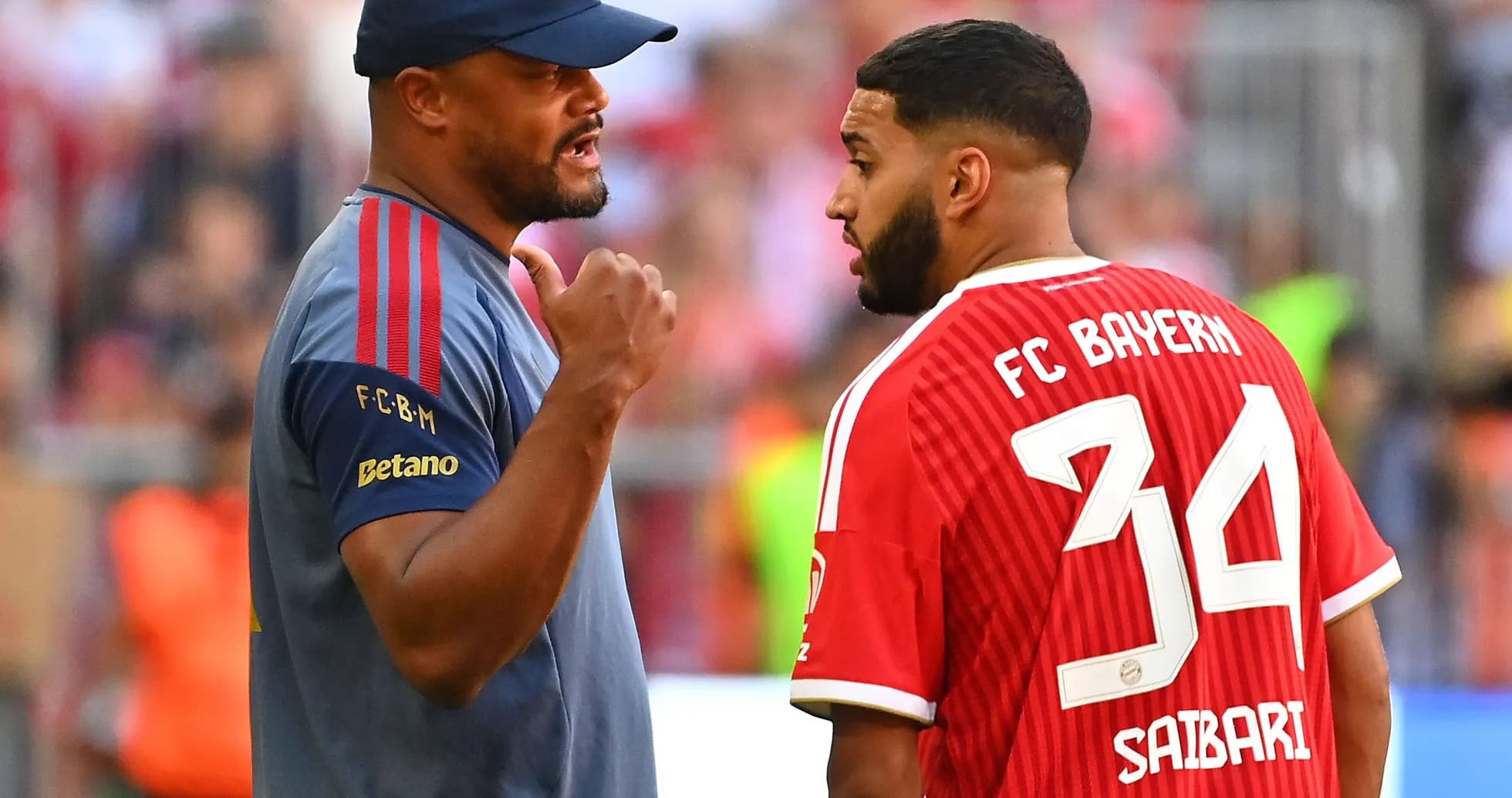
Musiala, Gnabry, Karl and €50 million signing Ismael Saibari all have a realistic claim to serious playing time. With a packed calendar, Kompany will have to rotate heavily. The problem for the players: nobody has clarity on who starts when it matters most.
On paper, this should be Musiala’s role. He wears the No. 10 shirt. He is one of the club’s top earners. He was projected as the face of Bayern’s future, a cornerstone rather than a question mark. Right now, though, he is far from that status.
Since his January comeback, Musiala has not hit his previous level. The frustrations of a disappointing World Cup were followed by the removal of a metal plate from his foot. Then came the images that jarred everyone: his collapses in friendlies against RB Leipzig and 1. FC Heidenheim.
Those moments triggered genuine concern about whether the 23-year-old can withstand the demands of elite football. The diagnosis is absence epilepsy. According to neurologist Dr Regina Becker, who spoke to SPOX, a professional career is still entirely possible with the condition.
Musiala has no intention of stepping away. In a widely discussed Instagram statement, he wrote that, in close consultation with specialists, it is his personal wish to face the challenge and, with medical clearance, continue living his everyday life and pursue his passion for playing football. He wants to play through it, not around it.
Saibari Seizes the Early Initiative
While Musiala wrestles with form and health, two of his rivals have been on their own recovery paths. Gnabry, now 31, and Karl, still only 18, both missed the World Cup with muscle injuries. Their summers were quieter, spent largely in individual rehab rather than full team sessions.
They are now being eased back into group training. There is a chance both could feature as early as Saturday’s Super Cup clash with Borussia Dortmund. If that comes too soon, the expectation is that they will at least be ready for the Bundesliga opener against VfB Stuttgart the following Friday.
Saibari, though, has stolen a march on all of them.
After an eye‑catching World Cup with Morocco, the 25-year-old also had to deal with a torn muscle fibre. He has now shaken that off. Fully integrated, he impressed in his first two friendlies and delivered an assist in the 3-1 win over Leipzig. He looks sharp, confident, and crucially, fit.
Right now, that fitness is his biggest weapon. Compared with Musiala, Gnabry and Karl, Saibari is simply further along physically. He starts this battle for the vacant attacking slot with a clear edge.
Youth Pushing, but Pathway Narrows
While the main contenders were unavailable, others stepped into the spotlight. Loan returnee Arijon Ibrahimovic, 20, and academy products Tim Binder, 19, and Maycon Cardozo, 17, all used pre-season to make their case.
Their performances did not go unnoticed. One of them could yet follow the trajectory Karl carved out a year earlier, when he surged from promising prospect to genuine first-team option.
This time, though, the route looks more congested. Bayern’s squad is deeper, especially in the attacking positions. Established names block the path that was more open for Karl 12 months ago.
The door is not closed. But in a Bayern side suddenly rich in creative options behind Kane, every minute on the pitch will have to be ripped from someone else’s grasp.