.svg&w=384&q=75 "GoalGist logo")
Sebastian Pedersen Joins Orlando Pirates: A New Striker's Journey
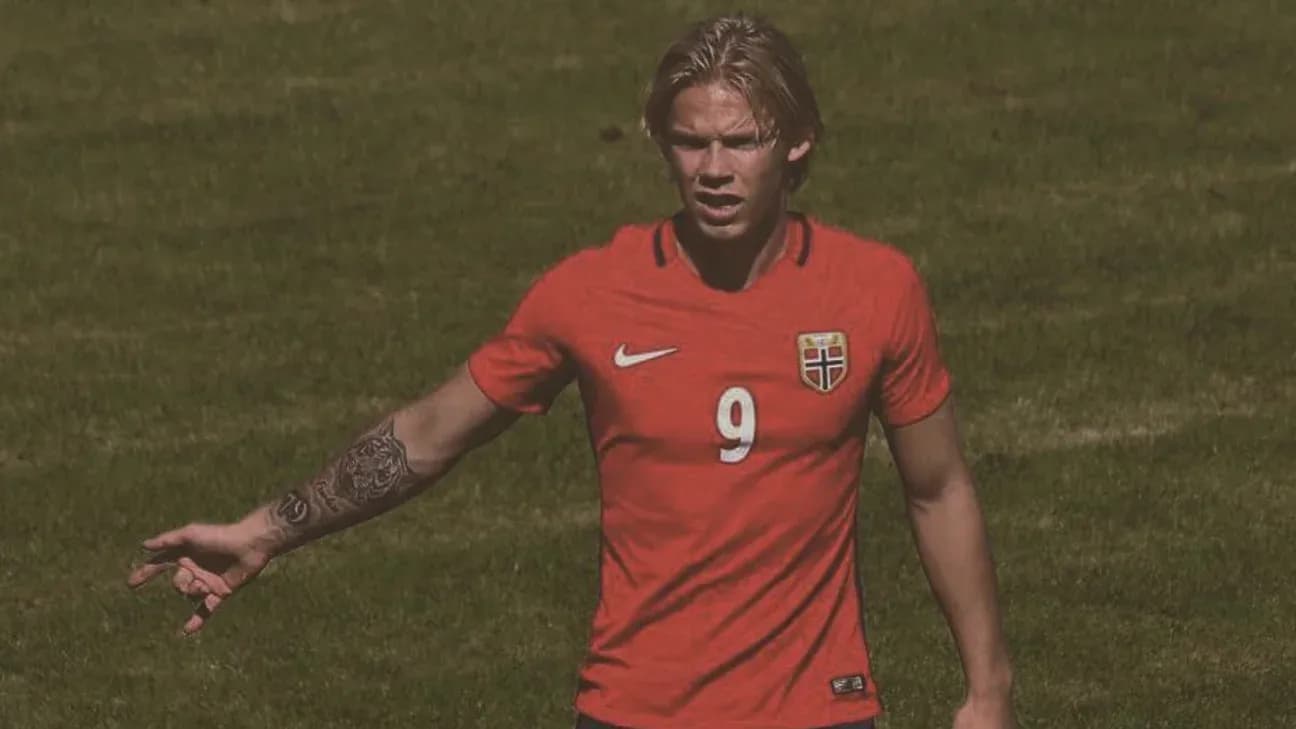
Erling Haaland and Sebastian Pedersen are not cousins. Social media can keep the joke, but the only thing that truly links them is a shared past in Norway’s youth ranks and a shared instinct to live between the posts.
For Orlando Pirates, that’s all that matters.
From Haaland’s Shadow to Buccaneers’ Spotlight
Pedersen’s path has long run alongside Haaland’s, even if it never quite crossed the white line at the same time. The two strikers were regulars in the same Norway U18 and U19 squads, competing for the same shirt, the same minutes, the same goals. According to Transfermarkt, they shared five squads, three of those outings in UEFA Euro Under-19 qualifiers.
The pattern was clear: when one went off, the other came on. Never a partnership. Always a duel.
Now, years later, Pedersen steps into a very different battle. On Sunday, Pirates announced the 27-year-old striker’s arrival from Norwegian side Sogndal Fotball on a two-year deal, with an option for a further season. He joins Abdeslam Ouaddou’s group as they gear up for a season in which defending the Premiership title will demand sharper cutting edge in the box.
The club’s statement painted the picture of a player forged in a system that knows how to produce talent.
“Pedersen arrives from one of Norwegian football's great talent factories. The blonde bomber is cut from that cloth, having featured at junior national team level from U15 all the way to U21,” Pirates said.
They also offered a concise scouting report: Pedersen is “considered a one-touch finisher rather than a bulldozer” and has “recorded 51 goals in the last 117 matches.”
That tag matters. Pirates are not buying a battering ram. They’re buying a penalty-box problem.
More Than a No. 9, But Signed as One
Pedersen can operate from the flanks, especially the left, mirroring some of the positional versatility that Relebohile Mofokeng offered before his departure. On paper, that gives Ouaddou options across the front line. In practice, early indications are that Pirates see him as a central striker first, not a touchline runner.
Given the context, it makes sense. With Tshegofatso Mabasa gone and the title won despite modest returns from the current forwards, the need is obvious.
Evidence Makgopa and Yanela Mbuthuma rotated as the focal point last season. Makgopa’s hold-up play gave Pirates a platform. Mbuthuma’s pressing and work rate without the ball stretched defences. Both brought value. Neither brought enough goals for a team with championship ambitions: six for Makgopa, five for Mbuthuma.
That is where Pedersen comes in.
Across his club career, he has produced 59 goals and 9 assists in 166 appearances. The bulk of that work has come in Norway’s second-tier OBOS-ligaen, where he established himself as a reliable finisher rather than a headline act. His record in the top flight, the Eliteserien, is more modest: one goal in 12 appearances, totalling 275 minutes.
It’s a profile that raises a familiar question in South African football: can a consistent scorer from a smaller European league become the ruthless, week-in-week-out finisher that a big club needs?
Pirates are betting that his movement and penalty-box instincts will travel.
The Other Marcus Pedersen
The surname has created its own confusion.
Norway’s 2026 World Cup squad featured Torino right-back Marcus Holmgren Pedersen, prompting some to assume a family link to the new Pirates striker. That’s not the case.
Sebastian does have an older brother named Marcus Pedersen, and he too has worn the Norway shirt – but his time came a decade earlier. The elder Marcus collected nine caps between 2013 and 2015, scoring once. Now 36 and last seen in Norway’s lower leagues, his international days feel distant, yet the career was solid.
A journeyman forward who, like his younger brother, could drift out to the left, Marcus Pedersen turned out for Vitesse in the Netherlands, spent time on loan at Barnsley, and had spells with Vålerenga in Norway and Odense Boldklub in Denmark. His most productive football came at Strømsgodset, where two stints between 2009–2010 and 2015–2019 made him a key figure.
For Pirates supporters, that background offers a useful reference point: this is a football family, used to the demands and expectations that follow professional strikers across borders.
The Missing Piece?
Strip away the Haaland chatter, the family tree and the social media noise, and the core remains simple. Pirates need goals. Reliable, repeatable goals.
They have the structure, the title, the platform. What they lacked last season was a specialist who turns half-chances into winning margins on a regular basis.
Pedersen’s numbers in Norway’s second tier suggest he understands that job. His style – a one-touch finisher, not a physical enforcer – fits a team that often dominates possession and territory and needs someone to arrive, not just someone to occupy.
He is not Haaland. He does not need to be.
If he can turn his OBOS-ligaen efficiency into Premiership productivity, he might become something far more valuable to Orlando Pirates: the striker who turns a good side into a ruthless one.