.svg&w=384&q=75 "GoalGist logo")
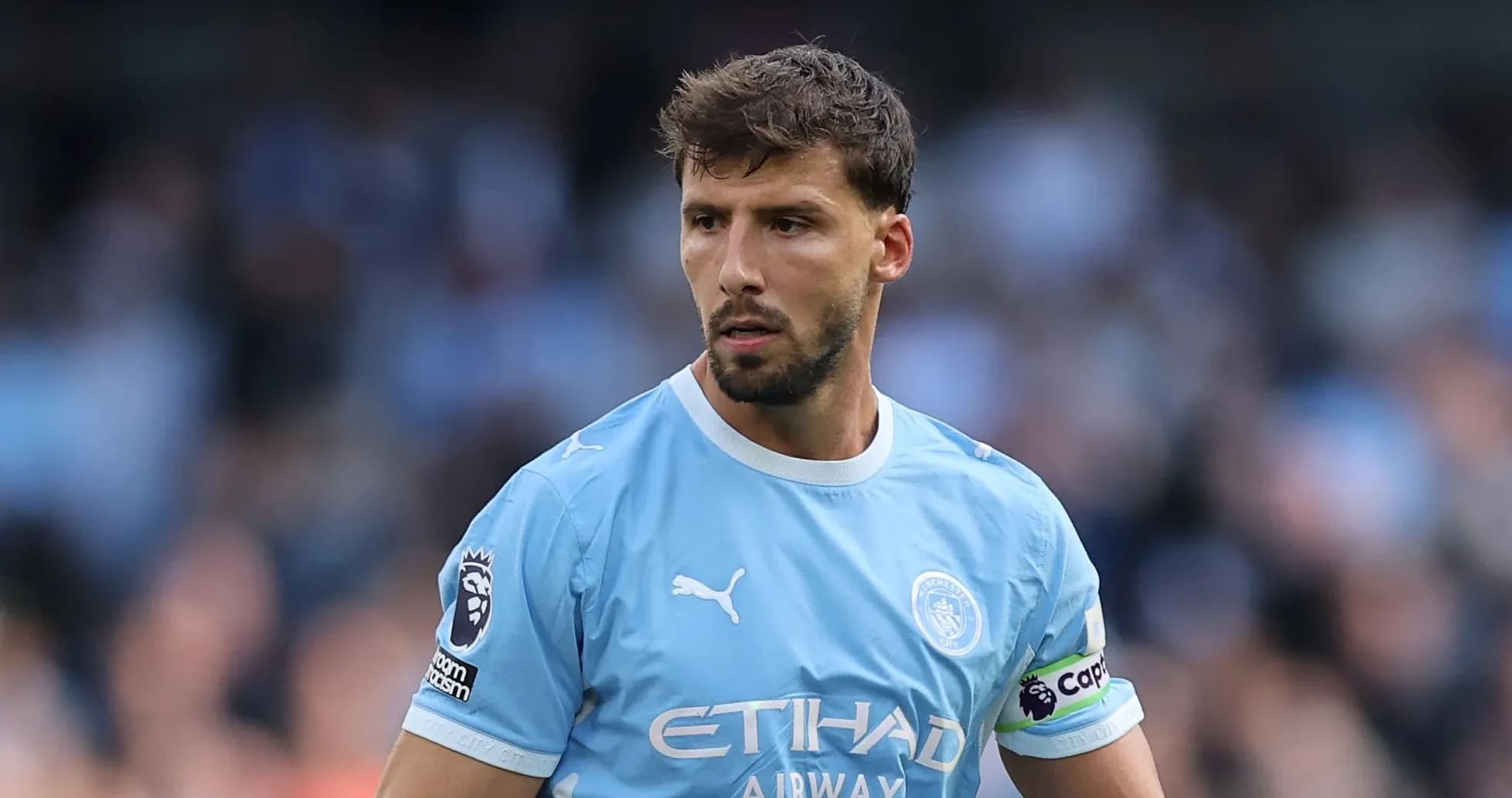
Rúben Dias: The Constant in Manchester City's Evolution
When Pep Guardiola finally walked away after a decade of control, it felt like the end of a footballing empire. Manchester City’s response was ruthless and expensive. A Premier League record £458 million thrown at a rebuild, a new voice in the dugout, and a dressing room almost unrecognisable from the one that swept the Treble.
Rodri gone. Bernardo Silva gone. John Stones gone. Pillars of an era, stripped out in one summer. In their place: Enzo Fernandez, Elliot Anderson, Ayyoub Bouaddi – fresh legs, fresh ideas, and a very different City taking shape under Enzo Maresca.
Through all of it, Rúben Dias has stayed exactly where he usually is: right in the middle of it.
Dias, the constant in a changing City
The Portugal defender has seen the Etihad change around him at speed, but he insists his own job hasn’t shifted with the churn of faces.
“In terms of the role I have, it goes down to trying to be the best version of yourself, and in terms of that, nothing has changed,” he told BBC Sport. The cast list has been ripped up, but the standards, he insists, have not. “So many people have left and so many winners have left, and now new people have joined with a lot of ambition and people that are desperate to win and that is also what makes the club keep on going.”
That’s the line City are trying to walk: saying goodbye to serial winners without letting the winning stop.
The potential fault line was obvious. Life after Guardiola is uncharted territory for this club. Yet Maresca has walked in and, so far, the machine has barely stuttered. Four wins from four to open the season across the Premier League and Champions League suggest the transition has been more evolution than rupture.
Maresca’s ideas, familiar foundations
Maresca is not a stranger parachuted into a superclub. He knows the corridors, the training pitches, the rhythms of the place from his time as Guardiola’s assistant, and Dias made it clear how much that matters during such a radical overhaul.
“There's obviously many things from training session to some details about the way we press, details about the way we defend and that make all of these Enzo's idea,” Dias said. The tweaks are his, but they sit on a familiar base. “I feel like everything is making a lot of sense. Everyone is buying into the idea. Everyone's excited about it and there is a lot of joy in training, which is massively important.”
That last point matters. Joy. Amid the pressure of sustaining a dynasty and the noise around record spending, City’s senior figures are talking about enjoyment. It’s a subtle but telling shift from the intensity of the Guardiola years.
From rising star to elder statesman
The most striking change for Dias is not on the tactics board, but in the mirror. At 29, with more than 250 City appearances, four Premier League titles and a Champions League medal, he has quietly become one of the old hands.
The defender who once walked into a dressing room of established champions is now the bridge between that Treble-winning core and a squad full of new names desperate to write their own story.
He has just committed himself to that story until 2029, signing an extension that underlines his status as a cornerstone of the new era. Yet he doesn’t hide the emotional cost of seeing so many familiar faces walk out.
“I am 29, I am going to be 30 next year but I am excited about all of this and all the things with the club, the new manager, new players, the new challenge, guys that I was so close with leaving,” he said.
Then he framed it in the bluntest, most honest way a footballer can. “It's the circle of life, you can call it and it is just how things are I am appreciative of all of it - I'm appreciative of the memories I have with all the ones that left and I'm excited with the memory about the memories I'm going to make with the ones that have just arrived.”
The sentiment fits a club trying to show respect to its recent past while refusing to be weighed down by it.
Legacy through longevity
Dias has already won almost everything there is to win at club level. Yet he made it clear his motivation is not fading with the trophies stacking up.
“I am still very ambitious,” he said. “I took the decision of being at this level because I feel like I have won so much but maybe the thing that would be my biggest reward would be to be here so many years playing at this level and and having the consistency of being ambitious for so long.”
For City, that is the crux of this new chapter. The money has been spent, the manager has changed, the dressing room has turned over. The question now is not whether they can win again in the short term – early results suggest they can – but whether figures like Dias can carry that relentless edge into a second era of dominance.
If they do, this won’t be remembered as a rebuild. It will be remembered as a handover.