.svg&w=384&q=75 "GoalGist logo")
Roshn League's World Cup Reflection: Missed Champions and Emerging Talents
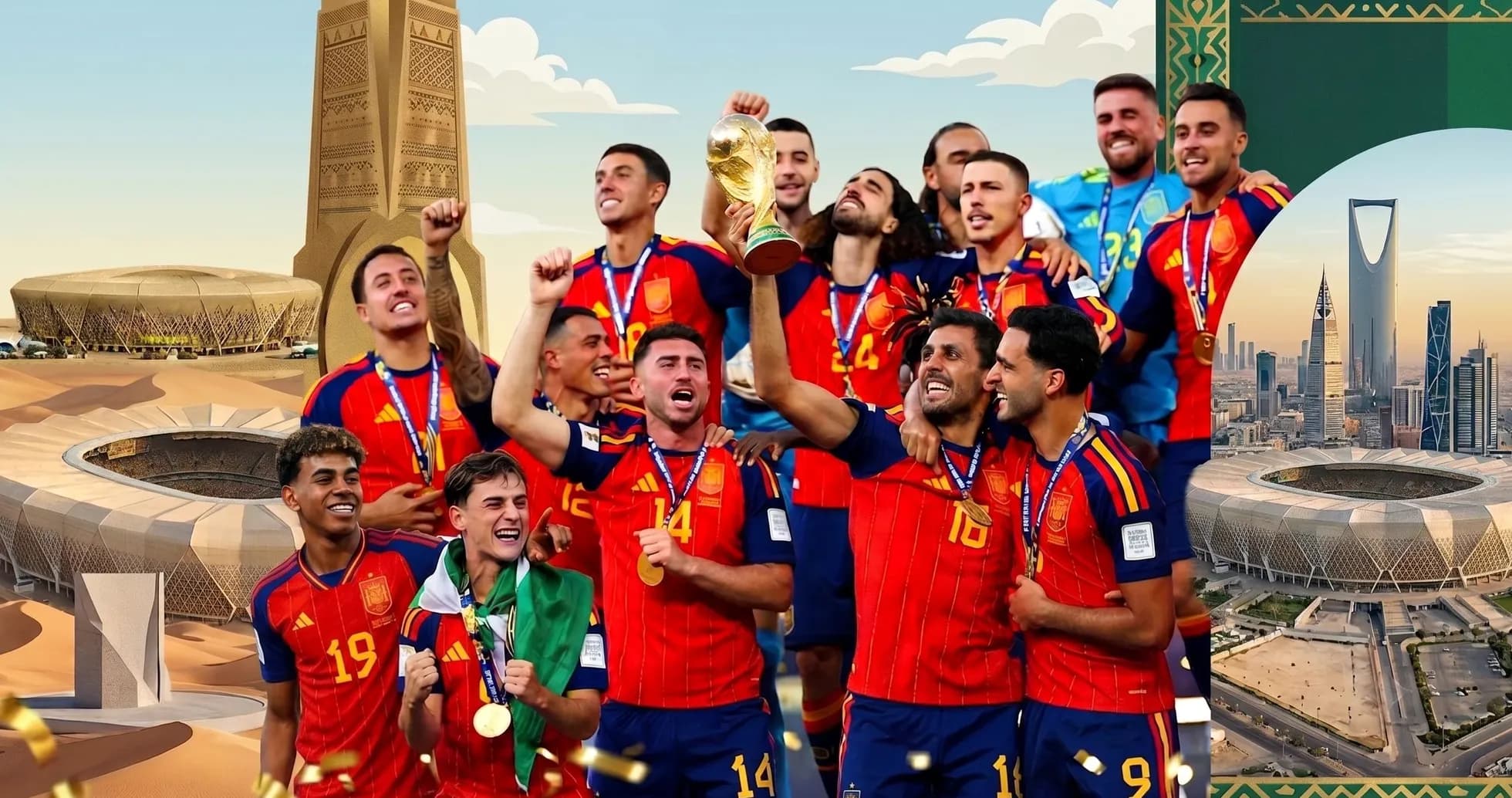
Two summers ago, the Saudi Roshn League basked in Spain’s glory. Euro 2024 ended with La Roja back on the throne and two of the league’s own – Nacho Fernandez and Aymeric Laporte – parading the trophy. Saudi clubs claimed a slice of the story.
This time, they watched from the outside.
Spain are world champions again, lifting the 2026 World Cup after a final of fine margins against Argentina, but not a single member of Luis de la Fuente’s squad came from the Roshn League. The domestic competition is full of Spanish talent, yet when the plane left for the United States, none of them were on it.
For the league, it was a strange mix: pride in how many of its players reached the tournament, and a sharp reminder of the deals that slipped away.
The world champion who got away
No case stings more than Aymeric Laporte.
Only a season after leaving Al-Nassr, the centre-back returned to Athletic Bilbao and promptly anchored Spain’s defence alongside Pau Cubarsi, forming the platform for a World Cup triumph built on tactical control and defensive discipline. The same Laporte who had once been a marquee name in Saudi Arabia, sharing a dressing room with Cristiano Ronaldo, now stood at the heart of the champions.
His exit from Al-Nassr had been anything but smooth. Under Italian coach Stefano Pioli, Laporte found himself sanctioned, isolated from the squad, training alone and omitted from the final stretch of the season. He later described the atmosphere at the club as “difficult”, pointing to constant upheaval in management and coaching staff.
From that turbulence, Al-Nassr watched a former player go on to become a world champion somewhere else. A brutal reminder of timing in football.
Laporte was not the only near miss. Across Spain’s World Cup-winning squad, several names had appeared on Roshn League shortlists, floated in negotiations, or circled in transfer rumours. None of those pursuits ended with a signature. When Spain lifted the trophy, Saudi clubs could only reflect on what might have been.
That “final step” in transfer talks – the last push over the line – proved elusive. Had it been taken, the league could now boast a world champion on its books. Instead, it must settle for having helped send 49 players to the tournament, a number that still underlines its growing weight in the global game.
No champions, but plenty of winners
On paper, the Roshn League failed to land a single player from the squad that conquered the world. On the balance sheet and the pitch, though, the World Cup delivered.
FIFA’s club benefits programme ensured that every participating club received a daily fee for releasing players. According to French newspaper L’Equipe, that figure stood at 4,300 euros per player, per day, from 1 June to 19 July 2026, drawn from a total pot of 305.3 million euros.
The numbers add up quickly in Saudi Arabia.
Al-Hilal sent more players than any other Saudi club – 12 in all – and emerged as the biggest beneficiary. Their full-back Theo Hernandez stayed with France all the way to the third-place play-off, extending his stay in the United States and the stream of compensation. France missed out on bronze, but Al-Hilal still profited from the exposure, the experience, and the cheque.
Just behind them came Al-Ahli and Al-Nassr, level in second place among Saudi clubs with nine players each at the World Cup. Al-Ahli had special reason to celebrate: Ivan Toney helped England secure third place, writing his own small chapter in his country’s history and returning to Jeddah with a medal and a higher profile.
The gains were not only financial.
Al-Qadsiah, who sent six players, watched Mexican forward Julian Quinones light up the group and knockout stages. Four goals, one decisive assist, five matches that turned him from a domestic standout into a fully-fledged international threat. His performances did more for his market value than any marketing campaign could.
This is the trade-off for the Roshn League right now. The world champions wear other colours, sign for other clubs, celebrate in other stadiums. Yet the league’s footprint at the World Cup keeps growing, its players more visible, its clubs more deeply woven into the fabric of international football.
The next question is obvious: with the money flowing, the profile rising and the World Cup stage now familiar ground, how long before one of those winners lifts the trophy while still wearing Saudi colours?

