.svg&w=384&q=75 "GoalGist logo")
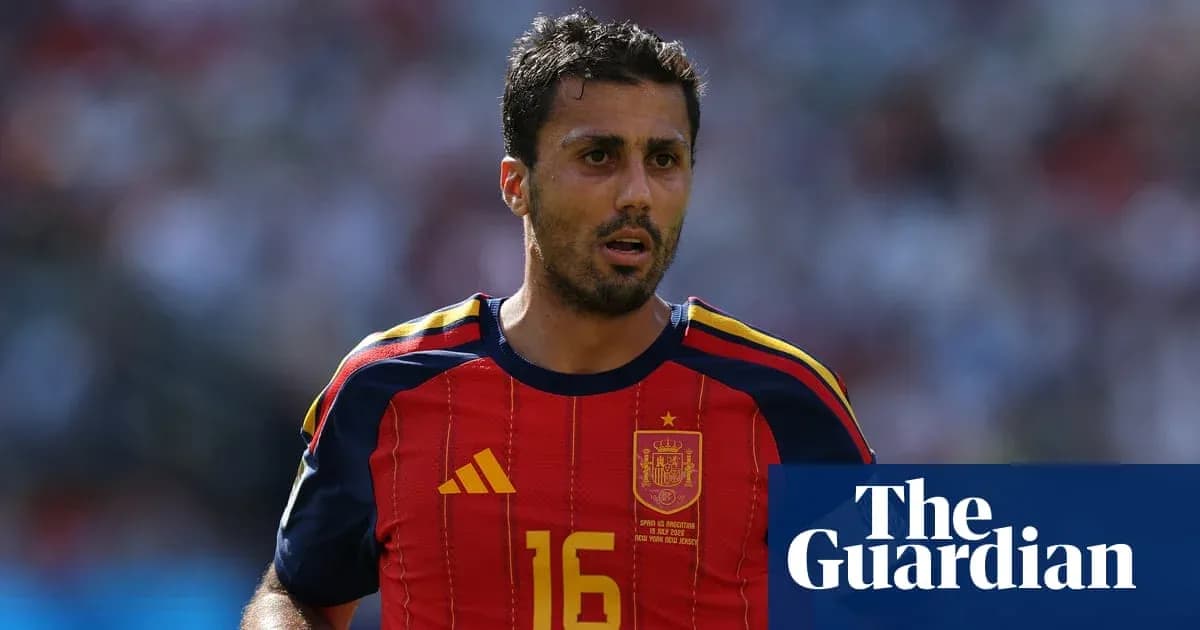
Rodri's World Cup Triumph and Injury Setback
Rodri’s World Cup summer, the one that was supposed to reset his career and reassert his status as the game’s dominant midfielder, may yet come at a heavy cost.
Days after lifting the World Cup with Spain in New Jersey, captaining his country to a 1-0 win over Argentina and collecting the Golden Ball as the tournament’s outstanding player, the Manchester City midfielder is facing the prospect of back surgery and a lengthy spell on the sidelines. The same stage that showcased his resurgence might now delay his return to club football.
At 30, Rodri had looked reborn. Two seasons wrecked and reshaped by injury had led to a sense that his peak might be slipping away. In the United States, he played like a man determined to wrest it back. He bossed midfields, dictated tempo, dragged Spain through difficult spells. On Sunday, he climbed the steps as a World Cup-winning captain.
Now he is braced for another fight with his body.
The back problem, serious enough that an operation is on the table, is expected to rule him out of the start of Manchester City’s season. For a player who has long been the metronome of City’s play, that absence would be more than a simple gap on a teamsheet. It would be another chapter in a punishing medical file.
His troubles began in brutal fashion. In September 2024, in a 2–2 draw with Arsenal at the Etihad Stadium, Rodri ruptured his anterior cruciate ligament. One moment he was anchoring midfield in familiar fashion; the next, his season had effectively collapsed. The injury removed him from most of that campaign and forced City to improvise in the very area of the pitch where they had been most stable.
When he finally worked his way back, the game struck again. At the Club World Cup last July he suffered another setback. Last season turned into a grim relay of muscle problems: hamstring, then groin. He started only 17 Premier League matches, a startling number for a player once considered almost indestructible in Pep Guardiola’s era.
The World Cup, then, felt like redemption. On the podium in New Jersey, Golden Ball in hand, Rodri spoke with the clarity of someone who had walked through months of doubt.
“For me, it’s been a very tough time,” he said. “I just want the new generations to see my example as an opportunity. When you go down, you can rise again. This is my philosophy for my entire life. Of course, sometimes things go well, things go wrong, but always the positiveness.”
Those words land differently now. The rise he spoke of will have to continue through another interruption, another rehab schedule, another lonely stretch in the gym while teammates prepare for the season.
The timing complicates more than just City’s tactical plans. Rodri’s contract runs out next June, and his future at the Etihad is far from settled. He has long harboured a desire to return to Spain at some point in his career and is understood to favour a move to Real Madrid if he does go back. The European champions, though, have not yet turned that admiration into a formal bid.
In the middle of all this stands Enzo Maresca, the new man in the City dugout, inheriting both a squad and a dilemma. Maresca wants to keep Rodri. For a coach who preaches structure and control, losing a midfielder of such intelligence and authority would be a wrench. Yet he may have to start his tenure without him, reshaping City’s midfield on the fly while one of its cornerstones recovers and weighs up his next step.
Rodri’s story has become a test of endurance as much as talent. He has scaled the sport again with Spain, proving on the grandest stage that his game still belongs at the very top. Now, with his back threatening to drag him away from the pitch once more and a contract clock ticking in Manchester, the next decision – surgery, recovery, future – could define the rest of his career.