.svg&w=384&q=75 "GoalGist logo")
Rodri's Future: Barcelona or Real Madrid?
Rodri has reached the point where his career feels like inevitability.
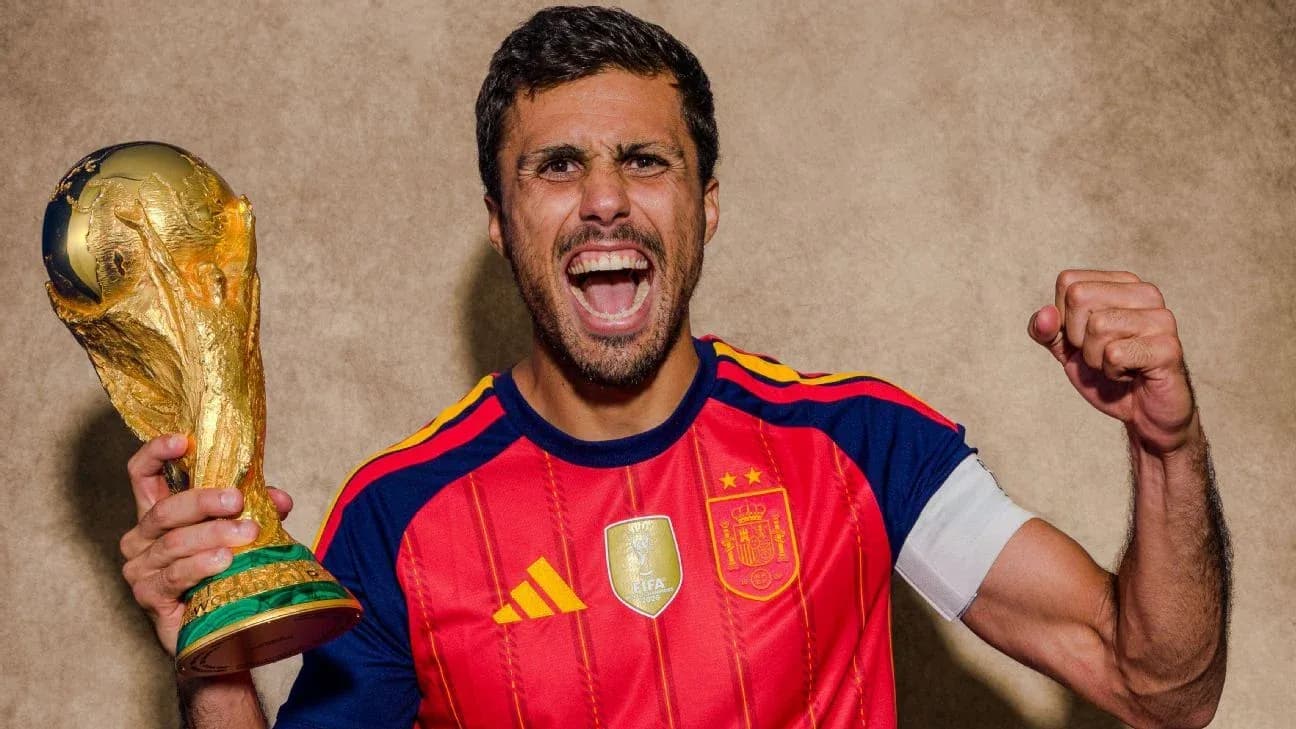
World Cup winner as Spain’s captain, Golden Ball in his hands after dragging La Roja past Lionel Messi’s Argentina, a European champion with his country two years earlier, Champions League match-winner for Manchester City, Ballon d’Or on the shelf. Thirteen trophies in seven years in Manchester. Four Premier League titles. The metronome, the shield, the man for the biggest moments.
Now, with one year left on his City contract and a nation hailing him as its standard-bearer, the question is no longer whether he returns to LaLiga. It’s where. And whether City can stretch this era out for just a little longer.
Barcelona: the Busquets heir finally within reach
At Barcelona, Rodri has lived for years on the whiteboard. The ideal heir to Sergio Busquets, the one name that ticked every tactical and emotional box, but always just out of reach financially or practically.
This summer did not begin with Rodri at the top of Barça’s to-do list. He was a dream, not a plan.
That changed quickly.
Frenkie de Jong’s injury dragged the club into the market for a new midfielder. As talks and whispers filtered through that a deal for Rodri might actually be possible, Hansi Flick and sporting director Deco didn’t hide their excitement. This wasn’t just another piece. This was the piece.
Then came the key twist: Rodri, sources say, would prioritise Barcelona over Real Madrid.
For years, the assumption inside Spanish football was simple: if Rodri ever came home, it would be to the Bernabéu. He’s Madrid-born, raised in the capital’s football culture, and his profile fits Real’s long-standing taste for dominant, big-game personalities.
Yet the World Cup shifted the ground. Rodri lifted the trophy surrounded by eight Barcelona players. He thrived in a style of football that mirrors Flick’s ideas. On top of that, a small but influential Catalan contingent with past ties to City spent the past decade building bridges between the Etihad and Camp Nou. Their advice, their stories, their view of what Barça could be again, all landed.
His head turned.
Barcelona now have what club sources describe as a loose agreement on personal terms with Rodri. Inside the offices, the mood is bullish: they believe he will sign. The final obstacle is City’s price. One opening bid has already been rejected, and negotiations are ongoing over a package that could climb to around €70 million.
Nothing is done until it’s signed. Everyone at Barça knows how quickly transfer winds can change. But right now, they see Rodri stepping into a midfield already loaded with talent: Pedri, Gavi, Marc Bernal, Fermín López, Dani Olmo.
That raises an obvious question: what happens to De Jong when he returns?
The club’s internal answer is blunt. You don’t pass on Rodri because of a selection headache. Those in power believe this signing, even if it means shelving the search for a centre-back for now, is the move that can push Flick’s team from domestic dominance to European relevance again. Back-to-back LaLiga titles are one thing. The first Champions League since 2015 is another. They think Rodri is the bridge between the two.
Real Madrid: from cool distance to late panic
Across the country, Real Madrid’s relationship with Rodri has been a long, slow burn that suddenly went cold.
For months, people inside the Bernabéu insisted he was not on the agenda. On paper that sounded strange. Here was the best holding midfielder in the world, a Madrid-born World Cup-winning captain with a year left on his contract, capable of solving several structural problems at once.
Still, there were doubts. Club sources point to Florentino Pérez’s concern over Rodri’s recent injury record. José Mourinho, back on the bench, preferred a different profile in the middle of the pitch. Renewing Aurélien Tchouaméni’s contract served as a public vote of confidence in the Frenchman and a signal that the club already had its long-term anchor.
Then Rodri’s World Cup happened.
He played every minute like a statement. Any questions about his form or fitness vanished. Inside Madrid’s hierarchy, opinions shifted. Director general José Ángel Sánchez and chief scout Juni Calafat, two of the most influential voices on recruitment, were now open to bringing him in.
From there, optimism grew. By late July, some at the club believed the deal would get done. Rodri wanted to come home, they were told. The issue was timing and money. City still needed to secure a replacement, and there was no agreement on a fee.
Madrid kept their nerve. They worked on other fronts: talks over Yan Diomande, discussions about Vinícius Júnior’s renewal. The message was calm. Rodri wants us, this will happen.
Then came Wednesday night.
News broke inside the club that Barcelona were not just lurking; they were genuinely in the race. Suddenly, sources were calling it 50-50 between Madrid and Barça. Rodri, they were told, was open to both.
Within 24 hours, the tone darkened. Madrid believed they were out. People close to the situation say Rodri felt the club’s doubts had never fully disappeared, especially Mourinho’s. Flick, by contrast, had picked up the phone himself, outlining exactly how he saw Rodri as the centrepiece of his project.
Madrid prepared one last push. But the sense inside the Bernabéu was that they were chasing a train already leaving the station. The player’s camp, sources say, were unimpressed by how long it had taken Madrid to act decisively.
Unless there is another sharp twist, Rodri is off their board. That leaves Madrid with a decision: look for an alternative, or trust the current core. Some reports suggest Mourinho has earmarked Bernardo Silva as a potential central option alongside Tchouaméni or Federico Valverde.
Rodri, though, looks gone. And that is a rare feeling for Madrid: watching an era-defining Spanish star slip through their fingers, possibly into the arms of their greatest rival.
Manchester City: calm faces, complicated reality
At Manchester City, the public line is clear and unwavering. Enzo Maresca repeats it whenever asked: Rodri is central to everything, and the club want him to stay and sign a new contract.
Behind the scenes, the picture is more nuanced.
City have long known that Rodri dreamed of returning to Spain one day. It influenced their decision to bring in Kalvin Phillips from Leeds United in 2022, an attempt to prepare for life after their midfield anchor. That move failed, but the reasoning behind it remains relevant now.
There is also a guiding principle at City: they do not like to keep unhappy players. When someone decides to go, the club tends to step aside — at a price that suits them.
Rodri’s age, his recent injuries and his contract situation all matter. With his deal up next summer, City face the prospect of losing him for nothing in 12 months’ time. A sale now, at the right figure, becomes a logical conversation.
Sources around the club suggest that if Barcelona or Real Madrid come in with an offer north of €70 million, City will sit down at the table. They will not entertain a cut-price exit. And they cannot simply let him go without a clear plan to rebuild the midfield.
That rebuild is already complicated. There are question marks over the futures of Tijjani Reijnders and Nico González. Elliot Anderson has arrived from Nottingham Forest, a useful addition but not a like-for-like replacement. Talks continue with Lille over Ayyoub Bouaddi, Morocco’s breakout World Cup star, but he would be a project, not an instant Rodri clone.
Maresca is stepping into the most delicate moment any City manager has faced in a decade: the first season after Pep Guardiola. Losing the on-pitch extension of Guardiola’s brain at the same time would make that transition even harsher.
For now, City are outwardly relaxed. No acceptable bid has landed. They can only wait, monitor the market and prepare contingency plans. Recruitment staff are already combing through options in case the worst — or the inevitable — happens.
Inside the Etihad, there is a growing feeling that Rodri will go. The club will not say it publicly, but they can read the same signs as everyone else: the pull of home, the World Cup glow, the chance to become the axis of a rebuilt Barcelona.
The next move belongs to Barça — and, from a distance, to a Madrid side wondering how they let the best Spanish midfielder of his generation drift towards the Camp Nou.

