.svg&w=384&q=75 "GoalGist logo")
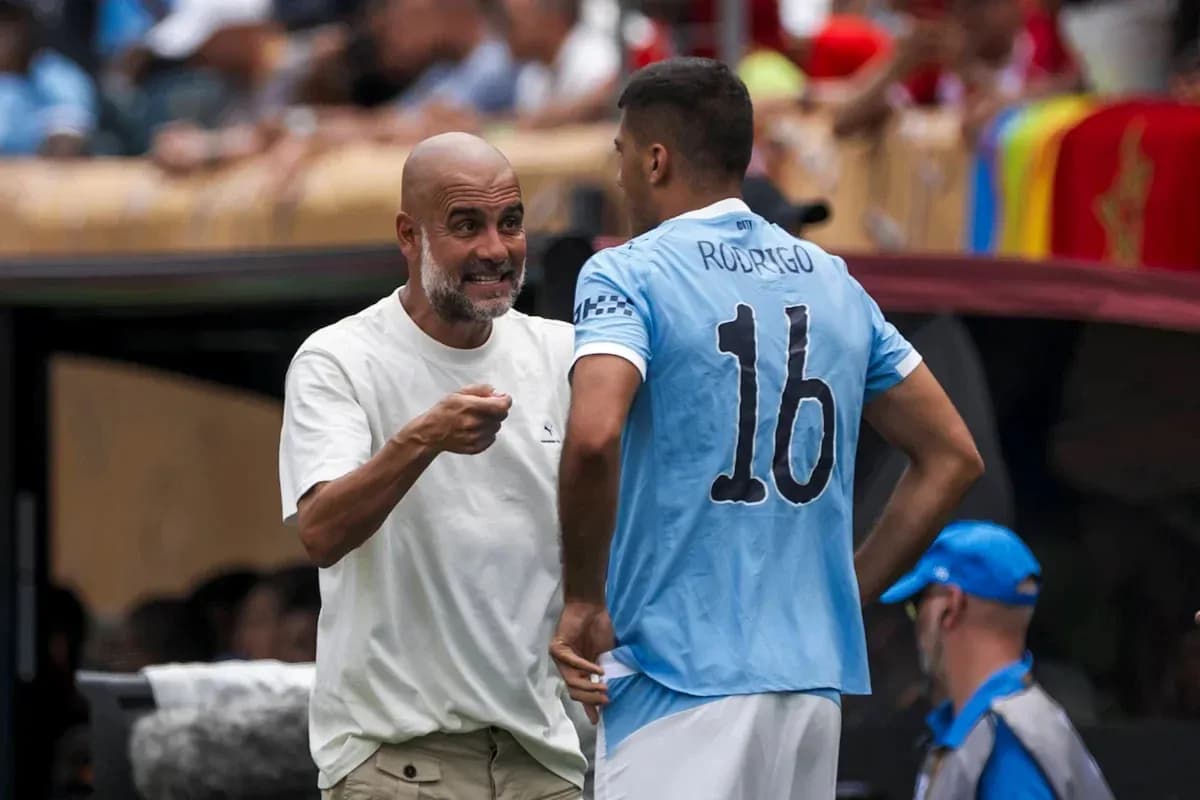
Rodri Chooses Barcelona: A Defining Clasico Move
Rodri’s decision to join Barcelona already feels bigger than a simple transfer. It is a power play, a statement, and a fresh injection of electricity into a rivalry that never really sleeps.
According to MUNDO DEPORTIVO, the Spain midfielder listened to both Barcelona and Real Madrid, weighed them carefully, then walked towards Camp Nou. His reasoning opens a window into how the very best now choose their paths. This was not romance. Not nostalgia. Not a snap decision made on holiday.
He spoke of a “far from peaceful” break as two giants tried to prise him away from Manchester City. So he stepped back, looked at the full landscape and asked himself where the pure football made most sense. In the end, Barcelona offered the sporting route that excited him most: a clearer role, a stronger sense of progression, a place where he believed he could win and grow at the same time.
That choice cuts against the noise that usually surrounds these sagas. When transfers are often reduced to salaries, shirt sales and social media metrics, Rodri put the ball back on the pitch. Barcelona’s sporting department, with Deco at the controls and Hansi Flick outlining the plan, convinced him that their project had the sharpest edge.
These are the margins that decide the biggest moves. The clarity of the blueprint. The quality of the conversation. The conviction with which a coach explains exactly how a player will be used. Barcelona nailed that part.
Respect for Madrid, but a firm “no”
Rodri did not slam the door on Real Madrid; he closed it carefully. That matters in Spain. Turning down Madrid is still a seismic act, and he never pretended otherwise.
He highlighted the way the club treated him throughout the talks, describing their behaviour as exemplary. This is a player who understands scale. Saying no to Madrid is never casual, and he framed it as one of the toughest decisions of his career.
Then came the Mourinho element. Asked about the coach’s attempt to lure him to the Bernabéu, Rodri stayed within the lines of respect and discretion:
"Bueno, no creo que sea lo suyo desvelar una conversación privada, pero evidentemente expresó sus ganas de que fuera y de lo que podía aportar al equipo. El trato fue muy bueno. Cuando tomé la decisión también le llamé para agradecer el interés y el trato. Me parece un grandísimo entrenador, ya lo ha demostrado allá donde ha ido en sus grandes etapas y el Real Madrid va a ser un duro rival para esta Liga."
A tidy answer. Diplomatic, but not cold. He recognised the effort Madrid and Mourinho made, then still chose Barcelona and made sure he personally thanked them after deciding. In a world where top-level football can chew through courtesy in seconds, Rodri chose to leave everyone with their dignity intact.
Barcelona didn’t just benefit. They convinced.
There is a thread running through his words that Barcelona fans will cling to. Rodri did not present this as an escape from Manchester City or as the result of some lingering grudge elsewhere. He framed it as a positive pull towards Barça.
That nuance gives the move extra weight. Barcelona were not simply the last club standing. They won an argument.
He also refused to feed the off-field drama around Madrid’s interest, the theories and conspiracies that swirl around any major Spanish transfer. He brushed that aside and brought the conversation back to football, his national team and his own professional path. That is the voice of a player who has lived for years at the very top and learned the value of keeping distance from the circus.
His final observation, that in England football tends to stay about football, landed with a hint of contrast. It sounded like a player shaped by the Premier League’s intensity, but ready for a different type of pressure, a different kind of spotlight, a different noise.
A Clasico battle won in the middle of the pitch
If Rodri hits his usual level, this move has the potential to tilt the balance of major games and maybe entire title races. Barcelona have brought in control, intelligence and steel at the heart of their midfield. They have done it by beating Real Madrid to one of the most coveted operators in world football.
That goes beyond one signing. It speaks to pulling power. To planning. To the enduring weight of the Barcelona name even in a turbulent era.
Madrid, for their part, are unlikely to feel humiliated. They moved with intent, they made their pitch, they were taken seriously. They just lost. Barcelona, though, will savour the feeling of landing a player who knew exactly what the alternative looked like and still chose their badge.
Through Manchester eyes: pride and a void
From a Manchester City perspective, the emotions are tangled. On one side, there is pride. Rodri is now openly discussed as the elite midfielder both Barcelona and Real Madrid chased hardest. That status says everything about what he became in Manchester.
He arrived as a talent. He leaves, if the move is completed, as the calm in chaos, the organiser in possession, the invisible metronome who made a great team feel balanced. Under City’s lights, in the grind of the Premier League, he sharpened his game and grew into one of the most influential midfielders in world football.
On the other side sits a familiar irritation. Every time Europe’s historic giants circle around a City player, there is a sense that they treat him as part of their natural ecosystem, as if his story always had to end in Spain. The reality is simpler: this version of Rodri was built in Manchester.
If he really has gone, most City fans would probably wish him well. Quietly, though, another question would dominate the conversation.
- Who controls matches for City now?
- Who dictates the tempo when the game frays?
- Who gives the team that sense of certainty when everything around them turns ragged?
That is Rodri’s legacy at City. He leaves a vacuum in the middle of the pitch. Barcelona and Real Madrid can argue over who won this particular battle, but for Pep Guardiola the problem is far more basic and far more brutal: how do you replace the heartbeat of a team that has forgotten how to live without him?