.svg&w=384&q=75 "GoalGist logo")
Rodri's Impact in Barcelona Debut: A Game Changer
Rodri needed only half an hour in a Barcelona shirt to look like he’d been there for years.
Thrown in after just a week at the club, with barely any time on the training pitch, the former Manchester City midfielder stepped into the chaos of a high-tempo game against Athletic Bilbao and immediately began to slow it down, bend it, and then bend it to his will.
The Spanish daily Sport described his debut as “jumping onto a train travelling at full speed.” It felt exactly like that. Barcelona were already ahead, the game was open, the rhythm frantic. Then, in the 62nd minute, Rodri appeared on the touchline.
The stadium erupted.
This wasn’t the polite welcome for a new signing. It was the roar usually reserved for the biggest stars. The noise swelled again with his first action: a towering leap in midfield to cut out an aerial ball. No frills, no nerves, just authority.
That single touch set the tone. Here was the dominant personality Hansi Flick had been talking about, the “natural leader” he had insisted would transform the side. Within minutes, Rodri had become the reference point, the player everyone looked for when the ball needed a safe pair of feet or the team needed to breathe.
He carried himself like one of the great classic midfielders. Broad-shouldered, upright, constantly scanning. His presence changed the temperature of the match and, crucially, the behaviour of those around him. The midfield, which had often felt stretched and improvised, suddenly moved with a shared idea.
Flick immediately leaned into that. With Rodri on, Barcelona shifted to a single pivot, abandoning the more cautious double screen. Around him, Pedri, Fermin Lopez and Dani Olmo formed the rest of the midfield, with the structure morphing into a 4-3-3 in possession.
Rodri sat alone in front of the defence, the first and often only receiver needed to slice through Bilbao’s lines. That allowed Barcelona to build from the back with more patience and clarity. One pass into Rodri, then angles everywhere.
The most striking change came from Pedri. Freed from constant responsibility in the first phase of the build-up, he pushed higher almost automatically, hovering between the lines where he does the most damage. Fermin Lopez and Olmo alternated their movements, one dropping, one running beyond, constantly rotating to disorganise Bilbao’s midfield.
Out wide, Adama and Lamine Yamal stretched the pitch, pinning the full-backs and giving Barcelona the width and balance Flick craves. With the structure set and Rodri anchoring everything, the football started to flow.
The second goal was the purest expression of that idea. Barcelona circulated the ball with patience, dragging Bilbao from side to side until the tempo suddenly snapped forward when it reached Adama. He drove, then whipped in a cross. Laporte misjudged it badly, and Fermin Lopez pounced, smashing home his third goal of the season.
The move looked rehearsed. It wasn’t. It was simply a team with clear reference points and a midfield that finally felt coherent.
Barcelona might have scored more. They would have, on another night. Unai Simon produced a string of saves and walked off as Athletic’s best player by some distance. Even so, the pattern of the match told its own story: this is an offensively overwhelming Barcelona, and they are doing it without a traditional No 9.
Two of their opening league matches this season already rank among the top five for expected goals created in La Liga since Flick took charge. The volume and quality of chances underline a key point: even without a recognised out-and-out striker in these early rounds, Barcelona are generating some of their most dangerous attacking football of the German’s tenure.
The plan is clear. Goals are no longer the burden of one specialist finisher. They must be shared. Rodri’s arrival reinforces that collective idea, stabilising the base so that more players can arrive in scoring positions. Raphinha, pushed into a more central role, has embraced it quickest, already on three goals and looking comfortable acting as the nominal striker.
Rodri’s influence isn’t limited to what happens on the ball. Against Athletic Bilbao, his understanding with Pau Cubarsi, honed with Spain, was immediately visible. The pair moved in tandem, one stepping, one covering, closing passing lanes before they even opened. Barcelona have yet to concede in their first two league games, and that clean-sheet record is exactly the kind of platform Flick keeps demanding when he talks about “more control” this season.
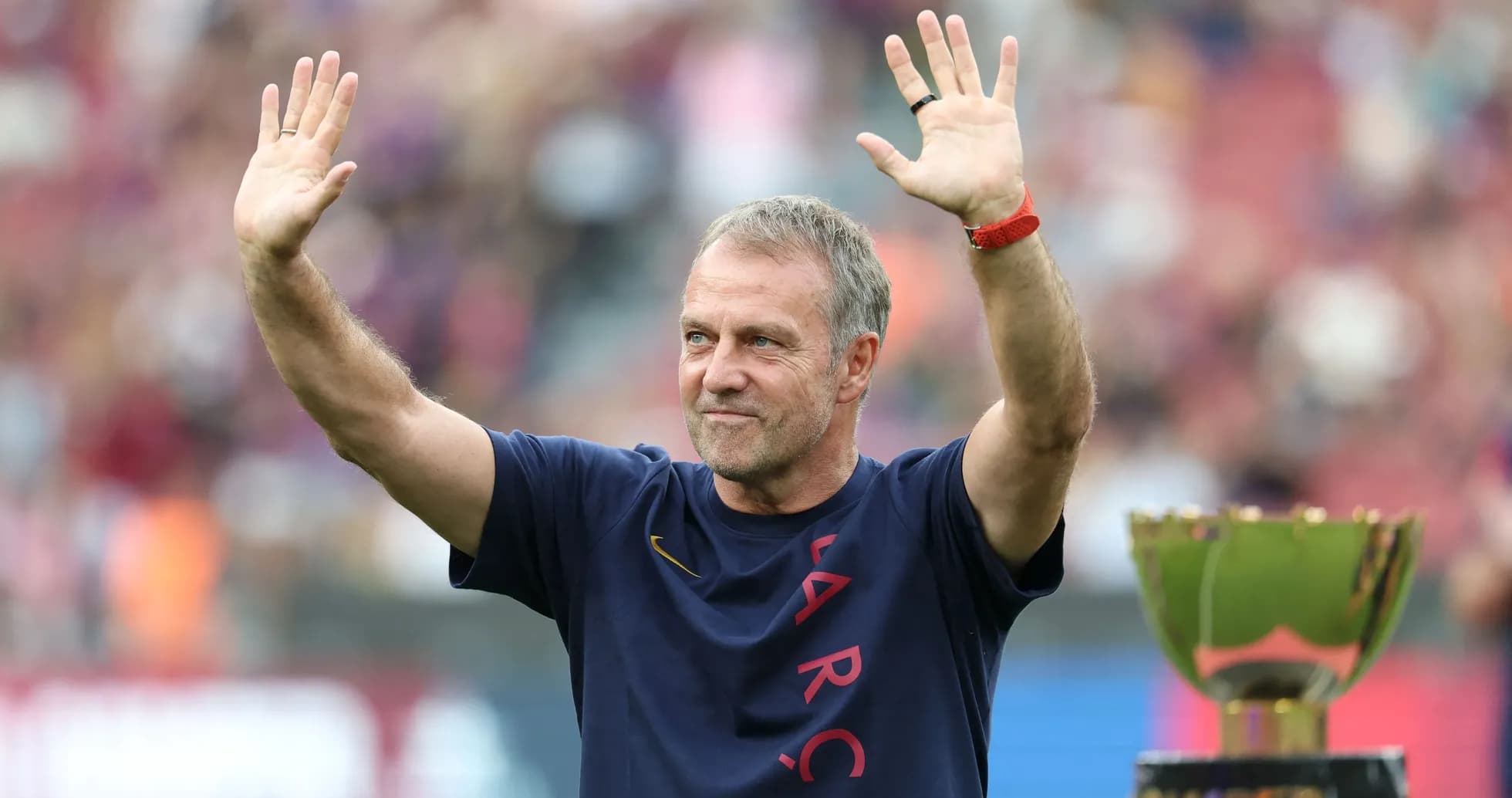
After the win, the coach didn’t hide his satisfaction. “Everyone is happy that Rodri is playing with us. He is the perfect player for us and for our style,” Flick said. It sounded less like flattery and more like relief. At last, he has a midfielder who can hold the ball, dictate the rhythm and let the others play where they hurt opponents most.
The biggest beneficiary might be Pedri. No longer chained to the base of the build-up, he can operate higher up without Barcelona losing their capacity to keep the ball. With Rodri in place, the team can enjoy longer spells of possession without constantly dragging their most creative midfielder back towards his own centre-backs.
One debut, 30 minutes, no goals, no spectacular assists. Yet the impact was unmistakable. Barcelona didn’t just add another name to their squad. They added a fulcrum. And if this is what the first appearance looks like after a week’s work, what happens when Rodri has a month, or a season, to bend the team fully to his rhythm?